
It takes more than two
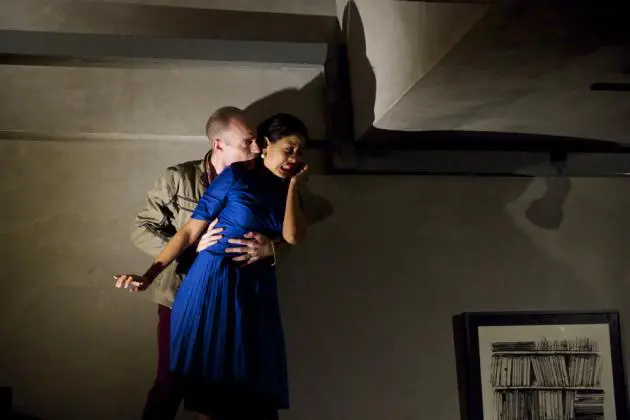


Too many Thai extras spoiled the otherwise gripping Lithuanian drama
WITH FIVE THEMATICALLY linked tales of contemporary romance – all heterosexual – Lithuanian playwright Sigitas Parulskis’s “The Never Ending Loneliness for Two” sets out to be something of an acting battle between the two leads.
In this case, they were UK-trained, Bangkok-born-and-based Pattarasuda Anuman Rajadhon and UK-born-and-trained and now Bangkok-based James Laver. And in such an intimate space as Toot Yung Art Centre, where the play was staged in its second weekend after a successful first at HOP, the two seasoned thespians did a commendable job in keeping the audience’s attention.
However, while all the words they uttered were convincing and in keeping with their characters, I couldn’t help wishing that there had been a greater difference between each of the five characters they portrayed and indeed a more distinctive pace between one scene and the next. For example, no matter the character and situation he was playing out, all Laver’s consonants and vowels were clear and precise while Pattrasuda’s speech was always faster. Small changes in timing and pace would have turned the evening into the acting tour-de-force many of us expected.
Even in this English translation, it’s evident that Parulskis is a true wordsmith and a master of drama. The play probably reminded some audience members of Arthur Schnitzler’s “La Ronde”, David Hare’s “The Blue Room” or even Nut Nualpang’s “Phop Rak Mak Krasan”. Universal, compelling and occasionally provocative, this Lithuanian dramatic gem powerfully showed how we live with each other without really sharing our lives and how we meet each other for the first and only time while imagining we do much more than meet.
With no holds barred in its explicit content, Parulskis’s storytelling technique is even more enticing. He keeps his audience, and readers, guessing not only where this man and this woman are but also who they are, how they are related, what will happen to them and whether what we are seeing is fantasy or reality. He reveals the truth only after having fun with our imagination and it didn’t take too long for the audience to realise that we couldn’t believe the characters even when they broke away from the dialogue and spoke directly to us.
Unfortunately, Lithuanian director and Bangkok expat Egle Simkeviciute Kulvelis may have felt that some details were too unclear for Bangkok audiences. A very detailed synopsis and quotes of important lines were printed in the programme leaftlet and as the play started late I was able to read the whole thing.
She also added five young male student actors as chorus members to the already limited performance space rather than leaving it to the two protagonists and thus ensuring intimacy with the audience.
Besides moving the props around and helping the actors with the costume changes, they also portrayed couples dancing in the bar who were supposed to be invisible onstage and only visible in our imagination. These five extras also created some sound effects for scene transitions. As a result, the Bangkok audience either knew too much too soon or didn’t get to exercise their imagination as much as in other productions of this play. This directing choice was in direct contrast to Kulvelis’ deft use of props and space in recreating these scenes in our imagination.
Now that audiences in this expat-friendly city have enjoyed this delightful Lithuanian appetiser, can we perhaps look forward to more exciting peeks into a dramatic spectrum with which we’re not yet familiar
And in the meantime, perhaps we can also put Moliere, Oscar Wilde, Noel Coward and Neil Simon down for a long-overdue nap.
MORE CONTEMPORARY FLAIR
n With the support from the French Embassy, Alliance Francaise Bangkok and Institut Francaise, Pascal Lambert’s 2011 drama “Cloture de l’amour” makes its Southeast Asia debut from September 11 to 14 in Bangkok. It’ll be in Thai with French and English surtitles. The internationally acclaimed French playwright will also travel here to give a lecture, a workshop and attend the premiere.
