
All the orphans in China


Play
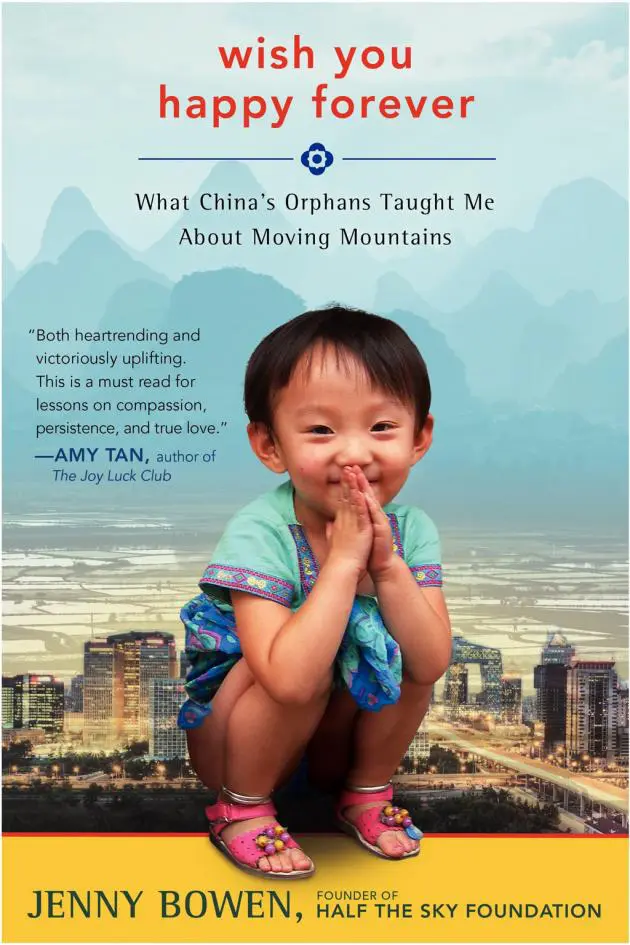
THE child on the front cover, seemingly perched precariously on edge yet wearing a couldn't-care-less smile, would make anyone want to read the book, if only to find out what she is all about. Well, that's what moved me to pick it up, anyway.
As the page numbers turned into double and triple digits, I came to know who the little girl was but I never quite understood what she was all about.
Written in the first person, the book leads us on a journey through dark secrets that we thought had died in the digital glare of this supposedly civilised age.
Screenwriter, filmmaker and author Jenny Bowen, together with her husband, Dick, adopted an orphan from China. Maya came to the American couple a scrawny, unloved child but she turned out to be a game-changer for the Bowens, giving them a renewed purpose in life.
One ordinary day, as Bowen watched Maya playing in the garden with abandon just months after she had been taken out of the orphanage, the author realised that it was not enough to make just one girl happy – and that is how Bowen’s Half the Sky Foundation came into being.
The foundation’s volunteers work with orphanages in China – long viewed as mere “storage” warehouses – to change the way the children in them are treated. The map at the start of the book traces Bowen’s visits to China, sometimes with Dick in tow. Bowen mostly rushes in and out of Chinese cities and villages, and the map gives an idea of the time spent and distance travelled.
Many characters come and go, and the names of people and places are two things that I found tiresome to keep track of – save for ZZ (Zhang Zhirong), who becomes Bowen’s guide, mentor and partner in the foundation.
The story seems too taken up with the trials and tribulations of setting up the Half Sky Foundation’s offices around China. There isn’t enough ado about the Bowens’ two adopted daughters, Maya and Anya (who came later).
We get only occasional glimpses of the girls trying to settle in and lose their wariness and inhibitions. That kind of emotion takes a back seat to Bowen’s larger vision of reaching out to more children from China’s orphanages. And it is an incredibly noble effort – but what I wanted more of was to share the growing up years of Maya and Anya.
Anya, the second adopted daughter, was particularly difficult in the early years, says Bowen, but we don’t know for sure when and how that changes.
Each sub-heading in the book is a Chinese proverb translated into English, and they carry heavy messages that anchors the story with universal meaning. Among those that I found particularly profound are: “Unless there is opposing wind, the kite cannot fly”, “A good beginning is half the journey”, and “A burnt tongue becomes shy of the soup”.
But the objective of writing the book seems unclear: Is it to record the writer’s journey or is it to share insights into the orphans and Bowen’s adopted daughters?
I also sensed a touch of fiction in this non-fiction book: Bowen’s journey in realising the Half the Sky Foundation is most definitely and admirably real, but the story is tinged at times with exaggeration. This is, perhaps, just a quibble over style. The dramatic layers of this enjoyable account draw will hopefully draw more readers to its core truth of compassion.
Wish You Happy Forever: What China’s Orphans Taught Me About Moving Mountains
By Jenny Bowen
Published by HarperCollins
Available at Amazon.com $19.98; Kindle $12.99
Reviewed by Bhavani Krishna Iyer
