
The studio is a laboratory


Historic experimental works and animation take centre stage at the Thai Short Film and Video Festival
ANIMATION AND groundbreaking experimental films are among the highlights of the closing weekend of the 18th Thai Short Film and Video Festival at the Bangkok Art and Culture Centre.
In honour of the 30th anniversary of the Thai Film Archive, there’s a special programme, “Archive EX”, spotlighting historic Thai experimental films.
Screening at 5pm on Saturday, “Archive EX 2” features two works – “Drifter”, an eight-minute piece from 1993 by Sasitorn Ariyavicha and “Chinatown Montage” from 1982 by Surapong Pinijkar.
Surapong spent six months along Bangkok’s Yaowarat Road in his effort to capture liveliness of the neighbourhood from morning to night. The result was his 55-minute work.
Sasitorn’s “Drifter” goes aboard a ship with a man in search of an empty place to release his emotions. Her work would later culminate in the 2004 feature “Birth of the Seanama”, which garnered acclaim from cinephiles around the region.
Last weekend, “Archive EX 1” featured more work by Surapong, who broke into commercial features with 2004’s “The Siam Renaissance”, a remake of the popular Rama IV period time-travel drama “Tawipob”. Others included debut works by well-known filmmakers Apichatpong Weerasethakul (“0116643225059”, which takes its name the phone number he dailed to call home while he was at art school in Chicago) and Pimpaka Towira’s “Mae Nak”, as well as shorts by Archive director and founder Dome Sukwong.
More experimentation can be found in the showcase of Thai animation in competition for the Payut Ngaokrachang Award, which is named after Thai cinema’s pioneering animator. Getting underway at 11am on Sunday, the entire programme is dialogue-free, making it appropriate for viewers of all ages, no matter what languages they understand.
The line-up mainly comes from students at Rangsit, Sripratum and Silapakorn universities as well as King Mongkut’s Institute of Technology Ladkrabang. Nearly every style is represented, from traditional two-dimensional drawings to 3D computer animation, as well as stop-motion. There are even works inspired by the Hollywood animated feature “The Lego Movie”, says festival director Chalida Uabumrungjit.
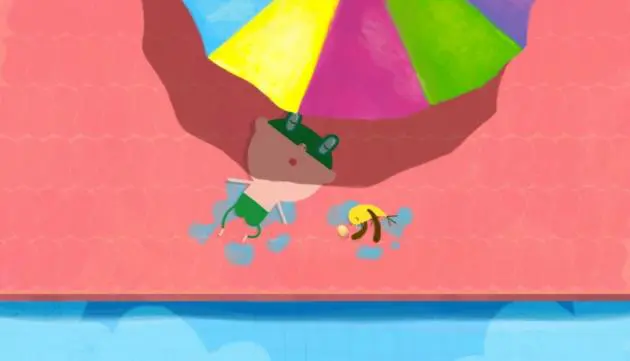
Among competitors taking part is the festival’s perennial award-winner Twatpong Tangsajjapoj, who comes this year with a two-dimensional animated short “I Can Fly”, about a boy who’s bored with swimming.
Before each show, there’s a chance to see even more experimentation, with director Nitivat Cholvanichsiri contributing the fest’s opening title. In keeping with the festival’s theme of egg-shaped logos and the concept of giving birth to films, Nitivat, who directed the 2010 monkey comedy “Kapi Ling Jor Mai Lork Jao”, captured footage of his wife, butoh dancer Bo Kittiphon, who happened to be in the final stages of pregnancy just a few weeks ago when the film was made.
Other screenings include the S-Express collections from Malaysia, Singapore and Indonesia, from 1pm on Saturday in the fourth-floor room, followed at 6.30 by Thai and international shorts in the Queer Programme.
There are competition screenings for the White Elephant Award for student filmmakers and the Duke Award for documentaries, plus chances to see “The Best of Clermont-Ferrand”, featuring award-winning entries from the world’s largest short film festival, and “Letters from the South”, a look at Chinese communities across Southeast Asia by six well-known filmmakers.
The fest wraps up at 4.30 on Sunday with the presentation of awards, including the top-prize RD Pestonji Award, which is named after the pioneering Thai auteur of the 1950s.
THE REST OF THE FEST
The 18th Thai Short Film and Video Festival runs until Sunday at the Bangkok Art and Culture Centre, in the fifth-floor auditorium and fourth-floor conference room. Admission is free.
For more details, see www.Facebook.com/ThaiShortFilmVideoFestival.
