
A BOOK MAP |of Bangkok


Every district of the city has featured in a book. Now it's time to do some reading
WE KNOW THAT Thais don’t read many books – the odd Harry Potter and Dan Brown fad notwithstanding. Not many books are read in the United States either when the average is measured across the country, but its cities are full of bibliophiles. That’s not the case with Bangkok.
Ask residents of the supposedly better-educated capital how many books they read each year and you get a lot of sheepish hemming and hawing. “Frankly, it might be just a few,” says author Prapassorn Sevikul. “Reading behaviour even in Bangkok is in serious danger.”
So the Bangkok Metropolitan Administration is having another go at goosing public interest in books. Having gained some ground when the Unesco named the city World Book Capital last year, it has mapped out a Bangkok Literary Trail that covers all 50 districts.
BMA Deputy Governor Amorn Kitchawengkul noted that most of the chosen books offer an interesting education in a specific district’s history. Even if the stories themselves are fictional, they often provide accurate glimpses of the clothing fashion, architecture, music, politics and social values of the past.
“By reading an inspiring novel set in a particular district, you can get a clear impression about the locality in that particular period,” he said.
“This is a great way for people to learn more about their own communities – and to encourage more people to write – since you want to delve deeper into a subject about which you already have an interest.”
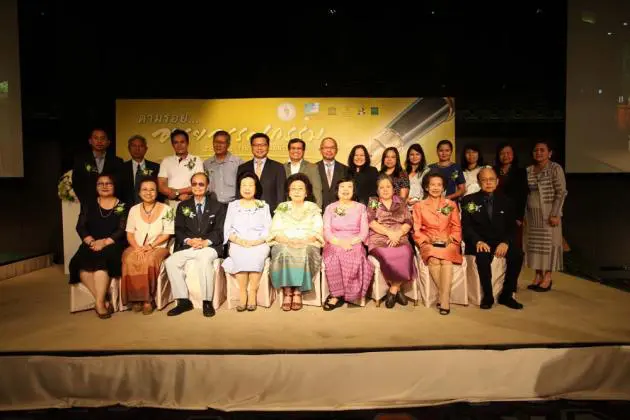
Several heavyweights of Thai literature turned out for the trail’s recent unveiling. Sukanya Cholsuek (who writes under the pen name Krisana Asoksin) was there. So too were Pensri Kiengsiri (Naravadi), Dr Vichitvong Na Pombhejara (V Vinitchaikul), Khunying Vinita Diteeyont (Kaew Kao), Supa Sirising (Botan), Chamaiporn Saengkrachang (Bangkombang).
The Bangkok Literary Trail is an extension of the ongoing “One District One Literature” project the BMA initiated with the help of Rajabhat University’s Suan Sunandha campus. Books were tracked down that had some connection with every district, zeroing in on a slew of novels that use actual locations as their settings.
Thus the trail evokes beloved novels like “Saen Saeb” and “Plae Kao” by Mai Muang Derm, set in Minburi and Bang Kapi, respectively. Thommayanti placed hercharacters in “Ku Kam” in Bangkok Noi during World War II. MR Kukrit Pramoj’s “Si Paendin” resides in Bangkok Yai. And Anake Nawikkamool’s spooky, eternally revisited tale “Mae Nak” helps keep Phra Khanong famous.
Huay Kwang provides the locale for “Sam Kleu Pol Nikorn Kimnguan” by Por Intarapalit. Sriburapa treks around Khlong Toey in “Kang Lang Parb”. And Krisana Asoksin travelled to Rajthevee for “Chao Krong”, Suan Luang for “Kam Si Tandorn”, Bang Plad in “Natang Ban Raek” and Phasee Charoen for “Lom Tee Plien Tang”.
Wang Thonglang and Tungkru districts have warrant “royal” honours, both having featured in books written by His Majesty the King. The former appears in “The Story of Thongdaeng” and the latter in “Mahajanaka”.
Two of the books are politics treatises. “The Free Thai Legend” by Dr Vichitvong Na Pombhejara evokes Bungkum district and Vin Liewvarin’s “Parallel Lines of Democracy” was chosen for its allusions to Kan Na Yao.
Prapassorn and Chamaiporn joined SEA Write Award winners Saksiri Meesomsueb and Rewat Panpipat at the unveiling ceremony for a panel discussion on the ways reading can help “civilise” people.
Prapassorn observed that it’s important to share the characters’ emotions as well as their experiences, and to always read between the lines to fully understand the author’s intent. “Reading builds up your world view, your intelligence and your mind,” he said.
“Encouraging a proper reading environment is very important. The speed of computers, video games and even smartphones decreases our concentration. We have to avoid that and take time to read worthwhile books. And parents should always be making time for family reading sessions.”
Four popular novels by Prapassorn were among the books cited as part of the literary trail – “Lod Lai Mangkorn” set in Bang Ko Laem, “Kor Mhorn Bai Nan Tee Tuea Fan” in Watthana, “Wela Nai Kuad Keaw” in Yannawa and “Dek Chai Maliwan” in Sai Mai.
Saksiri said reading should be part of everyone’s daily life. “I teach my son to look around our garden and then to read about the plants and insects he sees. But people should also be able to read directly from life, get the real experience. You should be able to ‘read’ the flavour you’re tasting and ‘read’ the sound you’re hearing. If we want to become more civilised, reading will never let us down.”
Rewat said he couldn’t imagine someone never discovering the joy of reading. Both reading and writing can be healing experiences amid the struggles and setbacks of life, he pointed out.
Four novels by Chaimaporn, another celebrated author, have also been placed on the trail – “Kulab Heng Pandin”, set in Pomprab Sattru Phai, “A-Ma Bon Condo” in Phaya Thai, “Swasdee Kang Thanon” in Prawet and “Chodmai Tung Duangdao” in Klong Sam Wa.
Youngsters these days want comfort and convenience, Chaimaporn acknowledged, so the city needs an intense campaign to get them reading. The students can’t be blamed, though, when many educators read little themselves and schools fail to encourage the practice.
