
Fabulous in full frame


Play
The new Sony Alpha a7S will have even a digital camera beginner taking pictures like a pro
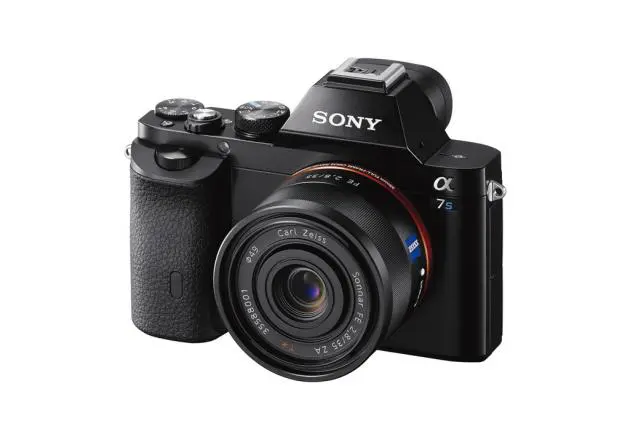
A new full-frame mirrorless interchangeable lens camera, featuring a 35mm large pixel image sensor and a 15.3-stops dynamic range, the Sony Alpha a7S is one of the best products to emerge from the Sony stable for quite some time.
It uses a 12.2 effective megapixel 35mm Exmor CMOS sensor, which is paired with the powerful BIOZ X image processor to allow the camera to shoot at a sensitivity range of ISO 100 – 409600 with low noise and an unprecedented 15.3 stops of dynamic range.
Since the image sensor is a full frame type or as large as 35 mm while the number of pixels is set as 12.2 megapixels, the pixels of the sensor are large compared to those on most sensors. The extra-large pixels collect dramatically more light than traditional cameras to produce beautifully detailed, low-noise images in even the most challenging of lighting environments.
To boost the image sensor’s light collection efficiency, a new-generation RGB colour filter has been adopted, in addition to the gapless on-chip lens design, light concentration technology and photodiode expansion technology. This delivers unprecedented high sensitivity and low-noise levels with high dynamic range in every light condition from severe low light to bright sunlight. The sensor is also designed to minimise the ghosting and flare effects by applying an AR coating on the surface of the glass seal over the image sensor.
The a7S is equipped with a high-precision Fast Intelligent AF system that improves AF sensitivity in low-lighting conditions that can go as low as -4EV.
The a7S is also very good for shooting Full HD videos that can be outputted in 4K resolution. Sony says the a7S also incorporates “direct pixel readout” utilising the entire width of the full-frame image sensor without line skipping or pixel binning. Therefore in video acquisition it can read and process data from every one of the sensor’s pixels to allow video shooters to utilise all of the artistic and creative benefits provided by the unique sensor.
Moreover, the a7S can output uncompressed QFHD 4K video (3840 x 2160) in 8-bit 4:2:2 to an optional external 3rd party 4k recorder via HDMI port.
Another nice feature is that the a7S has silent shutter mode when you need to shoot in a quiet environment. Activating the silent shutter eliminates the use of the mechanical shutter by utilising an electronic one in its place. This is useful for capturing wildlife, for example.
And the a7S comes with a 2.4M dot XGA OLED Tru-Finder, which features OLED improvements and the same 3-lens optical system used in Sony’s flagship a99 DSLR.
The viewfinder faithfully displays what will appear in your recording, including the effects of your camera settings, thus allowing you to accurately monitor your scene and the settings’ results. The viewfinder provides 100-per-cent frame coverage and a wide viewing angle.
And its 3-inch Xtra Fine LCD display is tiltable, making it easy to photograph over crowds or low to capture pets eye-to-eye by swinging up approximately 90 degrees and down 45 degrees. The display uses WhiteMagic technology that dramatically increases visibility in bright daylight.
At present, the a7S is available in body only option. It has to be mounted with Sony’s E-mount full frame lens or with the A-mount lens systems with an optional adapter. Sony’s complete Alpha lens system includes several premium offerings from Carl Zeiss and G Series Lenses.
The a7S also comes with built-in Wi-Fi function with one-touch NFC (near filed communication) feature. It supports “one touch connection” convenience with NFC enabled smartphones and tablets. Once connected with a Wi-Fi link, you can use your smartphone or tablet to control the shutter release and can fetch photos from the camera to share on Facebook on the go.
It’s intuitive to control various functions of the a7S with the several dials and buttons. They include a mode dial for switching shooting modes, an exposure compensation button, a movie record button, an Fn button for bringing up and changing available setting options, as well as three customisable buttons – C1, C2 and C3 – for changing frequently used functions.
For example, you can use the C1, C2, C3 buttons to change focus settings, focus mode and picture styles without having to bring up the menus.
The Fn button lets you register frequently used functions and recall them while shooting for fast access without having to bring up menus. Up to 12 functions can be registered to the Fn button. For, example you can use the Fn button to change Focus Area mode, Metering mode, Creative Style, Picture Effect, and dynamic range option.
There is also a Quick Navi screen suitable for changing settings directly when using the viewfinder. The list of functions is displayed in two rows on the right side.
There are several creative styles from which to choose including Standard, Vivid, Neutral, Clear, Deep, Portrait, Landscape, Sunset, Black & White and Sepia.
For example, when you use the Vivid option, the camera will highlight saturation and contrast for capturing striking images of colourful scenes and subjects such as flowers, greenery, blue sky and sea views.
You can use the Light style for capturing a refreshingly light ambience and the Deep style for shooting images with deep and dense colours..
There are also fun effects including Toy Camera, Pop Colour, Retro Photo, Partial Colour, HDR Painting, Watercolour, and Illustration. The HDR painting is really fun to use as it creates the look of a painting by enhancing colours and details.
Advanced users may use Manual Exposure, Aperture Priority, Shutter Priority, and Program Auto options that can be selected from the mode dial. Other options on the mode dial are Auto Mode, two Memory recall or user settings, Movie, Sweep Panorama and Scene Selection.
Newcomers will find Auto Mode and Scene Selection excellent shortcuts to shooting good quality photos quickly without having to worry about changing various parameters.
There are two auto options – Intelligent Auto and Superior Auto. You must first use the menu to select the type of auto mode you want to use and it will then be accessible from the Auto Mode option on the dial.
The Intelligent Auto analyses the current lighting environment and selects a programme scene mode that is best for the current environment. The Superior Auto goes beyond that by taking multiple shots at different exposures and combines them into a crisp and clean photo with a lot of details when it detects a complicated lighting environment such as backlighting.
I tested the a7S with Carl Zeiss Vario-Tessar FE 4/24-70 ZA OSS with 24-70mm focal length. I mostly used the Superior Auto mode during the test and found that the camera captured pleasing quality photos in most lighting conditions.
The camera also allows you to choose between Dynamic-Range Optimisation (DRO) or HDR (High Dynamic Range). The DRO divides the image into small areas and analyses the contrast of light and shadow between the subject and the background, and produces an image with the optimal brightness and gradation.
I preferred the HDR option in which the camera shot three images with different exposures and then overlaid them to create an image with rich gradation.
I found the a7S captured very well-saturated colours with good contrast and professionally blurred background.
The camera was really impressive in a low-light environment. When the environment was dark – for example, from our office balcony at night – what was seen on the camera’s screen was much brighter as was the resultant image. When we used the Handheld Twilight scene mode, the camera fired four shots and combined them into one sharp and colourful shot, highlighting the dark of the sky and lights of the night.
Other scene modes available for selection include Portrait, Sports Action, Macro, Landscape, Night Scene and Anti Motion Blur.
The a7S comes with 1080 mAh battery that lets you shoot more than 300 shots per one charge.
And of course such perfection does not come cheap. Sony Alpha a7S has a suggested retail price of Bt79,990. The Carl Zeiss Vario-Tessar FE 4/24-70 ZA OSS lens is sold separately for Bt39,990.
Key specs:
Lens compatibility: Sony E-mount lenses
Image sensor: 35mm full frame (35.6?23.8mm), Exmor CMOS sensor with 12.2-million effective pixels
Focus system: Contrast-detection AF with 25 focus points
Metering type: 1200-zone evaluative metering
Shutter speed: 1/8000 to 30 sec, Bulb
ISO: ISO 100-409600 equivalent (1/3 EV step) (ISO50 can be selected in expanded mode)
Maximum video recording resolution: XAVC S Full HD – 1920 x 1080/60p@50Mbps
Media: Memory Stick PRO Duo, Memory Stick PRO-HG Duo, Memory Stick XC-HG Duo, SD memory card, SDHC memory card (UHS-I compliant), SDXC memory card (UHS-I compliant)
Viewfinder: 0.5-inch electronic viewfinder with 2.3 million dots
LCD screen: 3-inch TFT with 921,600 dots, titltable up by 90 degrees, down by 45 degrees
Interface: microUSB, NFC, Wi-Fi 802.11 b/g/n, HDMI micro, multi interface shoe, microphone terminal, remote control, headphone terminal, vertical grip
Battery: 1080 mAh battery, capturing about 360 shots
Dimension: Approximately 126.9 x 94.4 x 48.2 mm
Weight: Approximately 446 g (body only)
