
See-through ingenuity


Play
Monrissa Leenutaphong's plastic Skin on Skin clothes are eye-popping but not provocative
Logo sets and jigsaw puzzles deserve at least part of the credit for a startling new concept from clothing designer Monrissa Leenutaphong. Her label Skin on Skin by Monrissa has just unveiled a line called “Revolutionary Jigsaw – Clothes without Sewing”.
It’s plastic clothing that’s perfect for parties.
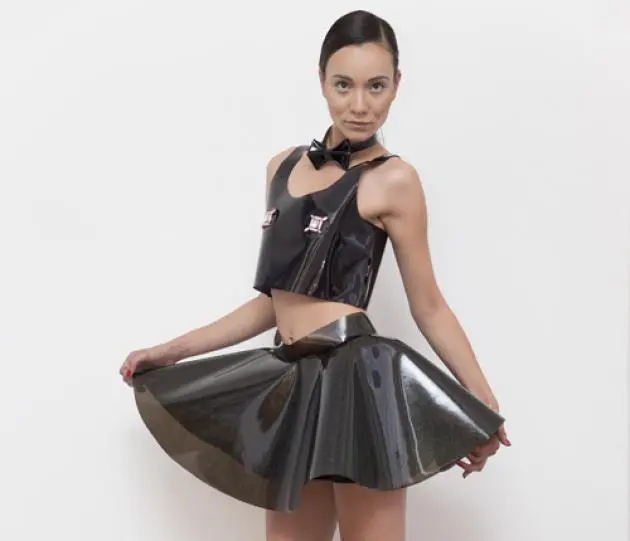
In lieu of the usual stitching, the 26-year-old pieces together segments of transparent but durable plastic using interlocking tabs. She’s come up with a full basic wardrobe this way – including a top, skirt, vest, jacket, pants, bow tie, necktie, collar and bangle.
If you’re worried about the see-through factor, relax: The idea is to wear complementary cover-ups underneath, preferably plain so as not to dampen the effect of the translucent coloured plastic, which shimmers with tiny, glistening embedded stones.
The plastic, as solid as PVC, is easy for her to find, one type available in Thailand and the other imported. It’s distinctive in its transparency, shine and relative rigidity.
As easy as buttoning up a shirt and zipping up a skirt, the sections of each article of clothing lock firmly together like they were made for each other – which of course they were. No sewing, no Velcro and certainly no glue required.
Monrissa earned her master’s degree in image and communications from Goldsmiths University of London, but she always had a love for art and fashion design. Once she got her own fashion label up and running, though, her best tailor resigned, which got Monrissa mulling other ways to make clothes without sewing.
It was a concept she kept turning around in her head while travelling in Japan, Germany, Belgium and France, and then, in a Paris art gallery, inspiration arrived. The art triggered more art.
“I don’t shop like a typical woman,” she says. “I like to buy Lego stuff, art models – things that are creative and collectible. I value creativity and I’m not attached to any particular brands. When you’re surrounded by creativity, great ideas just click into your head.”
Once she has an idea in mind, Monrissa tests it out on paper first. “It’s really hands-on, like doing a jigsaw puzzle. You’re thinking it through step by step and noticing the problems and drawbacks and then solving them. Ultimately you have a set of knowledge.”
That “eureka moment” she had in Paris ended up registered with the Department of Intellectual Property as an invention that’s actually wearable. “I’m not a famous designer, so I need to protect my creativity,” she says.
The clothing line is “like pieces of art and you can use your imagination and play with them, mixing and matching. Each piece can be swapped around, so, for example, the right side of the vest can be black and the left white or pink or green – it’s up to you. It’s fun, like dressing up a paper doll. You can personalise the clothes and match them up any way you like. You can wear the bow tie with a wide-neck blouse.
“Since the plastic is transparent and colourful, you have to wear plain clothes underneath, whether black or white or beige, or any colour that doesn’t create contrast. Leggings look cool with these clothes as well. But the collection doesn’t go well with patterned undershirts or anything ruffled or puffy.”
See-through clothes are a little too risque for most women, but Monrissa points out that her line isn’t provocative. Having said that, though, nor is it for everyone, she acknowledges.
“It’s about your attitude and really your personality. It depends on each person’s style. After all, the collection is a creative idea. These are wearable art pieces!”
She has no intention of pursuing a mainstream market for a line that’s so unique, that will really only appeal to people who want to “wear an invention”.
“Once you’ve personalised the colours and accessories, the outfit really does become one of a kind, really special,” Monrissa says, and yet her prices aren’t all that high. She disapproves of the high cost in haute couture.
“When you pay for something it should be for a good reason. You should be paying for the idea, but not the brand name, which to me is just an illusion, just marketing. As a designer, I consider originality and creativity vital. I think it’s important to add value to the world, not take it away.”
