
When the knee goes pop


Play
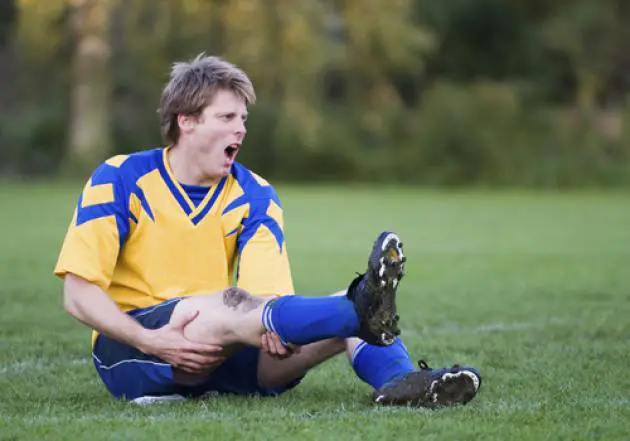
One of the most common knee injuries affecting footballers is an anterior cruciate ligament (ACL) sprain or tear.
The ACL is one of four ligaments in the knee that connect the femur (thigh bone) to the tibia (the shin bone) and any injury to the knee from direct and indirect trauma can rupture this ligament. Injury occurs when you change direction rapidly, stop suddenly or twist an ankle causing the body to shift forward. The weight strains the ACL, causing damage.
While the likelihood of ACL injury is higher among people who participate in high-risk sports, such as basketball, football, rugby, skiing, skating and soccer, such injuries can also be caused when running or jumping rope. Amateur sportsmen too, particularly those you haven’t received adequate training or play when they not fully fit, are also prone to injury.
A popular misconception is that women are unlikely to suffer ACL injuries. In fact, women are more susceptible to ACL rupture. Recent studies suggest that in women, the joint through which the ACL passes and the ACL itself is smaller than in men. This, along with lesser hamstring activation among women, might actually make it easier for the ACL to tear when executing certain cutting or pivoting movements. Hormonal changes, which make their muscles more flexible, are also cited as the reason for greater susceptibility to ACL tears.
ACL tears cannot be sewed back together because such a procedure does not guarantee stability to the knee and so a tendon graft is surgically applied instead. The success rate of such a process is between 82 and 95 per cent. The graft aims at restoring pre-injury mobility in the knee. Surgery alone is not enough though. Physical therapy is also vital. Exercises are usually prescribed immediately after the surgery. Regular application of ice to reduce swelling in the knee might also be required. In some cases, a brace may also be prescribed.
If you are a sportsperson, your doctor will likely recommend a return to active sports only after three to four months of rest and therapy. This is how much time it will take for the swelling and pain to subside and for full range of motion and muscle strength to return. Thereafter, you might need to re-train for your specific sport, so do not expect to jump back into the field immediately. You will only be exposing your knee to further and longer-lasting damage by doing so.
Not all ACL injuries need surgical intervention. For instance, doctors might not recommend surgery (or might defer surgery) to treat ACL injury in children because of the risk of growth plate injury. Older patients who live largely sedentary lives might also be considered capable of managing reconstruction of the ligament without surgery. If the ACL tear is partial and does not affect knee stability, surgery is unlikely to be advised.
An ACL tear might also be accompanied by injury to other ligaments or other parts of the knee. However, most patients with a partial ACL tear recover within three-four months of surgery and rehabilitation. In fact, if your doctor believes that surgery is not needed, medical advice and physiotherapy might suffice to get you back on your feet. However, in some cases of complete ACL tear, a return to challenging sports might be impossible and even walking might be difficult.
While treatment for ACL injury is readily available, it is better to try and prevent such a rupture. It is a myth that people can play sports to get fit. First, get fit; then, play sports to maintain that fitness. It is important to strengthen muscles to reduce the risk of injury. Proper and professional training is also important and when playing, use knee guards and other such protective gear to reduce contact injury.
If in spite of these precautions, you happen to injure your knee, consult a doctor as soon as possible to rule out or treat potentially debilitating injuries.
If you hear your knee pop or if your knee gives way entirely, you are likely to have injured your ACL. The injury is likely to be accompanied by pain in the knee and you will find it difficult to walk or stand. The knee would also be swollen. In such cases, you should contact a doctor immediately because these could be indicators of ACL injury. Your doctor might order X-rays or an MRI scan to determine the nature and extent of the damage to the knee.
Dr Chathchai Pookarnjanamorakot is an Orthopaedic Surgeon at Samitivej Sukhumvit Hospital. Call (02) 711 8494-6.
