
Seoul's "silver cinema" memories


Play
Movie theatres devoted to elderly tastes in film and song thrive on nostalgia
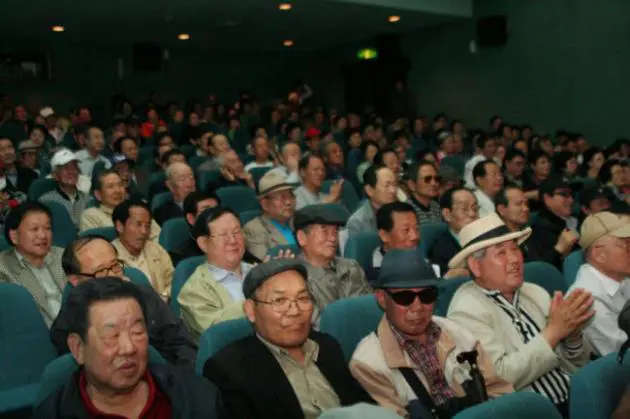
Jang Deok-ho's night out to the movies started way before sunset. The 74-year-old has walked for two hours to reach the Hollywood Silver, a small, old-fashioned cinema in Seoul’s Jung-gu district. His choice for the evening’s entertainment is screening at 6.20pm.
“I like walking and I like watching movies,” Jang explains while glancing at the film poster – it’s the 1961 American classic “The Hustler”. An elderly couple sits in the waiting area, their hands clasped tightly. A grey-haired woman purchases her ticket from the tiny box office, manned by a member of the staff who looks every bit as old as the customers.
In this 4D, multiplex age, this unassuming, one-screen theatre boasts one of the country’s highest seat occupancies and probably the most loyal clientele.
“There are only 300 seats,” says the boss, Kim Eun-ju, “but our seat-occupancy rate reaches nearly 80 to 90 per cent on average.” Of its four daily showings, one or two time slots – especially the one at lunchtime – are sold out almost every day, she says.
It’s an amazing feat, given that average occupancy at local multiplex chains stands somewhere between 20 and 30 per cent.
Targeting the now grey-haired movie fans who still remember the old Hollywood Theatre, Kim started screening classic movies. “They’re mostly from the 1940s to ’70s and ranked first to fifth at the box office in their day,” she says.
Past selections have included “Gone with the Wind” (1939), “Ben-Hur” (1959), “Dr Zhivago” (1965) and “Cinema Paradiso” (1988).
“We do show recent releases from time to time, films we think could appeal to senior citizens such as ‘My Love, Don’t Cross That River’ [from last year] and ‘Masquerade’ [2012].”
A short walk from Tapgol Park, the foremost gathering place for seniors in Seoul, the place quickly became a new hangout for old folks.
In its first few months the theatre had fewer than 100 daily admissions. But the number increased rapidly through word of mouth. In 2010 around 100,000 people visited, and by 2014 the tally had reached 250,000. Kim expects the upward trend to continue. Inspired by the theatre’s success, similar cinema ventures have sprung up in Seoul, among them Myungbo Silver Theatre and Cheongchun Cinema in central Jung-gu district. Now “silver cinemas” are spreading to other cities – Incheon, Daegu and, in Gyeonggi province, Ansan. To what can the success be attributed?
“The cheap price adds to the fun,” says 75-year-old Lee Chae-young, another regular at the Hollywood Silver. “Also, being able to watch classics and old romantic films is the reason I come here.”
She even has the theatre website logged on her smartphone’s favourites to check the timetable.
A ticket there costs 2,000 won (Bt59) for customers age 55 and up. Younger patrons pay 7,000 won, still less than the 9,000 to 10,000 won charged at most multiplex chains. The price hasn’t changed since the theatre first opened. Operating the theatre with such low prices is difficult, says Kim, but she long ago decided that ticket sales shouldn’t be the main source of revenue.
To fill the slack, she solicits donations and advertising from private firms and the government. SK Chemical, Yuhan-Kimberly and the City of Seoul have all chipped in.
“When people from donor companies visit, they’re deeply moved, and they decide to continue their support,” says Kim. “Without the sacrifice of the older generations, large local companies wouldn’t be what they are now. This is a way for the companies to pay them back.”
Culture observers often point out that the underlying needs of the elderly are often overlooked. Silver cinemas are not just places to watch movies but serve as gathering points for seniors, who otherwise only have public parks or community centres. While the population is ageing rapidly, indoor spaces where older people can have fun and engage in cultural activities remain scarce.
The Hollywood also hosts other events, including concerts. Renowned “teuroteu” singers, decked out in sequinned jackets, sing their beloved tunes to full houses. Audience members clap, sing and dance along, reliving fond memories.
The theatre has a cafe right around the corner called Adding to Memories. An old-fashioned metal lunch box and janchi guksu, a light noodle soup, costs 3,000 won. The DJ there plays songs requested by the elderly customers.
“People go there to dine and hang out before and after the movie,” says Kim, and it’s also a hot place for |elderly dating.
