
Detecting breast cancer with bare hands


Play
Blind woman in Germany are trained as medical tactile examiners
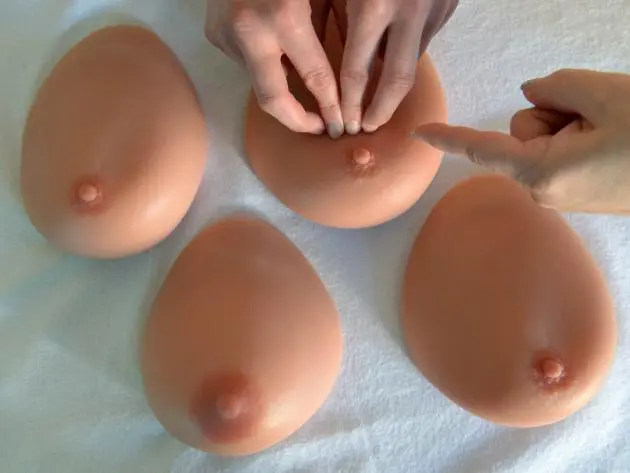
Her fingertips delicately work their way across a pair of silicon breasts as she demonstrates her sensitive pressing technique.
“This examination can take up to 30 minutes,” explains Silke Germersdorf, a 41-year-old medical tactile examiner, who can detect with her fingers alone the tumours and lumps which potentially indicate breast cancer.
She spent nine months in the German city of Halle learning to feel breasts properly. She has nothing but her hands to guide her, because she is blind.
The Vocational Training Institute for the Blind and Visually Impaired (BFW) in Halle has already held two training courses for blind women, according to a BFW teacher, Andre Kunnig.
One woman earned her qualification in the first year and another three, including Germersdorf, successfully passed their final exams last month. Other courses are due soon. The skill even has an acronym now, MTU, from the German words Medizinische Tastuntersucherin.
It was a gynaecologist, Frank Hoffmann, who first had the idea of exploiting blind people’s extra-sensitive sense of touch to carry our breast examinations.
He launched Discovering Hands at the BFW in the west German |town of Dueren in 2007, according to project spokesman Stefan Wilhelm. Now there are three more training centres in Mainz, Nuremberg and Halle.
Susann Arnold is one of the women who has decided to take the course. A qualified social worker, she suffers from cone dystrophy, which means she is extremely sensitive to bright lights.
She first experienced problems with her vision when she was aged 16, and the illness became worse during the course of her studies. Now, at the age of 35, she can only make out shapes when the light is less strong.
She sticks red and white stripes onto the doll on the stretcher in front of her.
“It works as a kind of grid,” explains Arnold. The tapes help her later to locate the places where she has found irregularities in the breasts. The coordinates are then entered into a computer spreadsheet.
“We give the data to the doctors, who speak with the patients,” she says. The MTUs do not give diagnoses.
In addition to the theoretical training in Halle, the women have also completed several internships in Halle and Berlin. “We’ve even examined men’s chests,” says Arnold.
According to recent figures from the German Cancer Research Centre (DKFZ), more than 70,000 German women were diagnosed with breast cancer across the country in 2010, and the trend is increasing.
But significantly fewer women are dying from breast cancer than 10 years ago.
For every 100 women diagnosed with breast cancer, according to the DKFZ, one man is diagnosed with it.
After their nine-month training, the women begin their work in Berlin.
“A new centre for medical tactile examiners was opened there in November,” says Kunnig. That’s where the women have been taken on.
Acceptance of the new profession is growing, he says, and according to Discovering Hands, 20 gynaecological practices and clinics are offering MTU examinations nationwide.
We can’t replace ultrasounds and mammograms, but we’re a good complement,” says Germersdorf,
Patients feel comfortable with the MTUs, she adds: “They feel like somebody is taking their time with them.”
She says that because of their superior sense of touch, the MTUs can often feel lumps that doctors, who also usually have less time to examine patients, tend to miss.
The 41-year-old is a qualified draughtswoman but 13 years ago she suffered a retinal detachment that left her unable to work in her chosen profession.
She was later operated on for cataracts, but then developed after-cataracts. Despite now being blind, the MTU qualification has given her a way back into the world of work.
