
How the 20th century sat


Play
A lifetime of iconic furniture designs by Charles and Ray Eames goes on show in Bangkok
Thier names might not be known widely across Thailand, but many Thais, especially the well-travelled ones, have more than likely rested their weary bones in one of their chairs.
Charles and Ray Eames revolutionised modern furniture design during the 1950s, bringing to the modern home a look that was playful and functional, sleek and sophisticated yet beautifully simple. Particularly remembered are the Eames Lounge and Ottoman, the famous moulded plastic chair, and their Lounge Wood Chair, which was lauded by Time magazine as the “greatest design of the 20th century”.
Now creators, designers and the general public have the chance to explore the inspirational stories of the husband-and-wife design team and reflect on their identity, philosophy and design spirit in “Essential Eames: Icons of 20th Century Design”, an exhibition co-hosted by Herman Miller and Chanintr Living at the Thailand Creative and Design Centre.
Architect Charles Eames (1907-1978) and abstract artist Ray (Kaiser) Eames (1912-1988) met at Cranbrook Academy of Art in Michigan in 1940, while Charles was head of the industrial design department and Ray a new design student. That fateful encounter set them off on a lifelong journey as partners in both life and design. With a grand sense of adventure, Charles and Ray turned their curiosity and boundless enthusiasm into creations that established them as a truly great design team. Their unique synergy led to a whole new look in furniture.
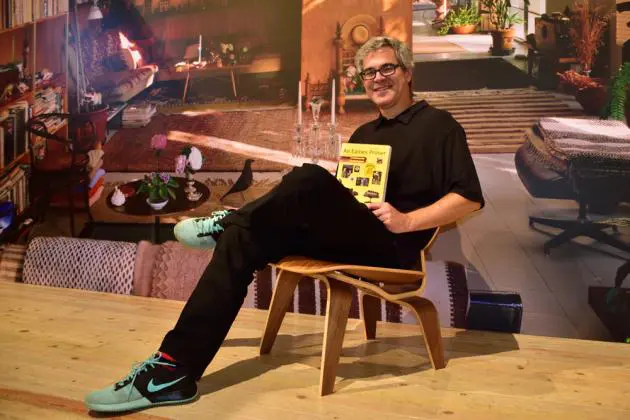
“I realised that people are familiar with the furniture, having seen it photographs and films, but don’t know the Eames name,” says Eames Demetrios, the couple’s grandson and author of “An Eames Primer”, who was in Bangkok recently for the opening of the exhibition.
“As beautiful as their furniture is, it is their ideas that I’d like to share with others. An exhibition is a great way to communicate those ideas to viewers around the world. We’ve designed it to be flexible for travelling and Bangkok is the sixth city it has been to,” he continues, adding that “Essential Eames: Icons of 20th Century Design” has enjoyed great success in Hong Kong, Jakarta, Tokyo, Shanghai and Singapore.
“Their philosophy was that in the world of design, you had to be a ‘good host’ and anticipate the needs of your guests,” Demetrios explains. “That’s a beautiful idea in so many ways. First of all, it underlines that the human being is the centre of the design process. The ‘good host’ standpoint is to make it affordable, comfortable, valuable and long lasting. It can be many different things and is not limited to one particular factor; in fact it encourages you to think about being a good host as much as possible. It’s also a very generous way to explain about design. It is not about the self-expression of the designer but the service to customers. The interesting thing about the guest-host relationship is that being a good host is very universal. I don’t think there is any culture in the world that does not have the sense of responsibility of host to guest. Thailand certainly has a strong tradition of being a good host to show off the best of its country.”
One section of the exhibition shows how the Eames’ concepts evolved over time, not overnight. As Charles noted about the development of the Moulded Plywood Chairs, “Yes, it was a flash of inspiration,” he said, “a kind of 30-year flash”.
Demetrios explains that his grandparents were not just designers but thinkers. “They thought through the process of creating. The authentic plywood leg splint that they produced for the US Navy during the WWII was an important learning experiment for them in using plywood to mould into the complex curve. So the flash was not literally 30 years. What he meant by that statement is that it takes a lot of work. Thirty years to keep making it better and better. The very first expression of the idea for the Plywood Lounge Chair happened in 1939. They didn’t just design it but figured out how to make it. They thought about the tools to use, not just the final product.”
After the success of Plywood Chair, the couple came up with the notion of making a very comfortable lounge chair that didn’t require lots of cushions. “They designed the modern version of the old English club chair and that became the Lounge Chair. It took two years to design and was constantly being refined. They always tried to make it better,” Demetrios says.
Another example of Eames’ philosophy is their belief in style. “When you talk about design, you talk about style. Charles and Ray thought that style often solved the design itself, meaning doing a good job. When we say we are trying to improve an Eames design today to make it eco-friendly, we realise that the original already was eco-friendly. For example, they were the first to use fibreglass. Then my grandmother and my mother became very concerned about the environment and insisted that the fibreglass chair be discontinued. It was only re-introduced when Herman Miller found eco-friendly fibreglass. It then took another four years until the eco-friendly fibreglass could be used for consumer products because we needed the colour to be exactly right. We honour their legacy.”
The Eames had many other interests beside furniture and indeed created many other masterpieces in the fields of architecture, exhibitions, toys and films that incorporate elements of art and science as well as design, functionality and aesthetics.
Visitors have the chance to see rare never-before-seen images, sketches and collector’s pieces from Herman Miller’s own archive, including a special chair designed for Pope John Paul II, a vintage fibreglass Eames shell chair and more 90 pieces of furniture designed by Charles and Ray Eames as well as 125 films including “Glimpses of the USA and “Powers of Ten”.
BACK TO BASICS
“Essential Eames: Icons of 20th Century Design” is at the Thailand Creative and Design Centre in the Emporium through June 28.
It’s open daily except Monday from 10.30am to 9pm. Call (02) 664 8448 extension 213 or visit www.TCDC.or.th.
