
Fighting the tuberculosis scourge


Play
How volunteers are helping to stop the spread of TB in Thailand's densely populated communities.
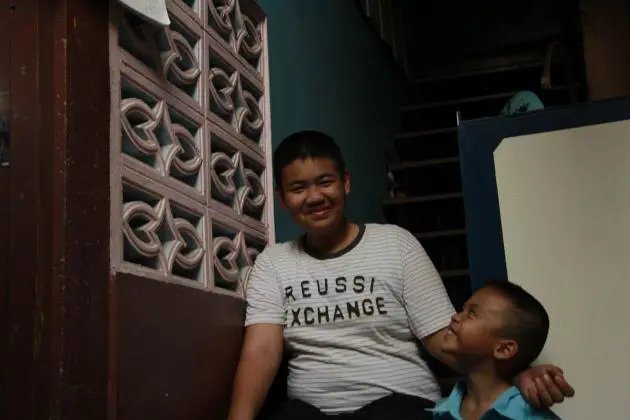
Name, 13, and his younger brother, eight-year-old Note, might be young but they are already well known to the other residents of the small community in Lat Phrao Soi 48. Neighbours regularly come to visit their home, a habit that is viewed with suspicion in this tightly packed settlement where drugs and crime are rife. But while the boys do indeed handle drugs, these are medications that save lives rather than endanger them.
The boys are playing an active role in the fight to stop the spread of tuberculosis (TB) in their community. They are learning their “trade” from one of World Vision Foundation of Thailand (WVFT)’s TB Direct Observation Treatment (DOT) health volunteers close to home.
That volunteer is their grandmother, Phitsamai, and she is arming the boys with crucial information to transform their community into a healthier place.
The role of a DOT watcher is to ensure that TB patients under the programme take the prescribed medications regularly. The watchers give a combination of TB medicines and a glass of water to a patient and check that the pills have been swallowed every day. This taxing daily routine goes on for 6 months, when a patient completes the entire course of medication and is rid of the disease.
“It looks easy but it’s not,” says Phitsamai. “Patients like to tuck the medicines at the back of their tongue then spit them out as soon as they are not being watched. They also need continuous follow-up to change their attitudes towards taking medication on top of their regular check up at health centres or hospitals.”
Patients failing to complete the treatment face even larger problems, among them developing resistance to the currently available TB medication.
The boys appear to have inherited Phitsamai’s volunteer spirit. “My family understands my work and is proud of what I do. My daughter and her two kids help out whenever they can,” she says.
Phitsamai is grooming Name and Note to become her assistants. “Right now, all they do is hand over the medicine packet I prepare and watch to see that the patient swallows the pills. It’s a big help.”
Name knows that grandma needs his help. Sitting in the eight-square-metre living room where they receive special visitors, he gestures towards a neat pile of brochures and says he learns from them.
Name’s community is home to some 500 families, who reside in cramped houses beside the black and turbid waters of Bangkok’s multiple canal system. Narrow alleys criss-cross the settlement and motorcycle taxis, bicycles, and people jostle for right of way reducing breathing space even further.
The overcrowding explains why inhabitants of congested areas like Lat Phrao 48 are especially vulnerable to communicable diseases. Since 2011 WVFT and its partners have referred 18,408 people suspected of having TB in 11 provinces for treatment and 1,175 Thais and migrants have been diagnosed with various variations of this highly infectious disease. The majority, 725, have pulmonary TB, the most widespread and contagious variation.
This notable achievement culminates from WVFT’s longstanding partnership with the Thai government, the Global Fund and other partners to reach, treat and cure TB cases since 2007. Last year, the NGO was recognised by the Bangkok Metropolitan Administration’s Health Department for its outstanding collaboration in the national initiative, “Bangkok Stop TB”.
“Community volunteers should take pride in the fact that they play a pivotal role in curing TB patients,” says Chitra Thumborisuth, WVFT’s National Director.
“WVFT’s success would not be possible without Khun Phitsamai and other volunteers who devote their time and resources to this cause.
“WVFT is working towards advocating for everyone, migrants and Thais alike, to have equal access to TB treatment and complete their medical regimen.” However the volunteers’ efforts continue to meet obstacles, largely because TB still carries a formidable stigma. A case in point is one TB patient under Name’s watch who prefers to take medications before daybreak.
“I have to give him his medicine package at 4am. He’s afraid that if other people find out about it, they will treat him as an outcast.
“I want to help grandma help her patients get well. So I told him that there’s no reason to fear. If he has the motivation to finish his medications, TB can be cured. Whenever I see a patient’s face light up, I feel good.”
Note is now following in his big brother’s footsteps. In between the homework and games, he joins Name on his rounds. “I watch what my brother does to the patients when grandma is busy,” the child explains.
Knowing the nature of TB, Phitsamai is also taking precautions. She has facemasks for her boys to use and makes sure all equipment is sterilised and segregated.
“Grandma always asks us how we feel and brings us to the health centre to make sure we are healthy,” Name says. The brothers are especially vigilant about learning more about TB and caring for the afflicted, lighting a flicker of hope in this densely inhabited community where children are at high risk.
“I hope TB is gone for good here,” Name says.
