
Standing in and bowing out


Play
Why proxy services are growing in popularity in Japan
The market for proxy services has continued to expand in Japan, with people wanting more and more tasks done for them. In recent years, that has even meant services that offer to read books and dote on your parents for you, a trend that has some people asking how much is too much.
Just what sort of people are using these services, and for what reasons? We took a look at the state of proxy services today.
Early in May, struggling to find a proper gift for Mother’s Day, I decided to turn to the Internet for advice and wound up on a page advertising “Parent support services for the busy person.”
Behind these proxy services is Kajitaku Co, based in Tokyo. Their offerings include the “Sparkling Clean Kitchen Package” and “Room Organisation Master,” with a pamphlet describing “unique gifts for Mother’s Day and Respect for the Aged Day.”
Kunio Natori, 37, who works for Kajitaku, received a request early in June for air conditioner cleanup at a home in the Tokyo. The elderly couple whose home he visited were delighted to receive such a unique gift from their child. Apparently, their son, whom they only see once a year, bought them the cleanup plan as a gift for Mother’s Day.
“The elderly prefer to receive gifts in the form of services to help them, rather than physical gifts,” says Natori. When the company was founded in 2008, the majority of its clientele consisted of bachelors and families with the financial leeway to hire such services. Today, however, close to 30 per cent of its business comes from gifts made to parents and relatives. In May, the company partnered with NTT East Corp to offer telegram and celebratory message services.
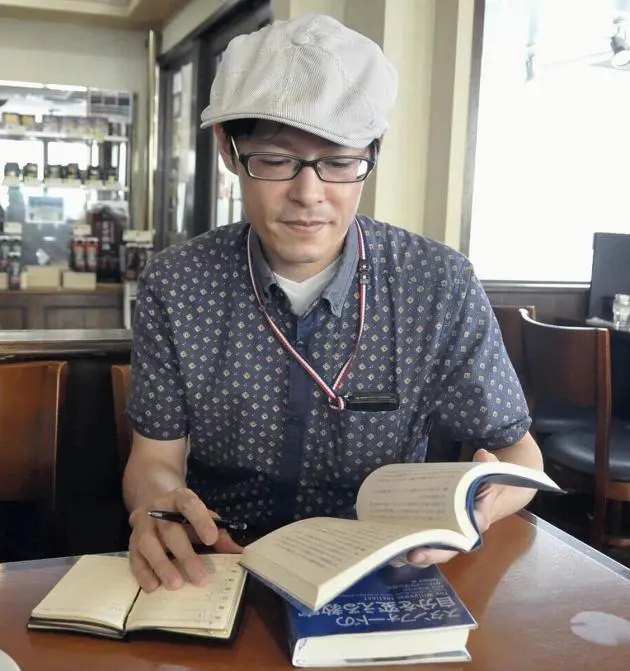
There is even a service that offers to read books for you and send you a summary. Hideshi Matsue, 40, a small and medium enterprise management consultant from Nerima Ward, Tokyo, started it four years ago.
Matsue obtains clients’ desired books from the library or bookstore, photographs key pages and takes notes while reading. Preparing a report takes time, so he only takes on one project a month.
In one case, the president of a company asked Matsue to summarise a business book that he wanted to use to train his employees. Another request came from a coach of a volleyball team needing a report on a self-help book. He wanted to convey to his team the importance of teamwork.
“People realise reading books themselves would be the best thing to do, but they’re just too busy. I offer this service for that sort of client,” Matsue says, adding that he refuses requests from students who want books assigned for their homework. “Young people should study,” Matsue says sternly.
Even local festivals are being kept alive by proxy services.
Cries of “heave-ho, heave-ho” were heard at a festival held at the Dairokutensakaki Shrine in Tokyo, on May 31. Three hundred bearers chanted as they lifted a portable shrine above their heads. Surprisingly, two thirds of these people were proxies. Almost 30 organisations and individuals from outside the area gathered to help hold the shrine aloft.
A member of the Miyamotocho neighbourhood association, Tsutomu Mamiya, 64, explains. “During Japan’s bubble era, people moved out of the area when speculators drove real estate prices up. That meant we lost people to hoist the shrines, so we turned to proxies.”
I also took part in the shrine-hoisting ritual. Everyone wore the same traditional hanten coat uniform, but the different proxy organisations in the group talked among themselves.
The roadside crowds were thin, with locals working behind the scenes for the festival. Even the conclusion of the festival, where the portable shrine was carried to its resting place in a larger shrine and a rite was performed to wish for the prosperity of the neighbourhood, was largely performed by non-locals.
Edo Saido, one of the participating proxy groups, got its start in 1979 as a coalition of “friends of shrine hoisting”.
“We began to get calls to help out here and there around the country. Today we do shrine-hoisting proxy work for close to 20 festivals a year,” Edo Saido’s honorary president Eiji Nagashima, 67, says,
There are also “wake proxy services,” where dedicated staff will attend a wake for you in the event of another person’s sudden death. There are also “apology services,” where personnel will bow and make formal apologies to customers with complaints.
There is even a “pilgrim service” that will make the Shikoku Eighty-Eight Shrine Pilgrimage for you. In this way, proxy services today are covering more and more areas, ranging from conveying your thanks to |family and clients to safeguarding local traditions.
As today’s world grows ever busier, there is no doubt that demand for such services will only grow, but contemplating the prospect of a world where everything can be ordered by proxy leaves one feeling something is somehow amiss.
