
In celebration of Krishna


Play
Sobha Deepak Singh brings the prince of Mathura-Vrindavan Krishna to the Delhi stage
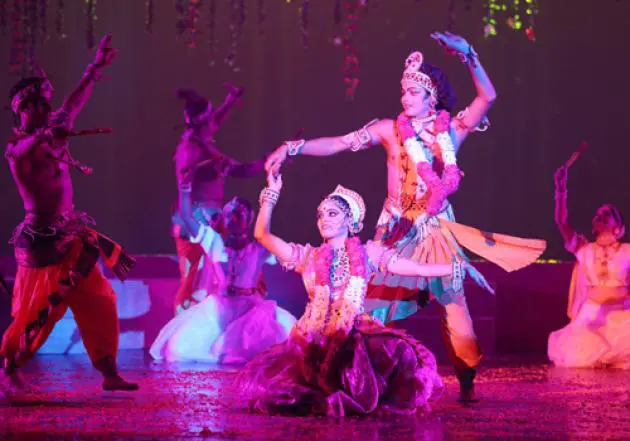
Every year, award winning Indian choreographer and dancer Sobha Deepak Singh brings the prince of Mathura-Vrindavan, as Krishna is known, to life with a dance ballet
Krishna – the icon of endearing childhood pranks and cauldron of immense wisdom, has been a motif force for Singh for the last 40 years.
Known as one of the pioneers in bringing Indian mythology to the masses through “natya abhinaya” or the traditional drama of the body, Singh splashes the stage with the resplendent colours of Indian classical ballet every September for at least five days to celebrate the enigmatic prince of Mathura – who sang, danced, serenaded lady love Radhika, performed “maya yoga” on devotees and moulded the realpolitik and the philosophy of the nation as the central protagonist of the epic “Mahabharata”.
This year is no different. Singh has opened the trove of her annual Krishna ballet at the Shriram Bharatiya Kala Kendra and the Kamani Theatre in New Delhi this week to portray the quintessential cowherd – Krishna’s early days in Mathura and Vrindavan before he took ancient Hastinapur (the central locale of the epic Mahabharata and now the modern day Delhi-Haryana) by storm – as an avatar of contemporary relevance.
The ballet coincides with the birthday of the lord celebrated across the country and the world on September 5. Mythology says Krishna was born of a deluge in a lonely cell to king Vasudev and princess Ketaki, who were incarcerated by the lord’s tyrannical maternal uncle Kansha, who feared a prophecy that an infant born to his sister Ketaki would be his undoing.
The spotlight of the ballet this year is on truth and its importance in the lores of the Krishna pantheon.
“Enunciation of the basic truths of life unfolds within Lord Krishna’s innumerable anecdotes, which emerge in the narration of his life’s tales, perpetually inspired, not only in their traditional context, but also their contemporary relevance,” the director explains.
The 40th edition of “Krishna” delineates between the Krishna of the Mahabharata and the butte- stealing baby Krishna, where the two independent entities merge into one. The ballet bestows a unique persona on the two beings.
The production presents Krishna as the beloved of Radha as well as an omnipotent being, where his presence exudes wisdom, dignity and infallible strength as enshrined in the “Bhagwada Gita”.
Singh presents all aspects of Krishna’s persona. Even in the presentation of violence in the battle of Kurukshetra, an epic war that Krishna scripted between two fraternal clans in Mahabharata, there emerges hope for eventual peace, despite the apparent chaos of the present as the war symbolises transcending the spans of epochs.
The dance drama uses mainstream classical Indian dance oeuvres like the Bharatnatyam, Manipuri, Kuchipudi, Odissi and Kathak, combining components from each of these with elements of the contemporary and conceptual body movements into a new indigenous body language that encapsulates the essence of the Indian modern classical dance ballet.
The uniqueness of the ballet is its designer costumes, which Sobha designs personally for the cast with traditional fabrics from her period collection of textiles, some as old as 500 years.
Singh’s annual repertoire is made up of “Karna”, “Meera”, “Shree Durga” and “Khajuraho”, all of which that have quietly “understood and withstood the strain of time” since 1969 when she presented her first mythological dance ballet in the Indian capital.
