
Complicit in the rape of Africa


Play
How can poverty prevail with all the oil and precious minerals underground? Greed, pure and simple, writes a clinically depressed witness
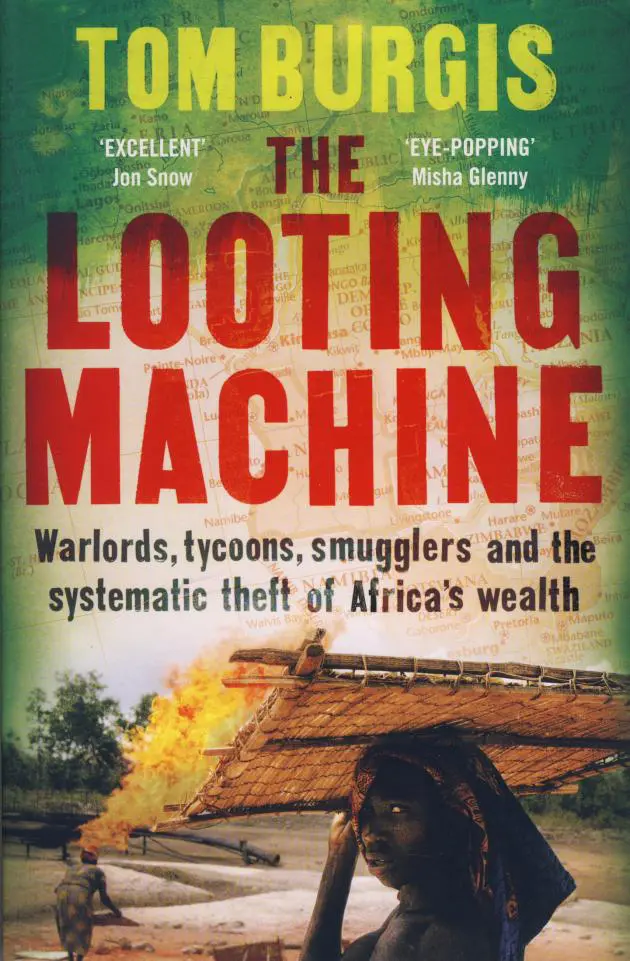
The Looting Machine: Warlords, Oligarchs, Corporations, Smugglers and the Theft of Africa’s Wealth
By Tom Burgis
Published by William Collins, 2015
Available at Asia Books, Bt650
Reviewed by Paul Dorsey
THE SUNDAY NATION
IT IS understandable if non-Africans finish reading “The Looting Machine” assured that most of the countries there are beyond hope, so deep runs the corruption, so devoted the foreign usurpers to extracting its sovereign wealth of natural resources. Author Tom Burgis does such a thorough job of documenting the chronic ailments afflicting these developing nations that it’s difficult to draw any other conclusion.
But Burgis has earned a measure of criticism to go along with all the well-deserved praise heaped on his book. We are reassured, notably by seemingly fair-minded Africans, that there are indeed positive transitions taking place beyond Burgis’ main focus. These are the champions of “Africa Rising” who point to envied growth rates in Gross Domestic Product.
For the author, though, such indicators of “growth” disguise the appalling inequality that chokes the resource-rich nations’ desperate need for social development. This is part of the “resource curse” afflicting countries around the world that fail to shore up mineral abundance with a broad domestic manufacturing sector to lift and keep their citizens out of poverty. The curse, Burgis writes, “is at its most virulent on the continent that is at once the world’s poorest and, arguably, its richest”.
Angola and Nigeria sit atop mammoth oil reserves, the Democratic Republic of Congo has a glut of coltan and diamonds, Guinea has bauxite, Niger uranium. And yet net income in these countries is among the lowest on the planet because all of the proceeds go to the multinationals that do the mining and drilling and – to a lesser but still shamefully lucrative extent – to the ruling elite. Meanwhile local industry collapses under an avalanche of imports. In South Africa, blessed with an array of valuable minerals besides diamonds, the gap between rich and poor appears wider since the end of apartheid, with black leaders simply replacing colonial whites at the feeding trough.
Burgis travels far to gauge the extent of the plundering, venturing to Europe and China in search of those who collude with the demagogues. A long-time Financial Times reporter, he is deft at analysing statistics, but he’s also a tough investigator – and a gripping writer.
His “toughness” in the field was severely tested when he witnessed the aftermath of a massacre in a Nigerian village in 2009. A year later he was mortally depressed and diagnosed with post-traumatic stress disorder. For Burgis, “The Looting Machine” is an attempt to “make amends” to the helpless victims of that slaughter by shedding light on the domestic greed and foreign complicity that cost their lives. Rival sides in Nigeria blamed the killings on each other, on tribal disputes, on ethnic and religious factors – but the sole cause was greed, he writes.
Foreign mining companies used to deliver US$4 million a week in cash-filled suitcases to DRC President Laurent Kabila. His constituents saw none of that money. Elections and support were easily purchased.
Burgis coaxes a frank admission of guilt from a former Nigerian governor: He needed the bribes for political survival. What’s not to understand?
If there are lessons for Thailand to be read into these revelations, there is also the dire spectacle of the current epic migration of asylum-seekers. Many of them are fleeing Africa, pawns in a high-stakes chess game played by super-corporations and rulers who cannot be prised from power.
It is tempting for outsiders to shrug, but Burgis will let no consumer anywhere in the world get away with apathy or resignation. The big companies that bribe dictators in exchange for contracts to gobble African resources also do daily business with each of us. He catalogues the mundane items sold in his London neighbourhood that rely on African resources, from petrol to mobile phones, all delivered across the same seas that African refugees seek to cross in their leaky boats. “Don’t think you’re not involved,” he says, quoting Nigerian singer Nneka.
The World Bank takes a bashing, along with British, French and American energy giants. Beijing is at pains to distance itself from Chinese corporations working privately in Africa, but Burgis detects links nonetheless. He zeroes in on entrepreneur Sam Pa, founder of a clandestine, Hong Kong-registered syndicate identified as the Queensway Group. If Beijing is at least doing some good for the people of Africa, Pa – well-connected to the leadership of several African nations – has engineered a slew of deals that benefit only him and them, all the while heedless of how oppressive or criminal are his partners.
“To mine is not necessarily to loot,” Burgis writes by way of suggesting a way out of this mess. He joins rights activists in calling not for withdrawal from corrupt territories but for responsible engagement. These countries will always depend on oil and minerals for their income, but perhaps they can be coaxed through sterner contracting into the light of equitable wealth distribution and greater transparency. Hopefully the foreign companies – and Chinese firms in particular – will also see the light
