
Get your sushi sorted


Play
It’s easy to make, a Japanese master of the craft explains in Bangkok, and just as easy to make terribly
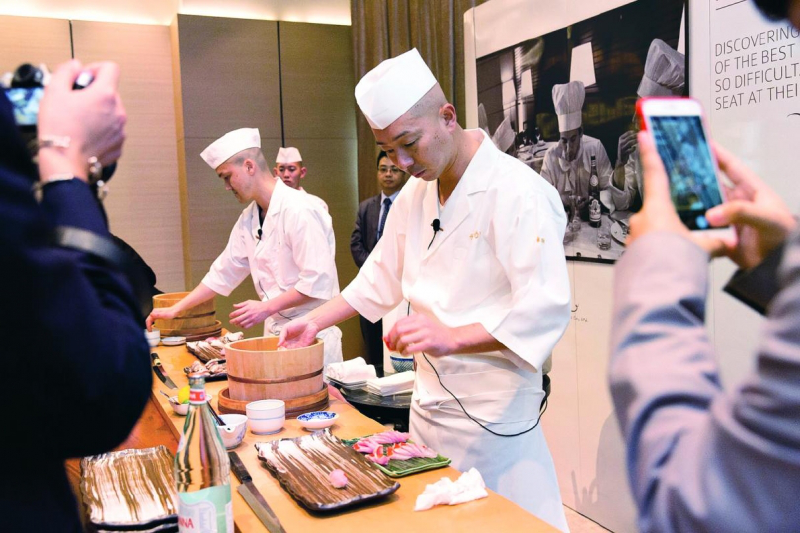
THE SECRETS OF making fine sushi were revealed in the latest S Pellegrino “Fine Dining Lovers” event at the Okura Prestige Bangkok, where Shinju Kanesaka – a chef with two Michelin stars to his credit – added pointers on pairing sake to food.
Kanesaka has spent more than half his 43 years honing his craft. The sushi shokunin – sushi artisan –opened the restaurant Sushi Kanesaka in Tokyo’s famed Ginza district in 2000, the youngest sushi chef in Japan to do so. It’s a magnet for aficionados, including many elite customers.
Now he’s got another spot with a Michelin blessing, Shinji by Kanesaka in Macau, where in his kitchen he expresses his belief that dining on the best sushi, created and presented with art and soul, is a holistic experience.
For the Bangkok master class, Kanesaka brought along his protege Toru Osumi, head chef at Shinji by Kanesaka at the Crown Towers in Macau’s City of Dreams resort.
“You might be surprised that this meticulous dish was regarded as fast food during the Edo Period,” Kanesaka said, referring to the segment of Japanese history from 1603 to 1868.
“A sushi eatery in those days was very simple. People came in for a quick lunch, a few easy bites, before heading back to work. Over time sushi has evolved into a speciality of Japanese cuisine, and although it’s very easy to make, it’s also a dish that can be easily made terribly!”
We also learned that the rice and the fish are equally important, even though the perfect proportion is 60 per cent of the former, 30 per cent of the latter and the rest wasabi or other seasoning, if any. Plus, you need the hands of a sushi chef. Even with the exact same ingredients and environment, Kanesaka said, different chefs can come up with very different-tasting sushi.
“Of course having the freshest ingredients is ideal, but that’s only half of what’s required. The preparation and the execution are also crucial. We look hard for the best ingredients and we train very hard. You need to train for at least 10 years. You have to learn not only how to make sushi but also how to prepare and match the fish and the rice, and there are many, many kinds to choose from.”
Our hard training was rewarded by exceptional food straight from the hands of Kanesaka and Osumi.
The first bite was yellowtail paired with Kokuryu Jungin sake. The sushi was seasoned with just a touch of freshly grated wasabi and shoyu to preserve the natural sweetness of the fish and the fragrance of the rice.
A lightly floral and sweet sake, Kokuryu Jungin bears the natural flavour of Gohyakumangoku rice from Fukui. It didn’t overpower the fish but rather brought out its sweetness.
Next up was a slightly more heavily seasoned shoyu of marinated lean tuna sprinkled with yuzu zest. This flavourful, slightly tangy and salty bite was matched with Kokuryu Daiginjo Ryu made with polished rice to yield a more elegant, perfumed aroma and more finesse.
The mildly sweet sake is ideal for any naturally sweet food, while its light and aromatic character enhances citrus notes in the sushi, making it a very well balanced combination.
Finally there was baby sea bream with a drop of sudachi lime on top. This mouth-watering morsel came with Kokuryu Tokugin, which has graceful aroma and clean taste to balance the slight tang of the vinegar-infused rice and the lime, brightening the dish.
“Look for a sake that’s less powerful than the sushi so that the drink will complement the food and not overshadow it,” Kanesaka explained. “And, if you can find a sake that uses that same rice as the sushi, that would be ideal.”
