
Xoan singing is back from the brink


Play
Vietnam will be asking the UN to lift the folk art from “urgent protection” status
Vietnam is hoping Unesco will help it reclassify xoan singing from an “intangible cultural heritage in need of urgent protection” to an “intangible cultural heritage of humanity”.
The protective nature of the classification dates to 2011, but Vietnam last year submitted a report to Unesco stating that the traditional form of folk singing has seen a revival thanks to efforts undertaken in Phu Tho province. The country is now awaiting guidance from the UN agency.
“There are two possible ways forward,” says Pham Sanh Chau, secretary general of Unesco Vietnam. “One, Vietnam has to submit an application to remove xoan from the list in need of protection and then resubmit it as an ‘intangible cultural heritage of humanity’, or, second, Vietnam simply submits a request asking Unesco to recognise it as such.”
The delegates of most countries that are members of the Convention for the Safeguarding of the Intangible Cultural Heritage have agreed to support Vietnam in its bid, says Chu. Experts are now preparing a fresh application ready for submission before March 31.
“The National Cultural Heritage Council will organise a session to approve the new document,” says Professor Luu Trau Tieu, its chairman. “It will be submitted to the relevant Vietnamese authorities before going to Unesco.”
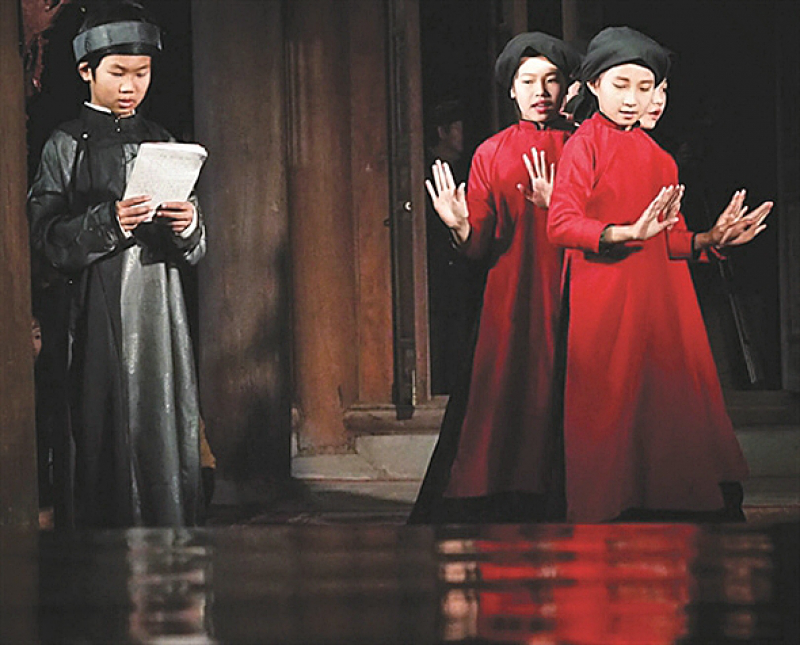
Xoan singing originates in northern Phu Tho province and is annually performed in front of communal halls at spring festivals. It is said to be 4,000 years old, dating to the time of the Hung kings. As well as a form of entertainment, it honours the land and the founders of the nation, appeals for good weather and harvests, and depicts the daily life of rural areas. Despite performances at the annual Hung Kings Temple Festival, xoan singing had been at risk of disappearing, with few younger people even aware of its existence. Its listing as a part of cultural heritage in need of urgent protection drew attention to its plight, however, and authorities in Phu Tho set about preserving it.
“The popularity of xoan singing has gone up and down and for a while it was at risk of dying out, but it never faded away completely,” says Phu Tho deputy chairman Ha Ke San.
In 2010 there were 13 xoan singing clubs with less than 300 members in Phu Tho, he says. By last year there were 30 clubs and 1,000 regular members, with hundreds more people expressing interest in joining. Promotional activities carried out by mostly elderly singers helped popularise some of the folksongs among younger people. This included 51 “Distinguished Xoan Artists” being honoured between 2012 and 2015.
And in 2013 the local People’s Committee ran a 165-billion-dong (Bt259-million) project on “Maintaining and Developing Intangible Cultural Heritage of Humanity – Xoan Singing in Phu Tho in 2013-20”.
