
When stress is unavoidable


Play
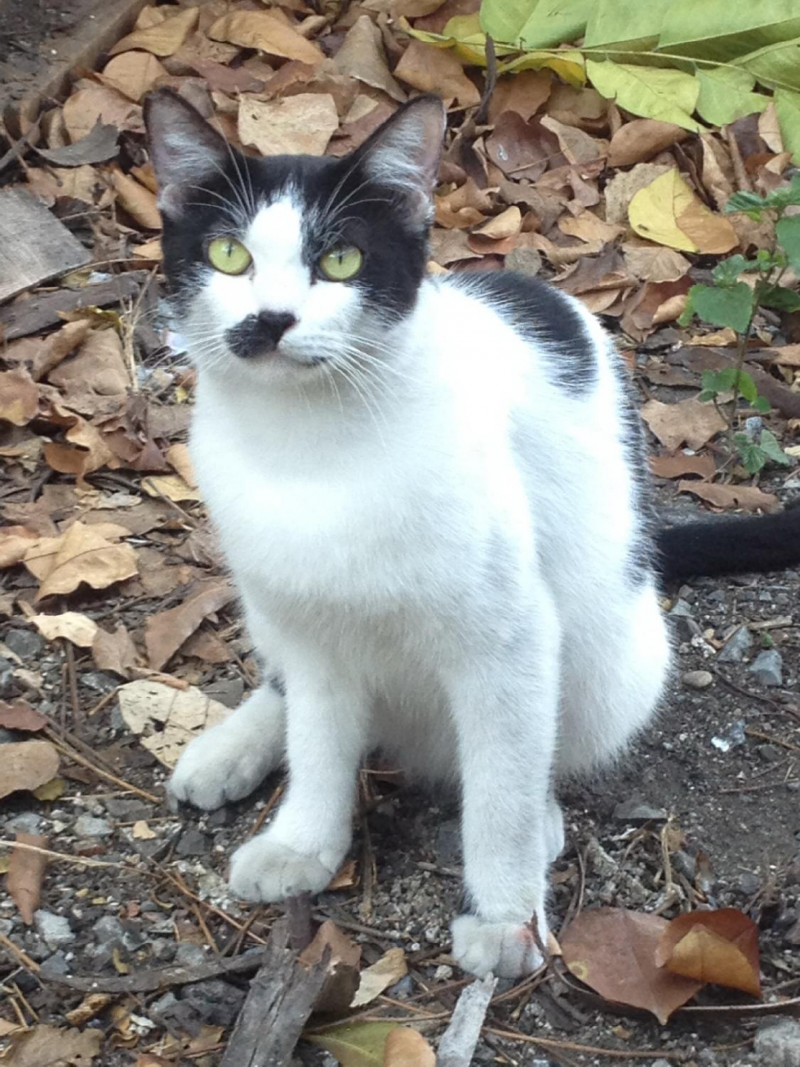
Wild child Manohra shows another side of her personality during her frequent stays at the vet
WHENEVER ONE of my animals has to stay at the vet’s for a few days, I mention some personality traits that might help treat the animal and also reduce the animal’s stress.
For example, one of my cats is terrified of humans and needs to be kept in a cage as far away from people as possible. Another cat cannot bear solitude. The closer he is to people, the better he feels.
The clinic staff already know my poodle-pup Wan-Wan. Even when she’s sick, she needs attention, a little play-time that always brightens her up.
Then we have Manohra, the Wild Child. At home, she’s a sensitive cat, quick to react to any other animal (or even human) who invades her space. She spends her time guarding her territory, but since her territory always changes according to where she’s decided to sleep, no one – no cat, no dog, no human – ever knows when she’s defending herself or when she’s just hungry.
Even a change in the usual schedule can send her into an aggressive mood. If I over-sleep by a few minutes, or get up a few minutes early, if a contractor is doing some work in the house, she becomes irate, screaming mainly at Yoyo, whom she hates. These are the times, by the way, that she’s more likely to bite me if I try to pick her up.
During the times that she’s not defending territory, she’s a sweet-natured cat, happy to have an ear or chin scratched.
When her screaming lasts more than a few minutes, though, she starts coughing, a deep, terrible cough that is sometimes so bad that she can hardly breathe.
Usually, when I hear a cough like Manohra’s, I take that cat or dog to the vet’s. It sounds too much like a very bad lung infection, one that will only get worse without treatment.
At first, it was easy to take Manohra to the clinic. I’d just plop her in a carrier, find a taxi, and off we’d go.
As she’s grown older, though, she knows what I’m going to do. I pick her up; she twists her body to the right, to the left, and suddenly, she’s on the floor.
She’s also grown even more sensitive. In the taxi on the way to the vet’s a few months ago, she suffered such a bad panic attack that she was barely breathing by the time we reached the clinic. Her trip on the back of a motorcycle was even worse. She nearly died.
It was fright, I think, that triggered the panic attack and affected her lungs. The vet, however, hasn’t seen Manohra at home, where her breathing seems normal except for that coughing after a confrontation with another cat.
“You must be doing something wrong,” my vet tells me.
“Just be careful,” I respond. “This cat is difficult to hold.”
No. At the clinic, the vet tells me, “Manohra is one of the most polite cats we have. We can do anything with her.”
Well, they don’t see her when she’s yelling at Yoyo, or when she’s protecting her territory. At the vet’s, she’s in a cage by herself. She has no contact with other animals, and she certainly doesn’t have territory to claim.
At home, I could put Manohra in a cage, just like at the clinic. She couldn’t wander around the house the way my other animals do and she couldn’t attack anyone else in the house.
Gradually she would stop trying to escape. She would accept her life in a cage.
She would also lose that spark that makes her Manohra. Forced to live in a cage would destroy this little cat’s spirit.
There must be another way to maintain peace and health – for everyone.
