
Sensational tastes of the past


Play
New restaurant Saneh Jaan does ‘heritage cuisine’ like no other
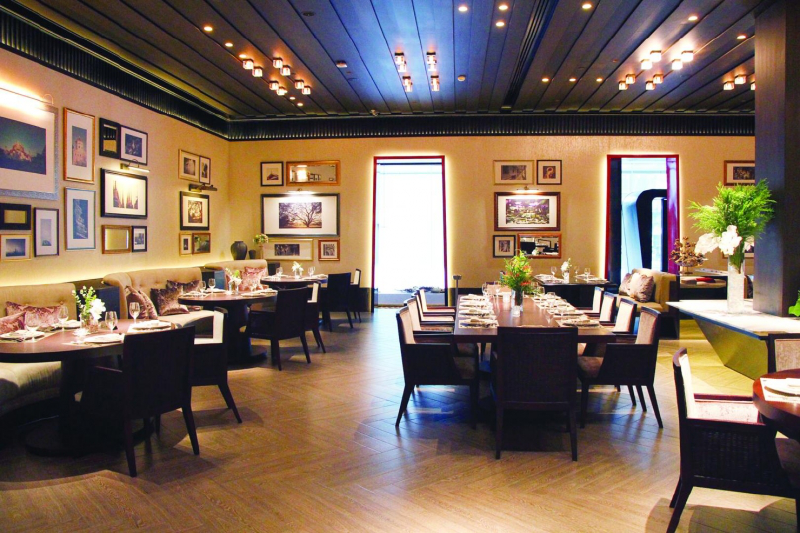
THE FOOD is classic Thai, the room is early 20th-century European and the photos on the wall are very much Old World Siamese – the Grand Palace and Golden Mount as they were in the Rattanakosin Period, the elaborate interiors of throne halls.
This is the charming new restaurant Saneh Jaan on Bangkok’s Wireless Road, which evokes the days of King Rama V with its decor and traditional music, along with European influence with its bone china and silverware. The menu too is transported from yesteryear.
The name Saneh Jaan is borrowed from an “auspicious” sweet.
Food connoisseur Chalaluck Bunnag, chief executive at Siam Sindhorn, has set up the restaurant in his firm’s Sindhorn Tower, in the refurbished “Glasshouse” out front that also boasts his bistros Cafe Parisian (French specialities), Cafe Milano (Italian) and CigarOne (for a good puff).
The customers are corporate executives, staff from the nearby American and Dutch embassies and neighbourhood office workers. They have 540 square metres to share, with seating for 150 plus three private rooms. The lounge opens an hour before the restaurant and serves snacks and aperitifs.
“Even with all the Thai restaurants around town, it’s not easy finding one that’s elegant enough for those special guests and foreign friends looking for the old, authentic Thai taste,” says food-and-beverage manager Premrudee Chairungruangsin.
“Here we have food gurus Pawinee Lamaikul and Torroong Jarungidanan as our consultants, helping set the menus, and several of the classical dishes come from Bunnag family recipes.”
Chef Phatchara Pirapak honed her formidable skills in Thai-food kitchens with the cuisine maestro Chumphol Jangprai. She’s a stickler for detail and insists on only the best ingredients.
The glass noodles, dried rice noodles and black bean curd come from Kanchanaburi, the shrimp paste from Klong Kone in Samut Songkram, the palm sugar from Phetchaburi, and the dried salted fish from Tak Bai in Narathiwat.
The staff grows its own vegetables organically on Bangkok’s Soi Tonson and pounds the curry paste by hand (no electric blenders here).
A marvellous meal might start with Hor Mok Plachon Na (steamed curried fish wrapped in banana leaves, Bt400). Boneless fillets of snakehead fish are kneaded with coconut cream and curry in an earthenware pot to a cream-like texture before steaming.
Khai Palow (five-spice egg with pork, Bt280) entails hard-boiled eggs and tiny chunks of caramelised pork belly braised for three days with Chinese five spices, black soy sauce and palm sugar.
“We use only the belly of young pigs because there’s less fat,” says Phatchara, a graduate of Suan Dusit University’s School of Culinary Arts. “Pawinee cooks the black bean curd that’s also added, simmering it slowly on a charcoal stove with the soy beans.”
Gaeng Runjuan (hot and spicy herbal pork soup, Bt380) is the perfect combination of sweet, spicy and sour. It’s a century-old recipe, said to have originated in the palace of Rama V – leftover shrimp-paste dip cooked in a broth of beef, lemongrass, onion, holy basil, garlic and chilli.
At Saneh Jaan, with modern preferences in mind, they replace the beef stock with another made from baby back ribs, but you can still have it made with beef or fish stock.
Another rarity is Kanom Jeen Saonam (rice noodles with coconut milk, Bt450). Kanchanaburi noodles are chewier and yet still soft, Phatchara finds. She presents them with sweet and sour chopped pineapple, sliced garlic, ground dried shrimp, julienned young ginger, and an egg that’s not quite hard-boiled.
The sauce, served separately, is coconut milk, coriander root and som saa (Seville orange) with small fish balls.
Gai Baan Khua Bai Jan (free-range chicken with cumin-leaf curry, Bt550) is an old-fashioned northern dish. The chicken is cooked with red curry, chicken stock and coconut cream, with fiery results.
Mee Krob Goong Mae Nam (sweet-and-sour crispy rice vermicelli with grilled giant freshwater prawns, Bt750) has more of that expensive som saa adding piquancy. The noodles are served with bean sprouts, Chinese chives and raw banana flowers.
Other Bunnag family recipes are Yum Woonsen (spicy glass-noodle salad, Bt380) and Khai Jiew Gak Moo (omelette with pork crackling, Bt280).
“You blanche the noodles and add fried garlic immediately,” Phatchara says of the first dish. “Then shredded pork and pork liver are seared with coriander root, garlic and pepper, and finally seasoned with fish sauce, lime juice and palm sugar.
“For the omelette, the recipe requires six eggs seasoned with soy sauce and a squeeze of lime and beaten 50 times with a fork. Then it’s fried on low heat for 15 or 20 minutes, until it’s fluffy and soft.”
Among the many tempting desserts, the obvious highlight is Saneh Jaan (Bt250), for which the restaurant is named. It’s made with steamed mung beans ground with coconut cream, palm sugar and egg yolk.
Another little-seen traditional dessert is Som Chun (Bt350) – assorted seasonal fruit in bitter orange som saa syrup with shredded ginger and golden-fried shallots.
And Khao Niew Durian (Bt400), intriguingly, doesn’t have its gan yao durian, sweet sticky rice and coconut milk all in one bowl, but rather arranged separately.
DINING UNDER GLASS
Saneh Jaan is in the Glasshouse at Sindhorn Tower on Wireless Road.
It’s open daily for dinner from 6 to 10pm, while the bar lounge is open from 5 to midnight.
Book a table at (02) 650 9880.
Find out more at www.Sindhorn.com/glasshouse_overview/Saneh-Jaan.
