
From screen to STOMACH
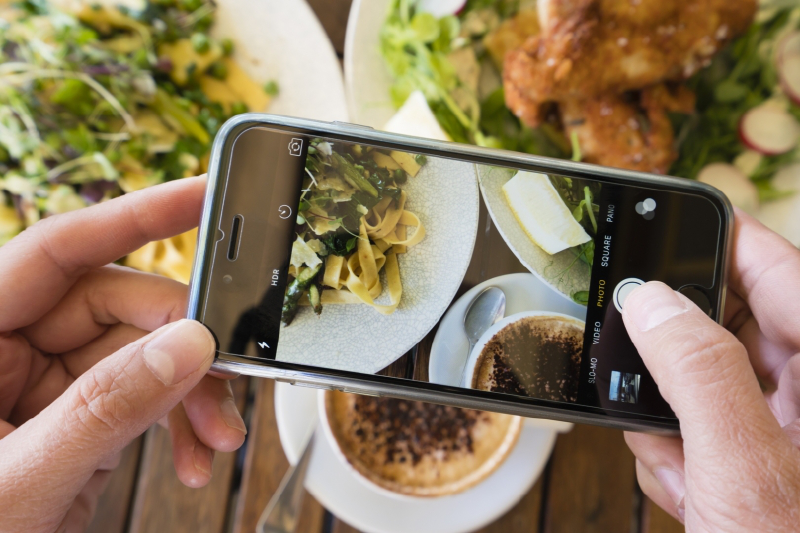


How Indonesia's trendiest restaurants and catering start-ups are using social media to spread the word
ACCORDING TO A recent report, Indonesia has 79 million active social media users and 88.1 million active internet users out of a total population of 259.1 million – and the figures rise every month. Th growth in social media users attracts young entrepreneurs who want to utilise these free public channels to market their products, including those from the culinary world. Chefs, food busines start-ups and restaurateurs are sharpening up their digital marketing skills to cater to new customers who want nothing more than to receive information via social media.
The Jakarta Post talks to five entrepreneurs using these marketing tools to great success.
Holycow by Chef Afit
Afit Dwi Purwanto and his wife, Lucy Wiryono, are pioneering Indonesian culinary entrepreneurs who utilise social media to promote their ever-growing steakhouse chain, Holycow by Chef Afit.
After six years in operation, the restaurant’s popularity is in part due to its clever use of social media. With more than 54,000 followers on Twitter and almost 13,000 followers on Instagram, the steakhouse has confirmed |itself as one of the most-followed food business accounts on social media.
“Holycow’s creative marketing gimmicks actually started from a lack of money,” Lucy says. “When we started out in 2010, people were not really into Twitter yet. Afit suggested promoting Holycow via Twitter because it required zero budget.”
But however close the couple are with social media in marketing their business, it’s their low margin model that has made the restaurant so successful. They offer premium wagyu beef at 20-per-cent of the price at comparable eateries.
Holycow’s success triggered Lucy and Afit to start other food businesses such as Loobie Lobster, The Holyribs and their most recent venture, Flip Burger and now they are planning to expand into Japan.
Markobar
Martabak Kota Barat, or Markobar (Indonesian pancake) was the first business owned by the son of Indonesia’s current president, Joko “Jokowi” Widodo. However, Gibran began his adventures in the food industry through Chilli Pari Catering, established in 2010.
Gibran, an alumnus of the Management Development Institute of Singapore, says he created the catering company was because my parents owned a meeting hall but not a catering company. When people marry, their biggest cost is in food or catering.
In 2015, Gibran used the money he had gained from Chilli Pari and bought some shares in Markobar, a local pancake business founded by Arif Setyobudi’s parents back in 1996. After Arif took over the business in 2014, Markobar started appearing on social media. After Gibran joined the business, he contributed to the business’ renewal in packaging and digital marketing.
With followers on Instagram, Facebook and Twitter numbering 57,600, 4,586 and 28,600, respectively, Markobar is becoming famous among an entirely new audience from all over the country. It also helps Chilli Pari in its business expansion through cross-promotion using each other’s social media channels.
Of the social media outlets, Instagram has been the highest-performing platform. “People will automatically take a photo when they buy (martabak). It is the fastest to go viral,” he says.
Currently, Markobar’s favourite pancake is the eight and 16-flavour martabak, which was inspired by the shape of a pizza pan, topped with premium chocolates, a green tea flavour and a variety of sweet toppings. The starting price is 40,000 rupiah (Bt110) for a single topping.
The Halal Boys
Founded in May 2015, The Halal Boys, which offers spiced or biryani rice topped with chicken or lamb, pita bread and lettuce is not looking to be just another street food outlet in Jakarta. “The initial plan was to create street food, but we do not want to be like the other outlets on the side of the streets with just tents and chairs,” says co-owner Astrid Angeline.
“We want to create food that is convenient or easy for people, especially professionals who are on the move. We basically want to create a culture where people can see our food as a lifestyle.”
In less than 18 months, the eatery has expanded to three locations in Jakarta and one in Bali. Its food truck can also be found at local bazaars and private events. Shortly after its opening, The Halal Boys made it onto Go-Food’s top five most-ordered foods and in 2016 it officially became makanan pereda ngambek (food to calm your bad mood) on Go-Food’s Save the Date competition held by famed delivery service app, Go-jek.
The popularity of The Halal Boys is mainly because of the success of its online marketing strategy.
“I think a lot of people now are focusing on social media and online apps,” says Astrid, adding that Instagram was the platform they used the most.
The Halal Boys is also planning ahead, including in the realm of franchising.
“Hopefully, in the forthcoming year, we're going to start selling franchise opportunities to other people who are interested in buying them,” Astrid says.
Black Garlic
Black Garlic baptised itself as the first “food materials” catering business in 2015.
“The idea of Black Garlic is a place that provides food materials, with everything measured out, processed and packaged individually, so that the cooking process at home is much faster,” chief executive Michael Saputra explains.
Instead of providing ready-to-eat meals, the business focuses on providing its customers with MSG-free ingredients to be cooked at home. Among its menus are ingredients for main courses, breakfasts, desserts, as well as children’s lunches with starting prices of 60,000 rupiah for two people and 100,000 rupiah for four.
Customers are able to access the continuously changing menu on Black Garlic’s website, as well as choose delivery schedules before placing an order online. To make it easier for customers to cook in the comfort of their own homes, each food material comes with a usage label, step-by-step recipe and seasonings.
“Through Black Garlic, I want to be able to share with other housewives that cooking can be fun and it doesn’t need to create stress,” says chief production officer Olivia Wongso, daughter of renowned culinary expert William Wongso.
The start-up has its menus supervised directly by William and has always leaned more toward a digital marketing strategy.
In addition to using social media to promote Black Garlic’s services, Michael and his team also utilise technology to analyse customer behaviour. The business is mostly active on Instagram and Facebook and currently has around 24,200 followers and 26,600 likes, respectively.
Skinny Misses
For those tired of tasteless diet food, a new gourmet diet catering service seeks to deliver premium calorie-controlled yet appetising meals like bulgogi bahn mi or honey soy and lemon-grilled salmon straight to your doorstep.
Based in Jakarta, 3 Skinny Minnes was founded by best friends and business partners Tana Suwardhono, Reina Wardhana, Putri Hardiman Alamsyah, Dian Sastrowardoyo and Jessica Halim. The idea came to them as they grew tired of losing weight by enduring diets and tasteless meals.
As the owners liked cooking, the idea of cooking their own meals came up, followed by food exchanges between themselves, friends and family. “It’s more like: ‘this works for us, and we are sharing it with you all, and hopefully it works for you’,” Tana says.
Up to 10 diet packages are currently available such as Regular Package, Breastfeeding, Maternity and Lean Mean Boyfriend, with prices ranging from 1,500,000 to 1,750,000 rupiah. Although there are chefs who help in the kitchen, Tana is the one who creates everything from scratch.
Putri manages the company’s social media presence. She said Instagram had become the most effective way of attracting customers. “I love managing our Instagram account because it's us, it's our product and I don't have to style it too much or make it too corporate,” she says.
Although Instagram still serves as the company’s main social media platform, 3 Skinny Minnies recently joined in the Snapchat hype and Steller. “I think it will tell the story of 3 Skinny Minnies in detail so people will know us better,” says Reina. “But like writing a book, it will consume a lot of time. However, we want to do it someday.”
