
Art keeps Roppongi busy all day
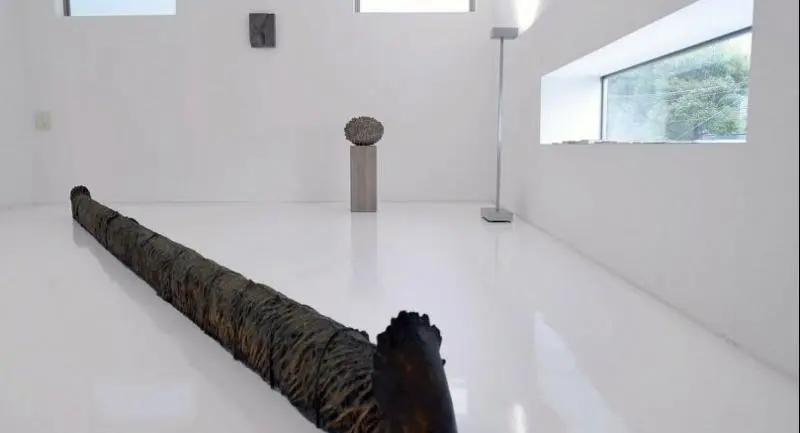


Tokyo’s famed nightlife district now has another claim to fame as galleries mass along its streets
Tokyo's Roppongi entertainment district is morphing into an art hub. Last October’s opening of Complex665, which houses three influential galleries, underlined how the area is bolstering its appeal to art lovers.
The three-storey complex is home to the Tomio Koyama and Taka Ishii galleries and ShugoArts, whose artist rosters include Mika Ninagawa, Yoko Ono, Daido Moriyama, Nobuyoshi Araki, Ilya Kabakov and Yasumasa Morimura.
The Piramide Building across the street is home to Ota Fine Arts, Wako Works of Art and the Zen Foto Gallery. Galerie Perrotin, with which Takashi Murakami is associated, will move into the Piramide this year. Based in Paris, it already has branches in New York, Hong Kong and Seoul.
The concentration of galleries is expected to make the Tokyo district a leading destination for contemporary art.
Complex665 came about after the developer, Mori Building Co, invited well-known galleries to move into the building and dictate what they wanted in the facility.
Tomio Koyama, who moved his gallery from the Kitasando district in Tokyo’s Shibuya Ward, points to Roppongi’s convenient location, which he expects more visitors. “By relocating here we hope to boost the image of Roppongi as an art district,” Koyama says.
“Roppongi has added a new dimension as an attractive area to visit during the daytime, rather than just a nightlife entertainment district,” notes Fumio Nanjo, director of the Mori Art Museum in Roppongi.
It was the Mori – founded in 2003 high up in the Roppongi Hills Mori Tower, part of a Mori Building redevelopment project – that became the leading force for giving this district the image of an art hub.
Beginning in 2007, the National Art Centre in Tokyo, the Suntory Museum of Art and 21-21 Design Sight followed suit. Their openings made Roppongi the primary place to see not only contemporary art, but also famed works of Western and Japanese traditional art and design, broadening the variety on offer.
The art institutions and local retailers have pooled resources on a “Roppongi Art Night” almost every year since 2009, bringing in about 700,000 visitors annually.
Perhaps thanks to the art on view, the number of foreign visitors more than doubled in recent years. A Japan National Tourism Organisation survey found that 15.9 per cent of tourists included Roppongi on their itinerary in 2008, up from 7.9 per cent in fiscal 2006.
One of the main beneficiaries has been the Suntory Museum of Art, which moved to Roppongi from the Akasaka-Mitsuke area of the same ward. In the 10 years through last October, 4.3 million people have visited, almost tripling attendance at its previous location.
Ueno is the traditional spot in Tokyo for art lovers, with a number of major museums, including the Tokyo National Museum and Tokyo Metropolitan Art Museum. Now they have competition.
“Roppongi is becoming an art spot comparable to the Ueno district,” says Tetsuji Katsuta of the Suntory.
“If people in Japan and around the world recognise the district as a must-visit place to discover the Asian art of today, it will be a key to help the area prepare for more tourists during the 2020 Tokyo Games.”
