
Looking back in wonder
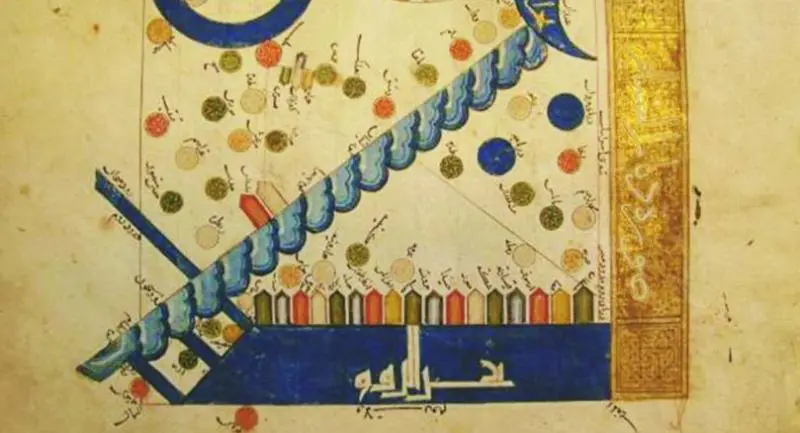


A Unesco exhibition offers a dazzling glimpse at rare and endangered heritage
Postponed from last year in order to provide space for a commemorative exhibition honouring the late King Rama IX, the United Nations Educational, Scientific and Cultural Organisation (Unesco) will tomorrow launch the exhibition and book “Memory of the World: Documentary Heritage in Asia and the Pacific” at the Bangkok Arts and Culture Centre.
Celebrating the rich, diverse heritage held in the region’s archives, museums and libraries, the show will be officially opened by Misako Ito, Head of the Communication and Information Unit, Unesco Bangkok at 3pm. His opening remarks will be followed by a keynote address from Dr MR Rujaya Abhakorn, Goodwill Ambassador to Unesco’s Memory of the World Asia and Pacific.
Unesco established the Memory of the World programme in 1992 to safeguard and facilitate access to documentary heritage of world significance, especially material that is rare and endangered.
The free exhibition presented in Thai and English coincides with the launch of an illustrated book of the same title jointly published by Unesco and Cloud Publication, from which dozens of images and material will be on view.
The documentary heritage includes manuscripts, books, newspapers, posters, drawings, prints, maps, music, films, discs, tapes, photographs, Web pages and databases.
Among the fascinating items on display are the “Kitab Ilmu Bedil” (“The Book of Malay Traditional Weaponry”), a 16th-century encyclopaedia of traditional Chinese medical material and wood block-printed Buddhist scriptures from Korea, dating to the 13th century.
From Bangkok come the epigraphic archives of Wat Pho, comprising 1,431 stone inscriptions from the early 1830s on both religious and secular |subjects. The celebrated “King Ramkhamhaeng Inscription” will also be on view.
And from Indonesia comes a “Description of the Country” written on palm leaves in 1365.
Unesco director-general Irina Bokova says the Asia-Pacific region “has always been a cradle of civilisation, at the forefront of human ingenuity and innovation”.
“Just as cultures vary greatly, so does the documentary heritage of the region,” she says. “Taking myriad forms, this heritage reflects the wealth and fragility of cultures large and small, past and present. Opening a window onto the past, this heritage carries values and knowledge that are essential for understanding the present.”
Visitors to the exhibition can examine “moments of historic change” – the invention of moveable metal type, the compilation of the medical knowledge of antiquity, the invention of the modern feature film and the achievement of universal suffrage for women.
“It also captures multiple waves of immigration, embodied in the records of indentured labourers in the Pacific and the convicts transported to Australia,” Bokova says.
“The documentary heritage relates to the struggle for human rights and dignity for all peoples, from history’s darkest chapters, like the atrocities of Cambodia’s Khmer Rouge to such victories as South Korea’s democratic uprising in 1980.”
The Memory of the World programme offers the caretakers aid in preserving the material through advice, training and help finding sponsors. To promote public access, it encourages digital copying and cataloguing for the Internet and the publication and distribution of books and videos as widely and equitably as possible.
Through the programme, registers are kept at international, regional and national levels, listing items that have been judged as satisfying its criteria for significance on those levels.
The Asia-Pacific register currently contains 46 items and |the international register 357, of which 91 are from Asia-Pacific.
“Unesco supports states in pursuing these goals [of preservation and distribution],” Bokova says.
“Maintaining international, regional and national registers of significant documents is important at every level, and the accompanying book showcases samples of inscriptions from both the international and Asia-Pacific regional registers.
“Too much of humanity’s documentary heritage is lost in the twists and turns of history. Too much lies hidden also in libraries, museums and archives. These treasures embody the importance of memory for human identity, for collective knowledge, and for cultural diversity. Capturing and sharing this wealth is one of Unesco’s core goals, and it has perhaps never been so important.”
THE PAST PROTECTED
- “Memory of the World: Documentary Heritage in Asia and the Pacific” runs through January 29 on the third floor of the BACC. It then moves to Unesco’s Bangkok on January 30.
- Find out more at www.UnescoBkk.org.
