
Working together for greater success
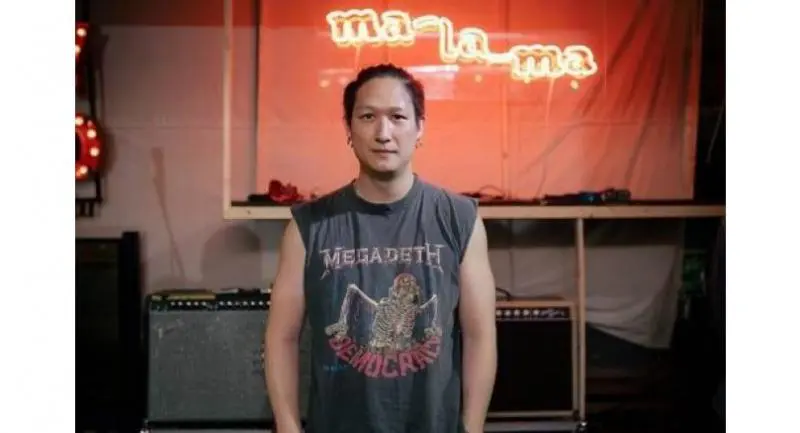


A new music collective kick starts the careers of indie outfits by offering funding with no limits on creative freedom
A SIDE PROJECT of Fungjai – a music community that connects musicians and their fans through online platforms and offline activities such as music streaming, online magazine, concerts and seminars – the new Malama Collective aims to support Thailand’s independent music industry and make the country a “music tourism” destination.
“I want to develop the country’s music market and also educate listeners. Thailand is not only about musicians signed with major labels. Independent music is also an interesting and important aspect of contemporary culture,” says Piyapong “Py” Muenprasertdee, a director of Malama Collective.

“Take K-pop – Korean popular culture. It’s an essential component of South Korean tourism. I think that Thailand can also be like that and I’m not talking about traditional Thai music, luk thung or mor lam”.
“Music tourism can help Thai musicians earn more income and, most importantly, make their musical careers more stable.”
While acknowledging that music tourism usually refers to visitors descending on a town – think Glastonbury – to attend a music festival, Piyapong points out that indie artists are constantly performing live in every part of the country.
“I remember being asked by some foreign visitors where they could hear a band that was playing original music rather than Western covers. I think Malama can be a platform to help foreigners, and even Thais, to know more Thai music. And I also want Bangkok to become a ‘music city’ that would combine festivals with conferences, with the contribution of artists from our neighbours. Two years ago, I attended conferences in Singapore, South Korea and Indonesia, which focused on the independent music scene and how promoters proposed taking their artists to perform in Thailand, and vice versa. Right now, we are building our network,” he adds.
The concept behind “Malama” – a Hawaiian word meaning “to take care of each other” – is “cooperative enterprise”, under which a group of musicians and artists help and support each other through meaningful experiences and personal skills.
“It is the Malama way,” Piyapong says. “We aren’t a record label but a community of indie artists who need to work. We are also a kind of a cooperative that tries to find funding for bands or artists to create their musical works. All bands and artists have freedom to create but at the same time should be responsible for managing their bands like a small business. A band should know how to manage itself and also how to build income. Lastly, all artists and bands own the copyrights of songs, not Malama Collective.
“Our own measure of |success is the artist has the freedom to stand for self-reliance or self-management.”

Piyapong says he has three visions for Malama Collective to fulfil. The first is to bring music to every corner of the country in such a way that it supports the economy. The second is to provide stability for the artists in their chosen musical career. Last but not least is to infuse the cooperative spirit in other music communities in order to drive the country’s independent music industry.
“The best way of explaining is to liken Malama to Bakery Music, the first indie label set up in the early 1990s that was hugely successful with its indie artists and also inspired the creation of many other indie labels. Malama Collective has added the cooperative way to the Bakery model,” says Piyapong.
Malama Collective has started with 10 indie bands. Jelly Rocket, Safeplanet, Mattnimare, Mono- mania, 23’O, SOLE, Lukpeach, Temp, River Rhyme and Child & Pa. All receive a budget, the amount of which varies from artist to artist, whether to create a song, an album, a music video or a concert under their two-year contract.

“If a band wants to produce an album, the funding would be about Bt100,000 to Bt200,000. For a concert, it’s about Bt100,000, for an EP Bt50,000 and for a music video anything from Bt10,000 to Bt100,000. A band requesting a budget must present a proposal detailing how the money will be spent and how it will get the income back before we even discuss the marketing plan, the release date and promotion,” Piyapong explains.
“We will help the band to find more jobs or shows and at the same time promote their work.”
“Malama Collective is an experiment in the music cooperative concept,” adds Sarun “Top” Pinyarat, Fungjai’s chief executive.
“In the first phase, the collective has 10 bands who agree with and accept our terms. In the long term, we will have many more bands and more funding. We must study those bands’ attitudes and marketing plans, both past and present. I will be promoting their work through the social networks. Using Lukpeach as an example, we are helping to promote her song, taking her to meet the media and finding more jobs for her,” he says.
“We will bring our artists closer to fans and, at the same time, give fans more chances to interact with them. We invited fans of each of the bands to the launch of Malama Collective as a first step in strengthening the bonds between the musicians and their public.
Piyapong brushes off suggestions that most music fans, in Thailand at least, favour mainstream over indie.
“There is room for both,” he says. “I don’t focus only on those artists of Malama Collective but also on the propagation of our cooperative concept. We would like to make the music scene livelier and build a chance for indie artists to go international.”
Collective Dreams
- Follow the movement of Malama Collective at www.Mala.ma and Facebook.com/|malamacollective.
