
So, you want to make a movie
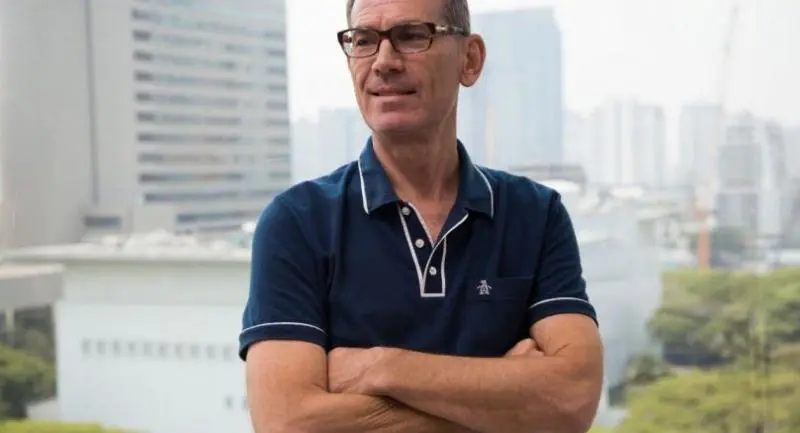


A member of the Sundance teams drops into Thailand to monitor up-and-coming filmmakers
IT’S ALL too rare that local filmmakers get a chance to train with the best so it came as no surprise to SEAFIC, the pioneering script lab for Southeast Asian filmmakers that’s based in Thailand, to receive a massive 57 applications for its 2016/17 training programme.
From this pool of new fiction feature filmmakers with work-in-progress scripts, SEAFIC selected five, two of them from Thailand, to take part in its film labs.
The first two sessions took place in Chiang Mai in October and February. The third and final session will take place in Bangkok in late June with the winning project being awarded a US$15,000 (Bt530,000) prize.
Paul Federbush, international director of the Feature Film Programme at the Sundance Institute, was brought to Thailand by the Public Affairs Section of the US Embassy in Bangkok for last month’s session and as part of his visit gave a presentation to students of the Entertainment Media Production Programme at Mahidol University’s Film and Applied Arts Division and met with important players in the Thai film industry at the US ambassador’s residence. He also found time to chat with XP.
OTHER THAN THE SUNDANCE FILM FESTIVAL, WHAT ELSE DOES THE SUNDANCE INSTITUTE DO WITHIN THE FILM INDUSTRY?
The Sundance Institute has been training and supporting emerging filmmakers for more than 30 years by creating environments through labs and workshops that nurture independent thought and inspire free artistic expression. Our lab programme, which include labs for screenwriters, directors, creative producing, music and sound design, and episodic storytelling, give these filmmakers the opportunity to work intensively on their feature film scripts in an environment that encourages innovation and creative risk-taking.
The filmmakers we select to participate in our programme engage in an artistically rigorous process that offers indispensable lessons in craft, as well as the means to do the deep exploration needed to fully realise their material. This takes place in a natural setting that offers the physical and mental space to focus on their work, hone creative skills and tap into new sources of inspiration.
CAN INTERNATIONAL ARTISTS PARTICIPATE IN THE LAB PROGRAMME?
Of course. We’ve included emerging international filmmakers in our programmes since the early 1990s. In fact, the inclusion of international artists in all of our various Artists Programmes – whether Feature Film, Documentary Film or Theatre – has allowed the Sundance Institute to promote the richness, history, diversity and unique perspectives of the world’s storytelling cultures. As a result, our support of a wide range of stories and methods of storytelling from around the world has enriched the creative dialogue within the Sundance community as well.
HOW DO YOU SEE THE FILMMAKING SCENE IN THIS REGION IS GENERAL?
I think Thailand and its neighbours have an exciting and burgeoning art and filmmaking scene. I identified Southeast Asia several years ago as a region that is exciting artistically and with a lot of growth potential. Collectively, the countries of South East Asia have a population of more than 600 million, youthful demographics and a steadily expanding middle-class. This is very promising for a growing film community.
But the region also has its challenges. Southeast Asian countries are as diverse as the countries that comprise Europe, and have different movie-going habits and tastes, disparate levels of industry experience and infrastructure.
That said, the countries also share this exciting growth potential. Over the coming years, I hope that Sundance and SEAFIC can create a support system for independent filmmakers that will help them develop their craft, as well as creating an independent filmmaking community that crosses borders in Southeast Asia and beyond.
Three sessions, eight months
For more information, go to www.SEAFICLab.com.
