
Thai Anti-Graft Watchdog Targets 'Amulet Loophole' to Stop Wealth Laundering
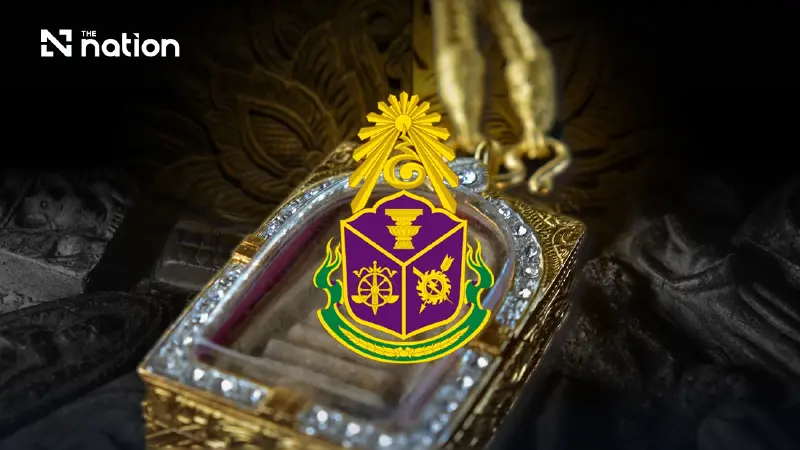


The National Anti-Corruption Commission introduces strict photographic rules for high-value artwork and charms to prevent the laundering of illicit assets
- Thailand's anti-graft agency is closing a loophole that allowed politicians and officials to use high-value Buddhist amulets and art to launder illicit wealth.
- Under new rules, officials must now individually itemize each valuable collectible and provide high-resolution photographs to verify its physical existence.
- Declarations must include the item's origin or a realistic price estimate, which can be audited by the anti-corruption commission.
- Officials who fabricate items or artificially inflate their value will face prosecution for filing a false asset declaration, potentially triggering wider investigations into their wealth.
The National Anti-Corruption Commission introduces strict photographic rules for high-value artwork and charms to prevent the laundering of illicit assets.
Thailand’s premier anti-graft agency, the National Anti-Corruption Commission (NACC), has moved to plug a notorious legal loophole that has allowed politicians and senior bureaucrats to use rare Buddhist amulets and fine art to launder illicit wealth and fabricate personal assets.
Under stringent new policy directives, political office holders and high-ranking public officials will be legally required to individually itemise every high-value amulet and piece of artwork in their possession.
Crucially, these declarations must now be accompanied by high-resolution photographs to verify their physical existence.
Where the precise market value of an asset cannot be determined, declarants are obligated to state its provenance or provide a realistic price estimate.
If a subsequent audit reveals that the items do not exist or that their valuations have been artificially inflated, officials risk facing prosecution for submitting a false asset declaration—an offence that frequently serves as a gateway to full-scale investigations into "unusual wealth".
The Unregulated Status Symbol
For over two decades, mandatory asset and liability disclosures have served as a critical mechanism for the NACC to monitor the financial integrity of Thailand's ruling class.
This disclosure policy casts a wide net, encompassing elected officials at both national and local levels—ranging from the Prime Minister, cabinet ministers, and MPs to provincial council presidents and mayors.
It also applies to senior institutional figures, including military commanders, the chief of police, and heads of independent state organs.
However, anti-corruption experts have long flagged a persistent vulnerability within the "Other Assets" category—specifically regarding items valued above 200,000 baht.
Because rare amulets and fine art lack a standardised global marketplace or benchmark pricing system, transactions are driven entirely by subjective collector sentiment.
This grey area has allowed legally vulnerable officials to exploit the system, intentionally misreporting asset values to establish a legitimate cover for unexplained cash reserves.
Over the years, hundreds of prominent figures have listed amulets in their portfolios, with self-declared valuations ranging from tens of thousands to tens of millions of Baht per item.
Historically, several former Thai Prime Ministers have officially declared highly coveted amulets as part of their personal fortunes, treating them as both spiritual shields and financial assets.
Banal Artifacts or Billion-Baht Fortunes?
The subjective nature of these assets has repeatedly triggered public cynicism and policy debates. Suspicion peaks when an official lists a collection without a price tag, describing it vaguely as "invaluable".
The policy shift follows several high-profile scandals that exposed how easily the system could be manipulated. A few years ago, a newly elected, first-term MP with no significant commercial background shocked investigators by declaring a collection of sacred charms valued at several billion baht.
The declaration immediately drew intense scrutiny over whether the figure had been completely fabricated to pre-emptively explain future illicit income.
In another landmark case, the NACC successfully exposed a senior ministry official who claimed a multi-million-Baht fortune had been accumulated legally through the private sale of rare devotional coins.
The watchdog rejected the explanation, proving the transactions were fraudulent, which ultimately led to a court-ordered asset confiscation of more than 49 million Baht.
The New Enforcement Policy
To dismantle these evasive tactics, the NACC's updated regulatory framework enforces strict verification protocols:
Individual Itemisation: Bundling or aggregate declarations of high-value collectibles are no longer permitted. Each piece must be listed independently.
Mandatory Photographic Evidence: High-resolution, sharp photography must be submitted to verify that the asset is physically in the declarant's possession.
Provenance Audits: If the acquisition history or price is forgotten, a fair-market estimate must be provided, which will then be cross-referenced by the NACC.
Under the new regime, the NACC will initiate audits by establishing the physical existence of the declared items.
If an official is red-flagged or faces a public petition and cannot physically produce the artwork or amulets listed, they will be instantly liable for filing a fraudulent declaration.
Furthermore, the watchdog will now routinely dispatch declared items to certified external appraisal experts. If a valuation is found to be intentionally exaggerated, the NACC will trigger a forensic audit of the individual's banking history.
By systematically targeting this cultural and financial blind spot, the NACC’s latest policy shift ensures that the traditional practice of hiding illicit fortunes behind sacred artifacts will become exponentially more difficult for Thailand's political elite.
