
Thai airline worker charged over Melbourne heroin seizure
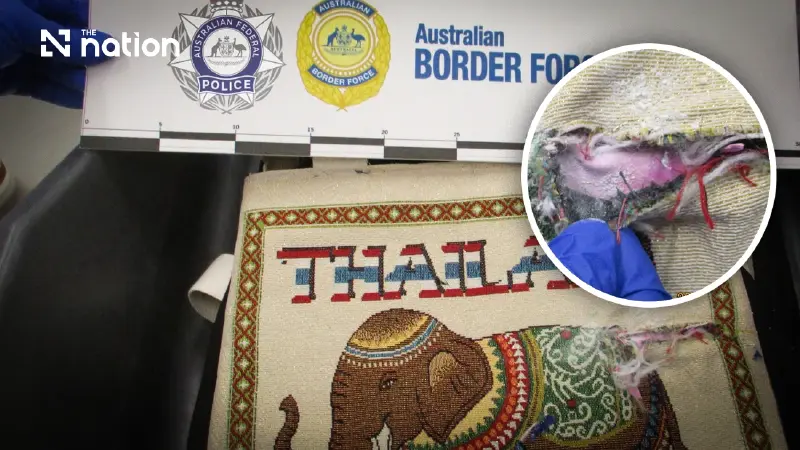


Australian police charge a 26-year-old Thai airline employee after more than 1kg of heroin was found hidden in tote bags at Melbourne Airport
The Australian Federal Police (AFP) and Australian Border Force (ABF) announced the arrest on June 29, saying the woman was accused of importing heroin into Melbourne after arriving on an international flight the previous week.
According to the joint media release, the Thai national was performing work duties on board the international flight when it arrived at Melbourne Airport on June 25, 2026.
Her baggage was selected for screening by ABF officers after arrival. During an X-ray examination, officers detected irregularities in 12 tote bags belonging to the woman.

Further inspection allegedly found white powder concealed inside the lining of the bags. Presumptive testing of the substance allegedly returned a positive result for heroin.
The heroin allegedly seized from the bags had an estimated street value of A$500,000, or about 11.5 million baht.
ABF officers referred the matter to the AFP, which seized the tote bags and arrested the woman at the airport.
She was later charged with two offences under Australia’s Criminal Code.
The first charge is one count of importing a marketable quantity of a border-controlled drug, contrary to section 307.2(1) of the Criminal Code (Cth). The offence carries a maximum penalty of 25 years’ imprisonment.
The second charge is one count of possessing a marketable quantity of a border-controlled drug, contrary to section 307.6(1) of the Criminal Code (Cth). This offence also carries a maximum penalty of 25 years’ imprisonment.
The woman was remanded in custody on June 26, 2026.
She is expected to appear again before Melbourne Magistrates’ Court on September 14, 2026.
AFP Acting Commander Simone Butcher said Australian authorities would maintain a firm, zero-tolerance approach towards anyone who used a position of trust to support criminal activity.
“The AFP remains unwavering in its efforts to target individuals who use their employment or community standing to support drug trafficking,” Butcher said.
“We work closely with our partner agencies to protect the community from the scourge of illicit drugs.”

ABF Commander Clint Sims said organised crime groups continued to target trusted insiders, including airline crew, as part of attempts to smuggle illegal substances into Australia.
“Anyone attempting to import illicit drugs into Australia, regardless of rank or position, will be targeted and face the full force of the law,” Sims said.
He said ABF officers relied on intelligence-led targeting, as well as a range of detection capabilities, to identify people attempting to breach Australia’s border controls.
“The ABF remains alert to the threat of trusted insiders and will continue to identify and disrupt this activity to maintain the integrity of our border and protect the Australian community,” Sims said.
The case underscores the concern among Australian enforcement agencies that transnational crime groups are seeking to exploit trusted positions within the aviation sector to move illicit drugs into the country.
Authorities said they would continue working together to detect, disrupt and prosecute attempts to smuggle border-controlled drugs through Australia’s airports.
