
Thailand faces tougher Japan scrutiny as drug seizures from Thai routes rise
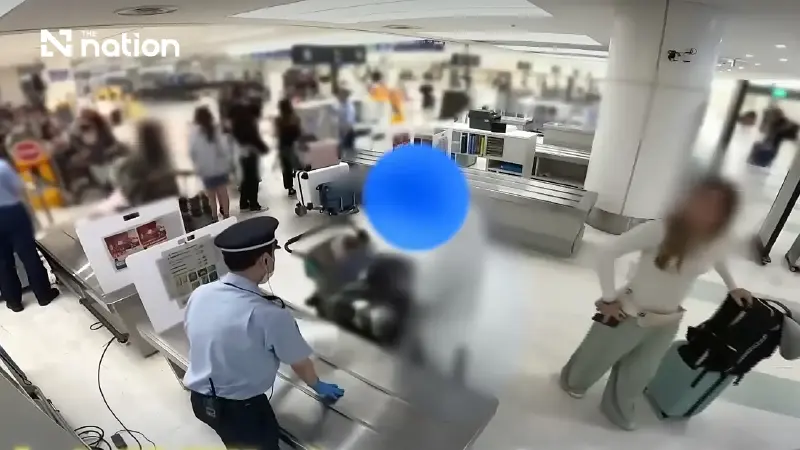


Japan has reported repeated drug seizures linked to Thailand routes, with cannabis, THC, methamphetamine, ketamine and MDMA among substances found
- Japan is tightening scrutiny of travel routes from Thailand after repeated drug seizures linked to Thai airports.
- Thailand ranked second after the United States as a source country for cannabis seized in Japan in 2025.
- Japanese customs seized more than 1.5 tonnes of cannabis from Thailand last year, with THC products also rising.
- Recent cases involved cannabis, THC, methamphetamine, ketamine and MDMA from routes linked to Don Mueang, Suvarnabhumi and Chiang Mai.
- Thai travellers have been warned not to carry luggage or parcels for others, as Japan imposes severe penalties for drug offences.
Thailand is facing closer scrutiny from Japanese authorities after a series of drug-smuggling cases linked to flights from Thai airports, adding to wider concerns over the country’s image following earlier reports involving a Thai Airways crew member accused in a heroin-smuggling case.
Japanese customs data and recent seizure reports indicate that several cases between May and June involved passengers or shipments that originated from Thailand. The cases have raised concerns that travellers arriving from Thailand may now face closer checks by Japanese authorities.
According to figures cited by Japanese customs from the beginning of 2026 to the present, about 51 drug-related cases have been recorded, with 11 cases linked to passengers travelling from airports in Thailand. That accounted for 21.6% of the total cited in the report.
The substances detected in the recent cases included cannabis, THC, methamphetamine, ketamine and MDMA. Authorities also identified both Delta-9 THC, the main psychoactive compound in cannabis, and Delta-8 THC, a related compound with weaker effects.
The cases were linked to departures from Thailand’s main airports, including Don Mueang, Suvarnabhumi and Chiang Mai.

Japan reports repeated seizures linked to Thailand routes
Seizure records cited in the report show a series of cases in May and June:
May 18: cannabis detected at Fukuoka Airport, with the route originating from Don Mueang
May 21: THC detected at Fukuoka Airport, with the route originating from Don Mueang
May 26: methamphetamine detected at Fukuoka Airport, with the route originating from Suvarnabhumi
June 8: 183 grammes of THC detected at Fukuoka Airport, with the route originating from Suvarnabhumi
June 11: ketamine, MDMA and methamphetamine detected at Naha Airport, with the route originating from Chiang Mai
June 15: THC detected at Sendai Airport, with the route originating from Don Mueang
June 17: nearly 6 kilogrammes of liquid THC detected at Nagoya Airport, with the route originating from Suvarnabhumi
June 30: THC and cannabis detected at Naha Airport, with the route originating from Don Mueang
Although Thailand has tightened cannabis controls and moved away from its earlier liberalisation policy, Japan’s customs statistics still place Thailand among the leading source countries for cannabis seized in Japan.

Japan’s Finance Ministry data showed that customs officers seized 3,211 kilogrammes of illegal drugs in 2025, the first time in six years that annual seizures exceeded three tonnes. Cannabis seizures reached a record 1,531 kilogrammes, up around 3.5 times from the previous year. By origin of detected cannabis shipments, the United States accounted for 43%, followed by Thailand at 27% and Vietnam at 8%.
Japanese data also showed 318 kilogrammes of THC extracts were seized. Japan has strengthened controls on cannabis-related products, with cannabis categorised under tougher narcotics rules from December 12, 2024, according to Japanese police information.
Online misinformation blamed for rising cannabis cases
Japanese authorities have attributed part of the surge to misleading information on social media, which they say has contributed to the false belief that cannabis is harmless. Authorities have described the influx of illegal drugs into Japan as extremely serious and said border controls will be tightened.
The Royal Thai Consulate-General in Fukuoka has also warned Thai nationals about the severe legal consequences of drug offences in Japan. It said offenders could face prosecution and lengthy court proceedings, meaning they may be unable to return to Thailand immediately.
The consulate also cautioned that several Thai nationals had previously been arrested or prosecuted in Japan in drug-related cases involving different methods, including carrying items for others while travelling and sending items through international postal parcels.
Thai travellers warned not to carry items for others
Thai authorities and consular officials have repeatedly advised travellers not to accept luggage, parcels or items from other people when travelling overseas, especially to countries with strict drug laws.
Under Japan’s Cannabis Control Act, possession, receipt or transfer of cannabis without due cause is punishable by imprisonment with work for up to five years. Offences committed for profit can carry up to seven years’ imprisonment and a fine of up to 2 million yen, depending on the circumstances.
Japan’s Health Ministry also warns that possession, transfer or acquisition of methamphetamine can carry imprisonment of up to 10 years, while possession or transfer of narcotics such as MDMA, cocaine, LSD and ketamine can carry imprisonment of up to seven years. Import, export or manufacturing offences carry heavier penalties, especially when committed for profit.
The warning comes as Japan continues to tighten screening of drugs arriving from overseas, while Thailand faces renewed pressure to strengthen enforcement against illicit drug movements through airports, postal channels and international travel routes.

Source: ANNnewsCH, TBNEWS DIG PowS ered by JNN, NationTV
