
Magnitude 7.1 earthquake strikes Japan’s Kumamoto region
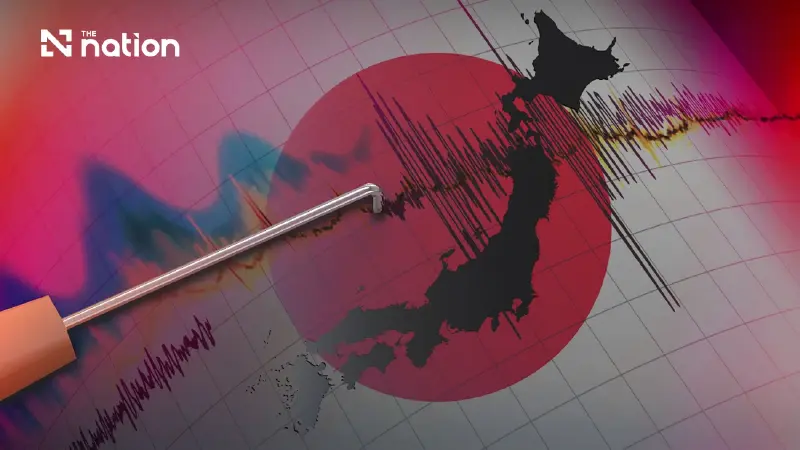


A magnitude 7.1 earthquake struck Japan’s Kumamoto prefecture, cutting power to 40,000 homes and prompting tsunami and aftershock warnings
A preliminary magnitude 7.1 earthquake struck Kumamoto prefecture on Japan’s southern island of Kyushu on Tuesday (July 28), cutting power to tens of thousands of homes, halting rail services and prompting tsunami and aftershock warnings.
Kyushu Electric Power reported that about 40,000 homes lost electricity following the earthquake, while JR Kyushu suspended services across the region, including high-speed bullet trains.
The Japanese government issued emergency earthquake warnings for Kumamoto, Nagasaki, Kagoshima, Fukuoka, Saga, Oita and Miyazaki prefectures, all located on Kyushu.
The Japan Meteorological Agency also issued a tsunami warning for waves of up to one metre following the earthquake.
Companies assess operations near quake zone
Sony and Taiwan Semiconductor Manufacturing Company, the world’s largest contract chipmaker, operate plants in the area affected by the earthquake.
A Sony representative said the company was checking conditions at its facilities. TSMC did not immediately respond to a request for comment.
Japan’s Nuclear Regulation Authority reported no abnormalities at nuclear power stations in the region.
Authorities continued to assess possible damage and warned residents to remain alert for further tremors.
Kumamoto struck by deadly earthquake a decade ago
Kumamoto was hit by a major earthquake 10 years earlier that killed 275 people and injured another 2,739, according to official figures cited by Reuters.
Japan is among the world’s most earthquake-prone countries. It lies along the Pacific “Ring of Fire”, a belt of volcanoes and ocean trenches associated with frequent seismic activity.
The country accounts for about 20% of earthquakes worldwide with a magnitude of 6.0 or higher.
