
'Heart-to-Price' over Bargains: How China's Consumer Shift Opens New Frontiers for ASEAN
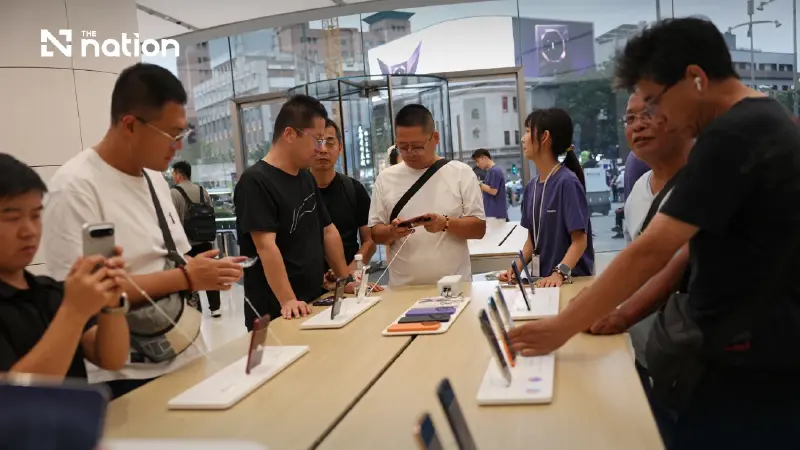


Chinese retail and F&B giants are abandoning deep price wars to export high-value, tech-driven lifestyle experiences across Southeast Asia
- Chinese consumer behavior has shifted from seeking bargains or status symbols to a "heart-to-price ratio," prioritizing products that solve real problems or provide emotional well-being over simple low cost.
- Chinese brands like CHAGEE and Hisense are expanding into ASEAN not with price wars, but by exporting high-value, tech-driven lifestyle experiences and products tailored to local needs.
- This trend presents a new strategy for ASEAN businesses, emphasizing that customer loyalty is now won through genuine localization and brand value rather than competing on discounts.
Chinese retail and F&B giants are abandoning deep price wars to export high-value, tech-driven lifestyle experiences across Southeast Asia.
When Chinese tea chain CHAGEE opened its first Thai store in May last year, it arrived as part of a broader wave of Chinese consumer brands—from BYD electric vehicles to Hisense appliances—reshaping retail across Southeast Asia.
A fundamental structural shift in Chinese consumer behaviour is rapidly altering business models across ASEAN, offering both intense competition and actionable strategies for local enterprises.
At the 17th FutureChina Global Forum 2026, held at the Sands Expo and Convention Centre in Singapore on Friday, 25 September, three corporate leaders leading that expansion offered Thai and regional businesses a detailed look at what is driving the trend.
Speaking on a panel titled Growth Drivers in China's New Consumer Landscape, Ervin Yeo, Group Chief Strategy Officer and CEO of Commercial Management at CapitaLand Investment; Clara Chang, President of Hisense ASEAN; and Eugene Lee, Chief Marketing Officer of CHAGEE APAC, described a Chinese consumer market that has fundamentally changed—and a new playbook being exported across the region.
Organised by Business China, the two-day forum gathered regional executives, policymakers, and academics to explore economic, technological, and societal trends spanning China and Southeast Asia.

From Status Symbol to 'Heart-to-Price Ratio'
Yeo, whose company has operated department stores and malls in China for over 30 years, described a striking reversal in consumer psychology.
"In the past, when you met the Chinese, they will ask, 'How expensive is this?'" he said. "Now the Chinese, when you talk to them, they will ask you, 'How cheap is this?' This is a very different philosophy."
Chinese shoppers today are less interested in status-signalling and more focused on maximising value—what Yeo called a "gamified" approach to spending, seeking the greatest experience for the least outlay.
Clara Chang of Hisense offered a more precise term for this shift: the move from "price-performance ratio" to "heart-to-price ratio" (xīn jià bǐ)—a calculation based not on cost efficiency alone, but on whether a product genuinely solves a household problem or provides emotional well-being.
"In the past, you may spend a lot of money to buy a European washing machine," Chang explained. "But now, if I use the same amount of money to buy a three-drum washer, this has come into my heart. This will solve all my problems in my home."
For Thai retailers and consumer brands, the distinction matters: price alone is no longer the winning argument; relevance to a specific household or personal pain point is paramount.
A Shifting Balance of Power in Retail
Yeo also described a significant change in the relationship between landlords and tenants inside Chinese shopping malls—one with clear implications for retail property owners across ASEAN. A decade ago, developers held all the leverage.

"You pay your rent and you go into our department store... if you want to leave, there is a queue of people who want to join us," Yeo said.
Today, that queue has vanished.
"We actually need to beg them to go into the department store," he added, describing a shift toward co-investment, shared risk, and flexible negotiations between landlords and retail brands.
He also pointed to an underused lever for retail performance: the store manager. In China, Yeo noted, a skilled manager who actively builds relationships with customers through group chat platforms such as WeChat can lift a single store's revenue by as much as 50 per cent.
This level of direct digital customer engagement remains largely untapped in markets like Singapore, where managers typically focus strictly on individual store operations rather than managing wider customer networks.
Localisation as the Price of Entry
For Hisense, which has spent nearly 30 years building an international footprint spanning 211 countries, localisation was described as non-negotiable.
Chang noted that 95 per cent of the company's overseas workforce consists of local hires—a deliberate choice to ensure products reflect local laws, culture, and consumer habits rather than assumptions carried over from China.
"We need the local employees to understand the culture, mindset, local laws, and consumer thinking to build our local business," she said.
She distilled Hisense's approach into four golden rules for going global: confidence in proprietary technology rather than competing purely on price; determination to adapt to local markets; genuine respect for local consumers in product design; and treating quality as corporate ethics.
In tropical climates like Thailand, hardware must directly adapt to regional needs, such as antibacterial washing machines or built-in refrigerator ice makers.
Chang noted that Hisense increasingly treats physical hardware as merely the entry point for long-term customer service. Its "Avatar Service" model, which guarantees issue resolution within 48 hours, helped drive a 94 per cent growth in the company's high-end ASEAN product segment in the first half of this year.
Holding the Line on Price Perhaps
the most directly transferable lesson for Thai businesses came from CHAGEE's experience navigating China's brutal 2025 milk tea price war, when rivals slashed prices to as little as 1 to 4 RMB per cup or gave drinks away for free. CHAGEE refused to follow.
"One of the big strategies that we held firm to is that we will not discount," said Eugene Lee, "because you destroy your own value at the end of the day... when I remove the discount or subsidy, you may not come back, because my habit has changed."
That discipline helped protect the brand's long-term positioning and contributed to a strong operational rebound this year—a cautionary tale for any Thai F&B or retail brand tempted to compete purely on discounting.
Instead of price cuts, CHAGEE gained operational efficiency by streamlining its menu. In 2022, the brand made the bold decision to eliminate 60 per cent of its product mix—specifically labour-intensive fruit teas—to focus 100 per cent on fresh milk tea.
Removing complex manual tasks, such as measuring and peeling watermelons across hundreds of stores daily, enabled automated processes, strict Standard Operating Procedures (SOPs), and rapid global scaling.
Following expansions into Indonesia, Thailand, Vietnam, and the Philippines in 2025, CHAGEE now operates over 3,000 stores globally.
Lee also recounted an early misstep in Malaysia, where the brand's original Chinese name, Bawang Chaji, translates to "onion" in Malay, prompting confused customers to wonder if the chain sold onion-flavoured tea—a mistake corrected in 2021 when the company rebranded globally as CHAGEE.
The company has since tailored its menu market by market: introducing oat and non-fat milk in health-conscious Singapore, focusing on calorie management in Malaysia given higher obesity rates, and positioning tea around mental wellness and "slow living" in high-stress Seoul.

The Rise of the 'C-Wave'
Lee framed this expansion as part of a broader cultural shift, moving from the Korean Wave (K-Wave) of the 2010s to what he called the "C-Wave" heading into the 2030s—spanning electric vehicles (BYD is now Singapore's top-selling car brand), electronics (Hisense, Xiaomi), social media (Xiaohongshu), and beverage culture.
He tied the trend back to the Chinese character for tea itself—茶—formed from symbols for grass on top, a human figure in the middle, and a tree at the bottom, representing people situated harmoniously between nature's elements.
"When you drink tea, tea is supposed to bring you back to nature," he said.
Strategic Takeaways for ASEAN
The panel's discussion highlighted a consistent set of practical lessons for regional enterprises: that price alone no longer secures customer loyalty, that genuine localisation—not just translation—is the price of entry into ASEAN markets, and that resisting the urge to compete purely on discounts may offer a stronger long-term strategy than matching rivals cut for cut.
As the "C-Wave" continues to sweep across Thailand and Southeast Asia, local business leaders are left with a strategic question: Should regional brands attempt to defend their home markets by competing on operational scale and price or by doubling down on their own unique civilisational values, localised customer intimacy, and authentic brand identity?
