
Chao Phraya Dam raises discharge as Thailand boosts drainage efforts
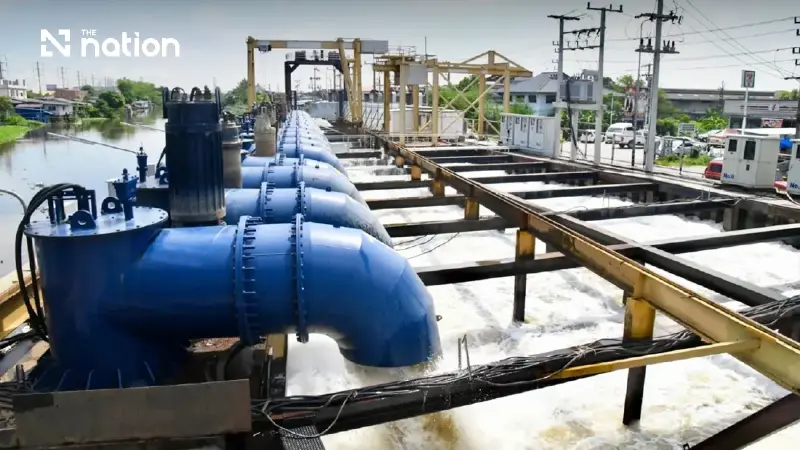


Chao Phraya Dam has increased releases to 2,500 cubic metres per second as authorities accelerate flood drainage and prepare for more rain.
The Chao Phraya Dam has increased water releases to 2,500 cubic metres per second as the Office of the National Water Resources (ONWR) mobilises agencies to accelerate drainage from flood-hit areas into the Gulf of Thailand ahead of another expected period of rainfall.
ONWR Secretary-General Chayant Muangsom said on October 2 that authorities were using the temporary reduction in rainfall to speed up water drainage, while upper dams were being used to hold back flows and divert water into irrigation systems and flood retention areas to reduce impacts on downstream communities before the next round of rain.
Data from the Meteorological Department and the Hydro-Informatics Institute indicate that a cold air mass from China is expected to move over northern and upper northeastern Thailand between October 5–7, bringing increased rainfall.
The rain is forecast to begin in the Northeast before spreading westwards to cover the North, Central, East and South, with some areas potentially experiencing heavy rainfall.

Chao Phraya Dam increases releases
ONWR estimates that water passing through the C.2 station in Nakhon Sawan could rise to a maximum of 2,700 cubic metres per second, with an additional 500–600 cubic metres per second flowing in from the Sakae Krang River.
The increased inflows have pushed up water levels above the Chao Phraya Dam. At 3am on October 2, the dam adjusted its discharge rate to 2,500 cubic metres per second.
The Royal Irrigation Department is accelerating water diversion into eastern and western irrigation systems, as well as harvested agricultural areas being used as temporary retention zones.
However, the diversion measures may cause parts of the Tha Chin River to overflow its banks.
Deputy Prime Minister Songsak Thongsri said authorities are assessing the situation every six hours and will issue warnings to residents living in low-lying areas outside flood embankments if necessary.

Several dams near full capacity
Several major reservoirs are approaching or exceeding their storage limits.
- Pasak Jolasid Dam has reached 109% of storage capacity and will gradually increase releases to 30 million cubic metres per day, with Rama VI Dam preparing to increase releases accordingly.
- Vajiralongkorn Dam is at 99% capacity, with the Electricity Generating Authority of Thailand (EGAT) adjusting releases to 42 million cubic metres per day. ONWR expects downstream releases through the Mae Klong system to remain controlled at around 2,200 cubic metres per second.
- Khun Dan Prakan Chon Dam is at 97% capacity.
- Khlong Si Yat Reservoir is at 94% capacity.
- Prasae Reservoir is at 105% capacity.
Authorities are preparing appropriate release plans to maintain dam safety and reduce downstream impacts.

More pumping capacity deployed
The Pak Khlong Rangsit pumping station in Pathum Thani is operating around the clock with backup equipment.
Songsak has instructed agencies to consider adding more pumps to accelerate the reduction of standing water in Pathum Thani and Bangkok, while monitoring upstream flows expected to reach the area over the next two to three days.
The Department of Disaster Prevention and Mitigation (DDPM) has installed a 24-inch pump with a capacity of 1,500 litres per second at the Chonlaharn Phichit floodgate in Khlong Dan and is operating it at full capacity with the Royal Irrigation Department to drain water towards the Gulf of Thailand.
ONWR has instructed all agencies to speed up drainage from affected areas while monitoring high tides in early October, which could slow water discharge before rainfall increases again.
