
Paetongtarn denies Thailand–Cambodia clash is a feud between two families, blaming on conflict tied to crackdown on call center gangs
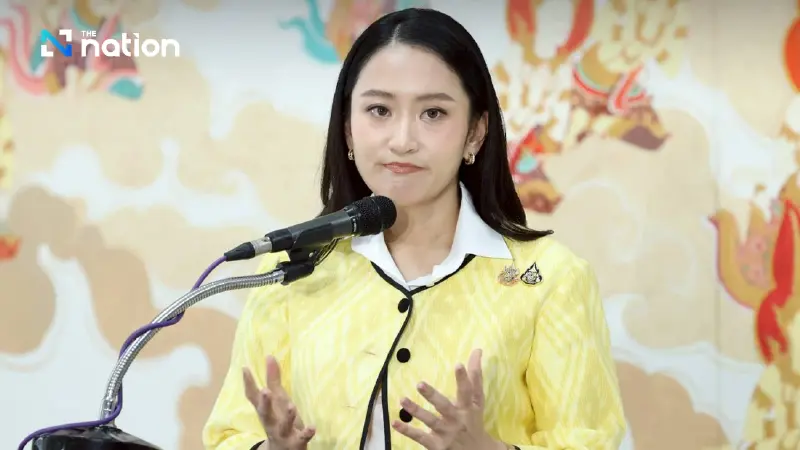


At the Ministry of Culture, Prime Minister and Minister of Culture Paetongtarn Shinawatra held a press briefing where she reaffirmed the earlier statement made by Deputy Prime Minister Phumtham Wechayachai, who said that Cambodia's actions amount to war crimes and serious violations of humanitarian principles.
She emphasized that the Thai government never wanted this situation to arise and has consistently prioritized civilian safety, acting only in response — particularly after Cambodia initiated gunfire on July 24.
Foreign media, she noted, have raised questions about evidence or digital footprints indicating who fired first. Observers also pointed out that Thai students continued attending school, while Cambodian students were kept home, leading to speculation that Cambodia might have known in advance about the attacks — whereas Thailand clearly did not.
Paetongtarn said that although she currently cannot fulfil her official duties due to the pending Constitutional Court ruling, she is closely monitoring the situation. She recently recorded a video for NBT (National Broadcasting Services of Thailand) and was briefed by the Deputy Minister of Defence, who reassured her that Thailand’s military equipment, including F-16 jets, is ready and sufficient. Their deployment was justified because the Cambodian attacks had reached civilian areas and endangered lives.

She stated that while the government and military are coordinating continuously, the next steps will depend on field assessments. Nonetheless, the government is committed to defending Thai sovereignty, stressing that Thailand did not start the conflict and does not seek violence, but will not retreat if aggression persists.
“We do not want violence, but this violence was started 100% by Cambodia,” she said.
She urged national unity in this time of crisis:
“Let’s argue with each other inside the country later — but when it comes to threats from abroad, we cannot wait. I believe Thais love and protect one another.”

Regarding accusations from political opponents who claim this conflict is a “clash between two powerful families,” Paetongtarn strongly denied it. She explained that months ago, the Thai government took serious action against call center scam operations, and the damage has noticeably decreased. Thailand worked with Laos and Myanmar in a trilateral effort to crack down on these gangs.
She recalled having a private phone conversation (not recorded) regarding Cambodia’s participation in this crackdown. Initially, there was hesitancy, but eventually, it was agreed that Thailand and Cambodia would collaborate bilaterally. Looking back, she speculated that this might have caused dissatisfaction or disrupted certain vested interests.
“Whether or not the government carries the Shinawatra name, we must take action — because it affects Thai people,” she said.
“Just like with drugs — we can’t ignore it. That’s our duty. And that may have triggered a number of consequences.”
