
Treasury sanctions Cambodia-based cyber scam networks targeting Americans


Treasury sanctions Cambodia-based companies and individuals involved in cyber scams, targeting Americans through virtual currency fraud and forced labor.
The US Department of the Treasury’s Office of Foreign Assets Control (OFAC) has imposed sanctions on several Cambodia-based companies and individuals involved in large-scale cyber scams targeting American citizens. These scams, which often rely on virtual currency fraud, are part of a broader transnational criminal operation that uses human trafficking and forced labor to exploit victims, it announced on Monday.
The sanctioned entities, including T C Capital Co. Ltd. and K B Hotel, are tied to illegal activities such as online fraud, human trafficking, and money laundering. The Treasury’s latest action comes as part of a broader effort to dismantle the criminal networks behind these scams, which have resulted in billions of dollars in losses for American citizens, the US Department announced in a press statement.
Cyber Scams in Cambodia’s Gambling Hubs
Many of the cyber scam centers in Cambodia were initially built as casinos by Chinese criminal organizations. However, these operations quickly pivoted to virtual currency investment scams, which have proven to be more profitable. Sihanoukville, in particular, has become a hotbed for these activities, with a number of casinos and hotels now doubling as centers for online fraud.

T C Capital, based in Sihanoukville, owns a complex of buildings that includes the Golden Sun Sky Casino and Hotel. These properties have been used to facilitate virtual currency scams, with many victims unknowingly coerced into investing large sums of money into fraudulent platforms. The complex also serves as a hub for money laundering activities, with illicit funds being funneled through the casino operations.
K B Hotel and Forced Labor
Another target of the sanctions is K B Hotel, which is also based in Sihanoukville. K B Hotel operates a complex of buildings that includes office spaces, a hotel, and a casino, where individuals are forced to conduct cyber scams. Victims, many of whom are trafficked into Cambodia under false pretenses, are coerced into working in these scam centers, often under threat of violence or sexual exploitation.
K B Hotel was co-founded by Xu Aimin, a naturalized Cambodian citizen with a criminal history. Prior to moving to Cambodia, Xu was convicted of operating an illegal online gambling ring in China and was the subject of an INTERPOL Red Notice. Despite his criminal past, Xu has used his connections in Cambodia to shield his business operations from scrutiny, making it difficult for authorities to investigate his activities.

Ties to Organized Crime and Money Laundering
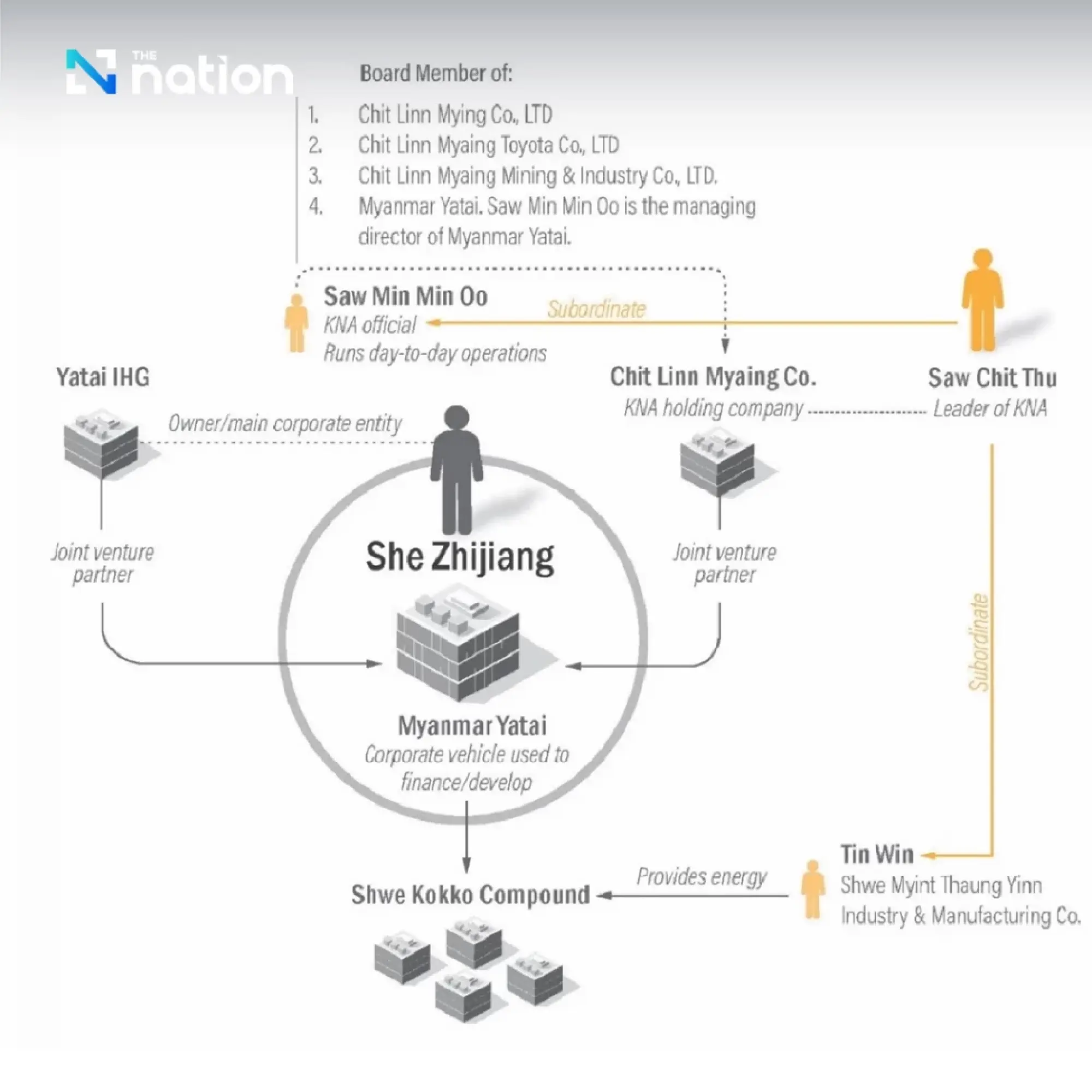
T C Capital and K B Hotel are part of a larger network of Cambodia-based entities involved in illegal activities that include human trafficking, money laundering, and online fraud. The Treasury’s sanctions extend to these companies as well as their key figures, including Dong Lecheng, founder of T C Capital, and Xu Aimin, co-founder of K B Hotel. Both individuals have been linked to organized crime and have used their businesses as fronts for illegal operations.
The Treasury has also sanctioned Heng He Bavet, a company based in Bavet, Cambodia, which owns a casino and associated buildings where victims of forced labor are made to work in scam centers. Heng He Bavet is tied to M D S Heng He, another company involved in virtual currency scams, and the two entities have received workers who were previously trafficked and exploited in Sihanoukville’s scam centers.
Sanctions Target Key Figures and Financial Support
The sanctions also target several key figures who play a critical role in facilitating these scams. Chen Al Len and Su Liangsheng, members of the board of K B Hotel and major stakeholders in M D S Heng He, have been named for their involvement in cyber-enabled activities that threaten U.S. national security and contribute to financial instability. These individuals are directly involved in managing the illegal operations, recruiting workers, and facilitating the money flows that support the scams.
In addition to targeting the companies and individuals running the scams, OFAC has sanctioned financial institutions that have been used to launder the proceeds of these illegal activities. HH Bank Cambodia, a financial institution co-directed by Chen and Su, is among the entities that have been sanctioned for its role in supporting cyber scams.
A Growing Problem: Forced Labor and Fraud
The departmetn said the sanctions reflect the U.S. government’s growing concern over the link between cyber scams and human trafficking in Southeast Asia. Many of the victims coerced into working in Cambodia’s scam centers are trafficked under false pretenses, often promised legitimate jobs only to find themselves trapped in exploitative conditions. These individuals are forced to work long hours in scam centers, where they are required to target American victims using fraudulent virtual currency investment platforms.
