
RTA says Cambodia lies to US that Thai troops erected barbed wires on Cambodian soil
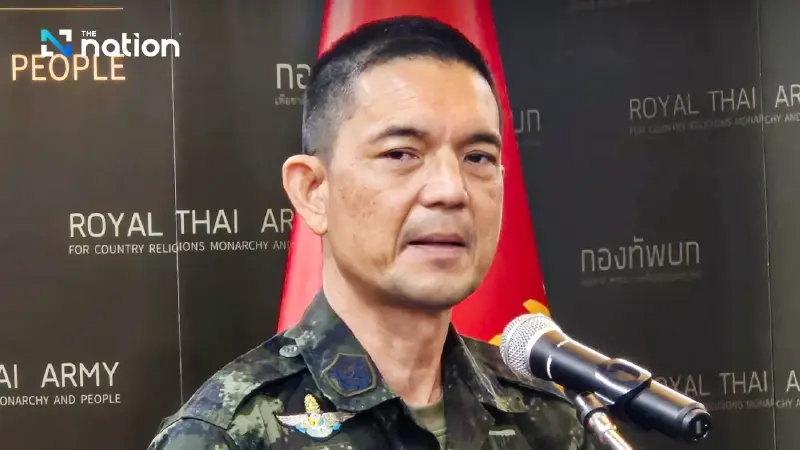


RTA denies Cambodia's claims that Thai troops erected barbed wire on Cambodian soil, citing military operations to secure Thai territory.
The Royal Thai Army (RTA) on Wednesday dismissed a report by Khmer Times claiming that Thai soldiers had erected barricades on what Cambodia alleges is Cambodian territory.
Denial of Allegations by Thai Army
RTA spokesperson Maj Gen Winthai Suvaree referred to a report published Tuesday with the headline "Civil society groups turn to Trump for intervention in border row." The report stated that 50 Cambodian civil society and youth groups had petitioned US President Donald Trump, urging him to pressure Thailand to halt the construction of barricades on what they claimed was Cambodian soil.
RTA Response to Claims of Erecting Barbed Wire
Winthai denied that Thai troops had placed barbed wire or built barricades on Cambodian soil. He reiterated that Thai troops had only raised razor wire to secure Thai soil that had been seized back from Cambodian troops during a four-day border clash in late July.
Cambodia's Strategy to Provoke Thailand
Winthai noted that using Cambodian civil society and youth groups to petition Trump was a familiar tactic of using civilians to provoke Thai troops. He added that Cambodia had changed its approach by using civil groups instead of directly having Cambodian citizens confront Thai soldiers, as had previously occurred with barbed wire incidents. The goal, Winthai claimed, was to damage Thailand’s image internationally.
RTA Justifies Military Actions on Thai Soil
The RTA spokesman emphasized that Thai troops had every right to conduct military operations on Thai soil, including securing military-controlled areas with razor wire to protect soldiers from clandestine attacks by Cambodian troops who were known to sneak across the border to plant landmines.
Cambodian Encroachments on Thai Territory
Contrary to the allegations, Winthai stated that it was Cambodia that had encroached on Thai territory for many years and refused to vacate. He highlighted specific areas where Cambodian forces had encroached, including Ban Nong Chan and Ban Nong Ya Kaew villages in Sa Kaeo’s Khok Sung district and Ban Bueng Takuan in Sa Kaeo’s Ta Phraya district.
