
Boonsin admits defying govt’s ceasefire order shortly after border clashes began
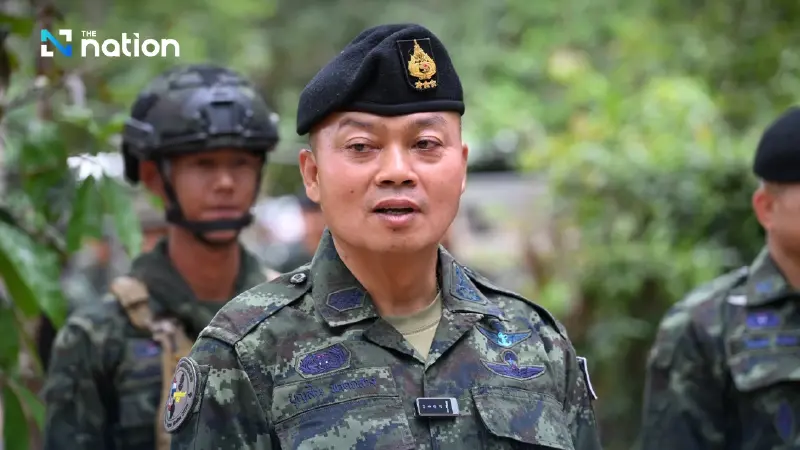


Former Second Army commander Lt Gen Boonsin Padklang says he defied a government order to cease fire during July’s Thai–Cambodian border clashes.
Former Second Army Area commander Lt Gen Boonsin Padklang disclosed on Saturday that he had defied an order from the previous government to cease fire just six hours after the Thai–Cambodian border clashes erupted in late July.
Delivering a special speech at a seminar in Nakhon Pathom, Boonsin said he refused to comply with the order for the Second Army Area to stop fighting because he wanted to reclaim territories encroached upon by Cambodian troops.
Heavy fighting between the two countries’ forces broke out on July 24 in disputed border areas, particularly near ancient sanctuaries such as Prasat Ta Muen Thom and Prasat Ta Krabey, as well as in the vicinity of Preah Vihear Temple.
“On the first day of the clashes, within the first six hours, an order was given to me through my superior to stop. But I argued and asked my direct commander to allow me to continue fighting. I negotiated like this for several days,” Boonsin revealed.
Following four days of fighting, an unconditional ceasefire was reached between the two nations on July 28, 2025, under international diplomatic pressure.
“Since I refused to cease fire, the one who gave the order had to go back and rethink it. So, I didn’t stop the fighting. Had I told my troops to stop, I would have had to reveal who gave the order — and that person would not have been able to remain in this country,” Boonsin said.
“This was because I wanted to reclaim the territories, but that person told me to stop. That would have been tantamount to a death sentence for them.”
Boonsin added that the person who gave the order might have had good intentions, aiming to prevent the loss of lives.
Boonsin did not name the government figure who instructed the Royal Thai Army commander-in-chief to order him to halt operations. At that time, Phumtham Wechayachai was serving as acting prime minister, and Gen Natthaphon Narkphanit as acting defence minister.
Boonsin said he believed the ceasefire order was issued because Cambodia had fired first and made a tactical mistake. He added that Cambodia likely did not expect the confrontation to last long and had intended to provoke a brief skirmish to bring the case before the International Court of Justice (ICJ). However, Thai troops fought on for four days, regaining a substantial amount of territory previously occupied by Cambodian forces.
