
DOPA clarifies legal work plan for Myanmar displaced persons
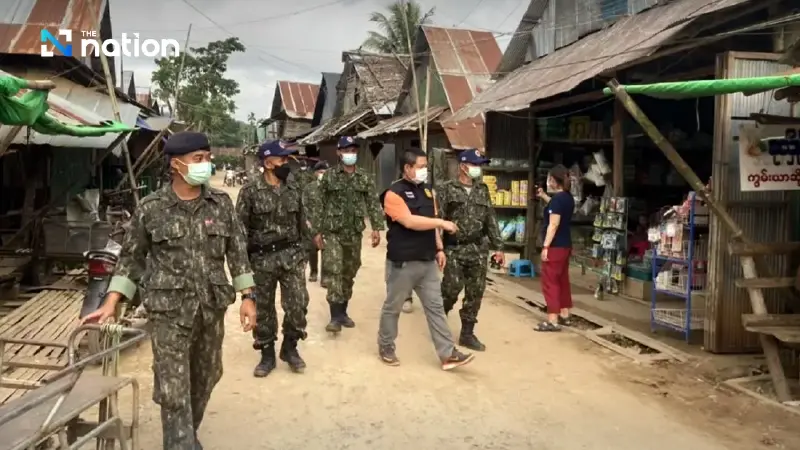


DOPA says displaced persons from Myanmar may work legally only in approved skilled, semi-skilled and MOU-based jobs across 43 provinces.
The Department of Provincial Administration (DOPA) has clarified measures allowing displaced persons fleeing fighting in Myanmar to legally leave temporary shelters to work in Thailand, saying the policy applies only to approved skilled, semi-skilled and MOU-based jobs in 43 provinces.
The department released details in response to public questions about displaced persons from Myanmar who have been permitted to leave temporary shelter areas for work. It explained the background, principles, reasoning and state management measures behind the policy to promote accurate public understanding.

Since 1984, displaced persons fleeing armed conflict in Myanmar have crossed into Thailand along the western border. They are referred to as “Myanmar Displaced Persons” and are classified as illegal migrants under the Immigration Act B.E. 2522 (1979).
However, the Thai government has provided humanitarian assistance and temporarily allowed them to remain within nine temporary shelter areas in four provinces: Mae Hong Son, Tak, Ratchaburi and Kanchanaburi. There are currently 77,305 displaced persons living across the nine shelters.

The department explained that the special permission allowing some displaced persons to work followed the United States’ decision to cut funding for displaced persons in temporary shelters. As a result, the responsibility for caring for them, including medical support and food assistance, has fallen solely on the Thai government.
The Cabinet therefore approved measures to manage the employment of foreign nationals residing in temporary shelters for displaced persons fleeing fighting in Myanmar. The Interior Ministry subsequently issued an announcement allowing foreign nationals living in controlled areas to remain in Thailand as a special case under the Cabinet resolution.

The Department of Provincial Administration also prepared guidelines for seeking permission to leave controlled areas. This allows eligible displaced persons to stay in controlled areas and legally leave them to work.
The measure is intended to reduce the burden on the Thai government, support economic activity and address Thailand’s labour shortage.
Foreign nationals covered by the measure may work only with legally registered employers and only in skilled or semi-skilled occupations. These include construction trades, agricultural trades and other skilled work such as knife-making, shoemaking, pottery and garment production.
The permitted job categories may be adjusted in line with labour-market demand at different times. Workers must also enter employment under memorandum of understanding arrangements and have employers. These jobs include labour work and shopfront sales.
The department said displaced persons who have been permitted to remain in Thailand as a special case may leave controlled areas to work in three regions covering 43 provinces.
In the North, 17 provinces are included: Kamphaeng Phet, Chiang Rai, Chiang Mai, Tak, Nakhon Sawan, Nan, Phayao, Phichit, Phitsanulok, Phetchabun, Phrae, Mae Hong Son, Lampang, Lamphun, Sukhothai, Uttaradit and Uthai Thani.
In the Central region, 18 provinces are listed: Bangkok, Kanchanaburi, Chai Nat, Nakhon Pathom, Nonthaburi, Pathum Thani, Prachuap Khiri Khan, Ayutthaya, Ratchaburi, Lop Buri, Samut Prakan, Samut Songkhram, Samut Sakhon, Saraburi, Sing Buri, Suphan Buri, Ang Thong and Phetchaburi.
In the East, eight provinces are included: Chanthaburi, Chachoengsao, Nakhon Nayok, Prachin Buri, Chonburi, Rayong, Trat and Sa Kaeo.
The Department of Provincial Administration stressed that allowing displaced persons from Myanmar to leave temporary shelters for work is a measure carried out under relevant laws, regulations and Cabinet resolutions.
It said the system includes supervision, identity verification and systematic controls on employment to strike a balance between human dignity and national security.
