
Thailand rebuts UN human rights expert over return call


Thailand says civilian returns must be safe and dignified, while the Ban Nong Chan boundary issue remains with bilateral border mechanisms.
Thailand on Thursday (August 20, 2026) distinguished the humanitarian return of displaced Cambodian civilians from the determination of border sovereignty, arguing that any return to the Ban Nong Chan area must meet safety conditions and comply with the full terms of the December 27 ceasefire statement.
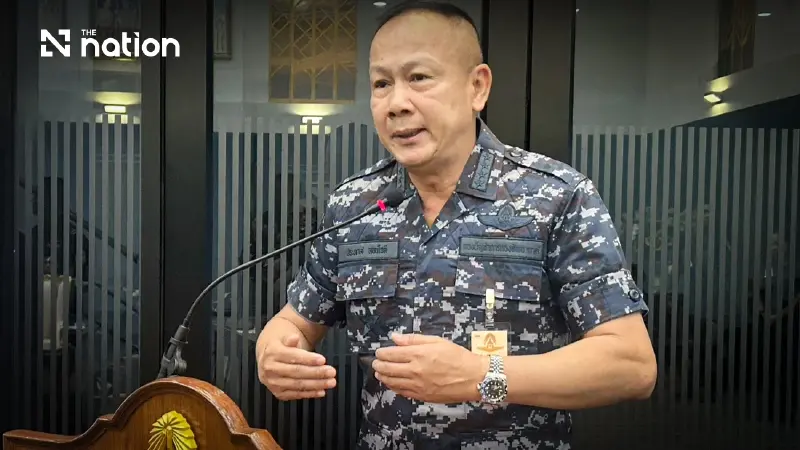
ACM Prapas Sornchaidee, Assistant Commander-in-Chief of the Royal Thai Air Force and director of Thailand’s Joint Information Centre on the Thailand-Cambodia situation, made the remarks in response to Tom Andrews, the United Nations Special Rapporteur on the situation of human rights in Cambodia.
Andrews has said people displaced by armed conflict have a right under international law to return to their homes and has urged Thailand and Cambodia to work together to accelerate the process. Prapas was responding specifically to Andrews’ call for Cambodian civilians to be allowed to return to the Ban Nong Chan border area in Sa Kaeo province.
Thailand cites full wording of ceasefire clause
Prapas urged Andrews to consider the joint statement in its entirety rather than interpret selected wording without its broader context.
Clause 4 of the statement allows civilians living in affected border areas to return as soon as possible, without obstruction and in safety and dignity, to their homes and normal livelihoods in areas within their own side.
Clause 3 separately states that all arrangements under the agreement are without prejudice to border demarcation or the international boundary between the two countries. It assigns the resumption of survey and demarcation work to the Joint Boundary Commission (JBC), including measures to protect survey teams from landmines.
“Several terms matter, not only ‘return’, but also ‘areas within their own side’, ‘safety’ and ‘dignity’. Each must be respected equally,” Prapas said.
The December 27 agreement introduced an immediate ceasefire and de-escalation measures, with the ASEAN Observer Team involved in verifying their implementation.
Safety and sovereignty treated as separate questions
Prapas said the Thai government had a responsibility to protect civilians and would need to verify conditions before allowing people to enter any affected area.
Authorities would have to ensure that an area was free of landmines, that there was no risk of renewed fighting and that a civilian return would not trigger another confrontation, he added.
The question of which territory belonged to either country was a separate matter that had to be considered through facts, evidence and the border mechanisms agreed by Thailand and Cambodia.
Prapas argued that the movement of civilians, or demands made by external parties, could not replace those mechanisms or be treated as a decision on sovereignty.
“Thailand is not rejecting humanitarian principles, but we must act responsibly. Safety must come first, trust must be built and the facts must be verified before we proceed,” he said.
Ban Nong Chan sector remains under joint survey
Ban Nong Chan has been the subject of competing territorial positions. Thailand’s Foreign Ministry maintains that it is Thai territory and says the area originally served as a temporary shelter for Cambodians fleeing earlier fighting before the settlement expanded over time despite Thai protests.
Cambodian official reporting refers to the corresponding locality as the Chouk Chey-Nong Chan sector, while Cambodian authorities and displaced residents have argued that civilians should be permitted to return to their homes.
At a special JBC meeting in October 2025, Thailand and Cambodia agreed to conduct a joint survey covering the Chouk Chey-Nong Chan and Prey Chan-Nong Ya Kaeo sectors between boundary pillars 42 and 47.
The two sides also agreed to install temporary markers after completing the survey. The markers are for technical survey purposes only and are explicitly without prejudice to the final international boundary between the two countries.
Local military and civilian authorities were instructed to ensure the safety of the joint survey team, avoid obstructing its work, refrain from provocative actions and confirm that survey areas were safe from landmines.
Prapas concluded that civilians could return once they could do so safely and to areas within their own side. Their movement, he said, should not be used to establish the border or determine either country’s sovereignty.
