
Thailand to raise Myanmar mining pollution concerns with China
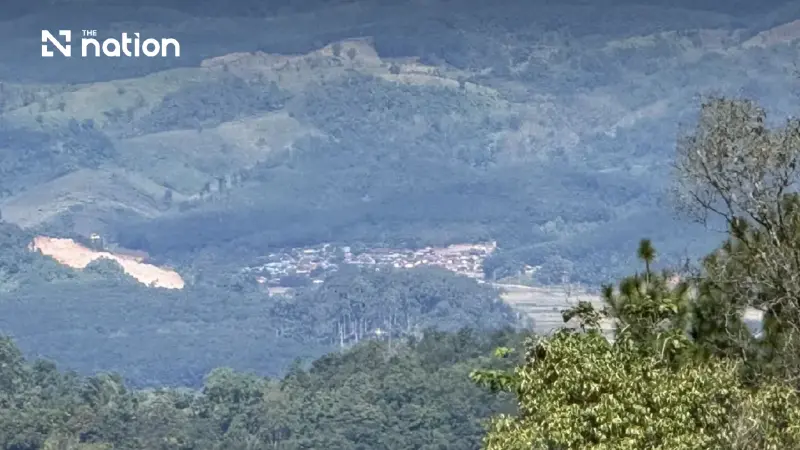


Jeseth’s border inspection highlights mining expansion concerns as Thailand prepares talks with China and alternative water supplies for Chiang Rai.
- Thailand is preparing to raise concerns with China over expanding mining operations in Myanmar that are suspected of causing water pollution in Thailand's Chiang Rai province.
- Thai officials infer Chinese involvement because they believe valuable minerals from the mines, such as rare earths and gold, are not entering Thailand and are likely being sent to China.
- A high-level Thai delegation, including the Prime Minister, plans to present findings on the mining operations to Chinese authorities during an upcoming visit.
- While pursuing diplomatic talks, Thailand is also considering controls on mineral imports and is developing alternative water supplies for affected communities.
Thailand is preparing to raise concerns with China over expanding mining operations in Myanmar and their suspected links to water pollution in Chiang Rai, while developing alternative supplies for local communities.
Deputy Interior Minister Jeseth Thaiseth visited Ban Phaya Phrai in Chiang Rai’s Mae Fa Luang district on Saturday (November 14, 2026), inspecting mining areas in Myanmar’s Shan State from the Thai side of the border.
Jeseth, who plans to join Prime Minister Anutin Charnvirakul’s delegation from 16–18 November, estimated that the mining operations he observed could double in size within a year.
China talks and possible mineral import controls
Jeseth said Anutin had already discussed the issue with the Chinese premier and instructed him to gather comprehensive information on mineral production, import-export companies, mining inputs and minerals entering Thailand, including any involvement of Thai individuals or businesses.

He intends to present his findings during discussions with Chinese authorities and proposed involving other countries affected along the connected waterways.
Jeseth expressed hope that the situation would improve if China gave the issue sufficient attention and honoured its commitments.
The Cabinet has discussed possible controls on mineral imports, but Jeseth wants consultations with Chinese and Myanmar authorities before measures are determined. Further information gathering and legal assessment are needed, with negotiations, pressure and requests for cooperation proceeding together.
Asked whether the mines were Chinese-funded, Jeseth said some minerals from the area entered Thailand, but rare earths and gold did not. He inferred that these products were instead being sent to China, suggesting Chinese involvement without establishing ownership of the mines.
He added that a deputy prime minister had raised mining concerns in previous discussions. Although Jeseth had not attended those talks, he had supplied information on water-production problems.
Alternative water supplies for Chiang Rai
Protecting water supplies for drinking, household use and agriculture was the government’s immediate responsibility, Jeseth said. He had instructed agencies to assist affected residents, including children, adults, older people and patients.
He described the situation as a national-level problem, arguing that even a 24-hour interruption to tap-water production would be serious, given Thailand’s water-supply standards and the consequences for residents.
Jeseth planned to inspect Mae Sai’s waterworks and hear community concerns that afternoon. Additional water-production facilities might be needed to meet household demand.
Mae Sai has already used emergency supplies from Ko Chang within the district when contamination exceeded acceptable levels.
Longer-term measures include the Chiang Saen project, which aims to draw water from the Mekong River. Jeseth acknowledged water-quality concerns in the Mekong but indicated that contamination levels there remained relatively low.
Funding to address problems associated with the Kok River had also been approved, with procurement underway for work involving the Lao River.
Jeseth said the aim was to establish permanent alternative supplies, adjust water-supply routes and support village waterworks. Requests for central government funding would be accelerated where immediate improvements were possible.
Coordination over a proposed Thai-Chinese water-quality monitoring centre was continuing. The Ministry of Foreign Affairs, Ministry of Industry and Ministry of Natural Resources and Environment would lead the initiative.
Jeseth recalled raising environmental concerns at an earlier ASEAN+1 meeting on urban planning, when public awareness and pressure were lower. He believed wider communication would encourage other countries to give the issue greater attention.
Border inspection points to further mining expansion
The visit to Ban Phaya Phrai in Thoet Thai subdistrict offered views of mining areas at Doi Ko Wan and Mong Kan in Myanmar’s Shan State.
Large areas of exposed earth were visible along the mountainsides, while binoculars revealed no fewer than 10 additional locations where land had been cleared.

Two excavators were operating at a hilltop site. No machinery was observed at other locations, although journalists had seen machines working about a month earlier and residents reported continuing gold mining.
Nearby buildings included a structure thought to be an ore-smelting facility and rows of buildings resembling compounds associated with scam operations near Myawaddy. These were visual assessments, not confirmation of the buildings’ functions.
Jeseth said the inspection allowed him to compare satellite imagery with conditions on the ground, including changes in infrastructure, the number of mining sites and the extent of new excavation.
He observed more buildings than previously reported and considerable land available for expansion. Streams near the mining areas flow towards Mae Sai, raising concerns for communities along the waterways.
“From what I have seen, I believe the mines could double in size within a year, given their resources, machinery, workforce and infrastructure,” he said.
Jeseth expected operations to continue and cautioned that the volume of toxic substances could increase, progressively worsening the problem.
Limits on intervention and security coordination
Jeseth acknowledged that Thailand had no authority to intervene directly in mining operations across the border.
Conflict in Myanmar complicated efforts to regulate the activities, while meeting international production standards would require specialists and technology, even if operators permitted inspections and agreed to cooperate.
He said a committee had held discussions without receiving clear answers, with parties denying involvement or declining to intervene in activities involving four groups, which he did not identify. Security channels would therefore also be needed.
On questions about unresolved border demarcation, Jeseth referred the matter to the relevant security agencies. He had recently spoken with the Third Army Area commander, whose information included confidential material that could not be disclosed.
Agencies would consolidate their findings after the prime minister’s return and provide a further update to the public.
The border visit was conducted without advance notification to local agencies so Jeseth could see conditions first-hand.
He was accompanied by journalists and Dr Suebsakun Kidnukorn, a Chiang Rai-based academic who had previously highlighted the issue. Colonel Singhanat Losuya, deputy director of the Internal Security Operations Command in Chiang Rai, also joined the inspection and provided information.
