
Heavy rains from Wipha remnants dilute arsenic pollution in northern rivers: PCD
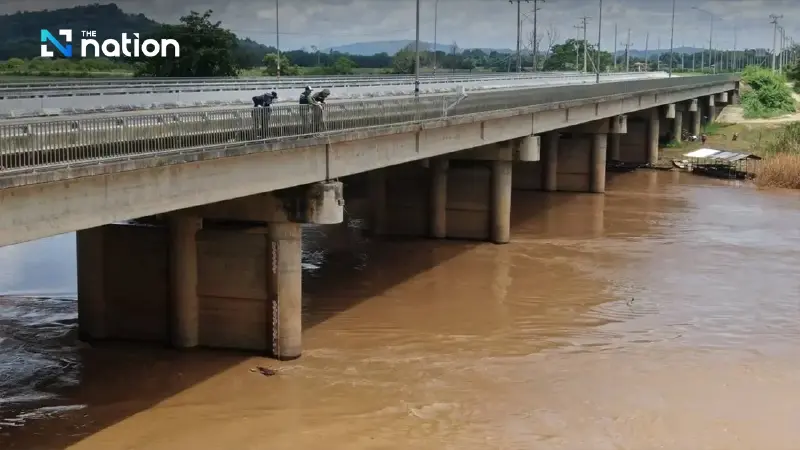


PCD reports arsenic levels in Kok and Mekong rivers dropped after Wipha rains, but Sai River remains heavily contaminated from Myanmar rare earth mining.
- Heavy rains from the remnants of tropical storm Wipha have diluted arsenic pollution in northern Thailand's Kok and Mekong rivers, according to the Pollution Control Department (PCD).
- Following the late July storms, water samples showed a notable decrease in arsenic levels, with parts of the Kok River falling below the danger threshold for the first time.
- In contrast to the improvements elsewhere, arsenic contamination remained high in the Sai River, where all monitoring sites continued to exceed the standard safety limit.
- The PCD attributes the improvement to both the dilution effect of the rainwater and a possible temporary suspension of the polluting mining operations in Myanmar caused by the weather.
Arsenic levels drop after late July storms
The Pollution Control Department (PCD) has reported a decline in arsenic contamination in the Kok and Mekong rivers for the first time, attributing the improvement to heavy rains triggered by the remnants of tropical storm Wipha in late July.
According to the PCD, water samples were collected between August 4–8 from the Kok, Sai, Ruak and Mekong rivers. The results showed a notable decrease in arsenic levels in the Kok and Mekong rivers, while contamination remained high in the Sai River.
This marks the ninth round of monitoring by the PCD since uncontrolled rare earth mining in Myanmar’s Shan State caused severe water pollution across northern river systems.
Rare earth mining blamed for river contamination
Reports indicate that rare earth mining in Shan State expanded significantly between 2015 and early 2025. Operators have been using the low-cost in situ leaching (ISL) method, which involves dissolving minerals underground using chemical solutions. This process has severely contaminated groundwater and river systems flowing from the mining sites.
To track the impact, the PCD has set up 15 testing points on the Kok River, three on the Sai River, two on the Ruak River, and three on the Mekong River in Chiang Mai and Chiang Rai. Water is sampled twice a month, with sediment samples tested monthly since March.
Kok River: slight exceedances but overall improvement
For the first time, arsenic levels in the Kok River in Chiang Mai were found to be below the danger threshold. However, slightly higher concentrations than the standard limit of 0.01 mg/L were detected in some locations in Chiang Rai, such as Ban Ja Doe (0.011 mg/L), Chalerm Phra Kiat 1 Bridge (0.011 mg/L), Chiang Rai Weir (0.011 mg/L), and Rim Kok–Wiang Nuea Ruam Jai Bridge (0.012 mg/L).
Sai River: persistent high contamination
In contrast, all three monitoring sites along the Sai River exceeded the standard limit. Levels were recorded at 0.029 mg/L in Ban Hua Fai, 0.034 mg/L at the Second Sai River Friendship Bridge, and 0.019 mg/L at Ban Pa Sang Ngam.
Ruak River: within safe standards
Tests in the Ruak River showed arsenic levels remained within safety standards at both monitoring sites, with results below 0.010 mg/L.
Mekong River: contamination under control
The three Mekong River testing points in Chiang Saen district also reported levels within the standard, at or below 0.010 mg/L.
PCD’s outlook
The PCD said heavy rains not only diluted contamination but might have forced mining sites in Shan State to temporarily suspend operations. It noted that only residues at water gates showed levels higher than the safety standard.
