
Bangkok governor says flood situation improving, but warns of high tides next week
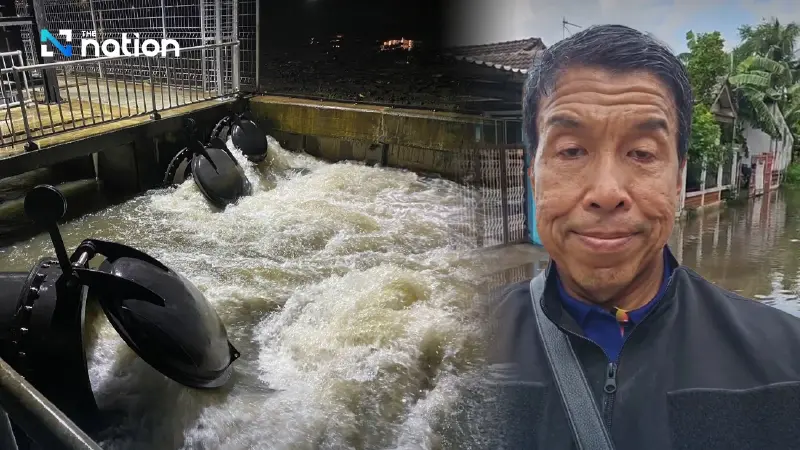


Bangkok governor Chadchart Sittipunt says the flood situation is improving as the city braces for high tides on October 10–11.
Bangkok Governor Chadchart Sittipunt on Sunday (October 5) inspected the Phra Khanong pumping station, a key flood-control hub in the capital, accompanied by Deputy Governor Wisanu Subsompon and other city officials.
Chadchart reported that the overall flood situation in Bangkok has improved in previously affected areas, particularly in Prawet district, which recorded the city’s heaviest rainfall on October 4, 122 millimetres. However, he said officials continue to monitor residual flooding in smaller alleys and local streets.

He added that water from the northern region is not a major concern for Bangkok and is unlikely to reach a critical level, even though water levels in major dams remain high.
“Water management this year is far more efficient than in 2011,” he said, referring to the year of Bangkok’s major floods. “The volume of water released is significantly lower, currently about 2,500 cubic metres per second, while the system can safely handle up to 3,500 cubic metres per second.”
The Phra Khanong pumping station is currently maintaining water levels at –1 metre relative to mean sea level, he said. However, water from Khlong Prawet has been slow to flow due to the canal’s winding route, causing upstream water to remain high.

“In the future, we may need to consider constructing a water tunnel,” Chadchart noted, adding that the upcoming Nong Bon drainage tunnel, set to open next year, would help boost the city’s drainage capacity.
The governor also warned that high tides are expected to peak on October 10 and 11, with water rising twice daily, around 9am and 7pm. “There’s no cause for public alarm,” he said, “but residents living along the river outside flood barriers, such as the Rong Si and Thewarat Kunchorn communities, should remain vigilant.”
City Hall has reinforced sandbag barriers and built temporary wooden walkways to assist riverside residents.
Wisanu added that several projects are underway in the Phra Khanong and Prawet areas, including deepening the canal near the pumping station and constructing new embankments to improve water retention and flow.
Chadchart expressed regret that some communities had opposed the installation of small floodgates, saying such infrastructure would enhance the city’s water-control efficiency.
“The situation is not worrying,” he said. “Our Drainage Department is working around the clock, because the floods don’t take holidays, nor can our officials. Soon, the rainy season will end, and we’ll move into the dust season. For now, if any area remains flooded, please report it so we can send help immediately.”
