
Trang turns marine waste into art as 24 countries join eco-awareness project
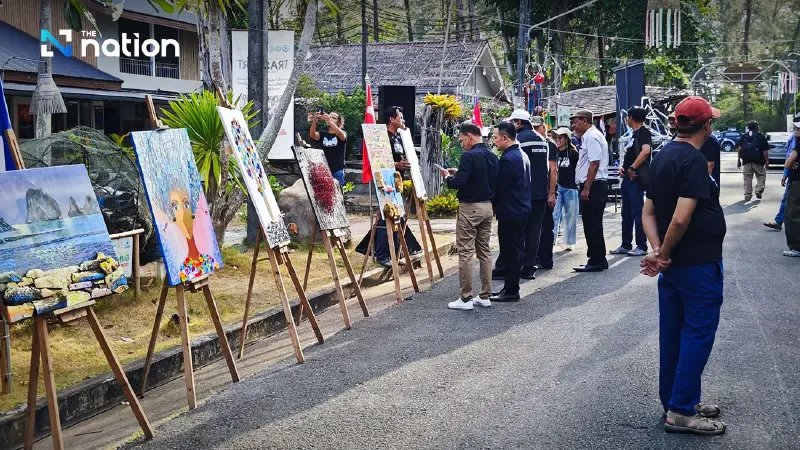


Thai and international artists from 24 countries have joined students and coastal communities in Trash Art Trang International 2026, transforming marine waste into artworks to raise environmental awareness and promote sustainable tourism.
Thai and international artists from 24 countries have joined students and coastal communities in Trash Art Trang International 2026, a project aimed at turning marine waste into art while encouraging tourists and local communities to protect the environment and tourist attractions.
The event is being held at Dugong Village in Sikao district, Trang, where artworks created from marine debris and discarded materials are on display as part of the third edition of the international project.
Organisers said marine litter, especially plastic waste, has become a major global problem that is harming marine animals, damaging ecosystems and affecting human health through the food chain.
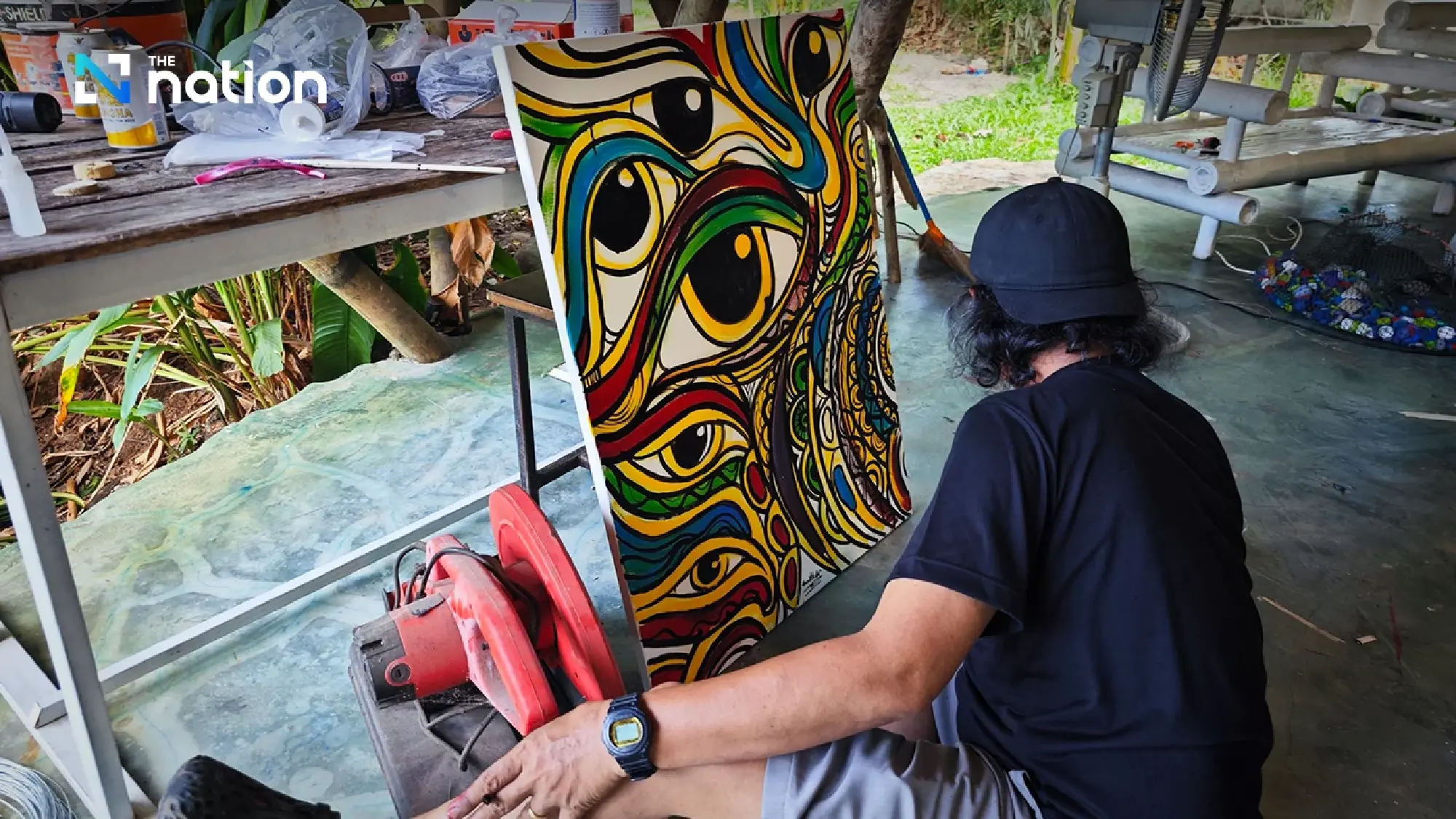

Art project turns waste into awareness
Trash Art Trang International 2026 has been organised on a continuing basis as a creative response to the growing problem of marine waste. By transforming discarded materials into art, the project seeks to raise awareness of environmental damage while showing how waste can be reused in meaningful ways.
Artists from 24 countries, including Spain, China, Indonesia, France and Thailand, have contributed works made from waste collected from the sea. Organisers said the project not only helps reduce waste, but also highlights the importance of using resources wisely and inspires people to see the value of marine and environmental conservation.
The event is also helping to promote tourism in Trang by drawing attention to local attractions through art.
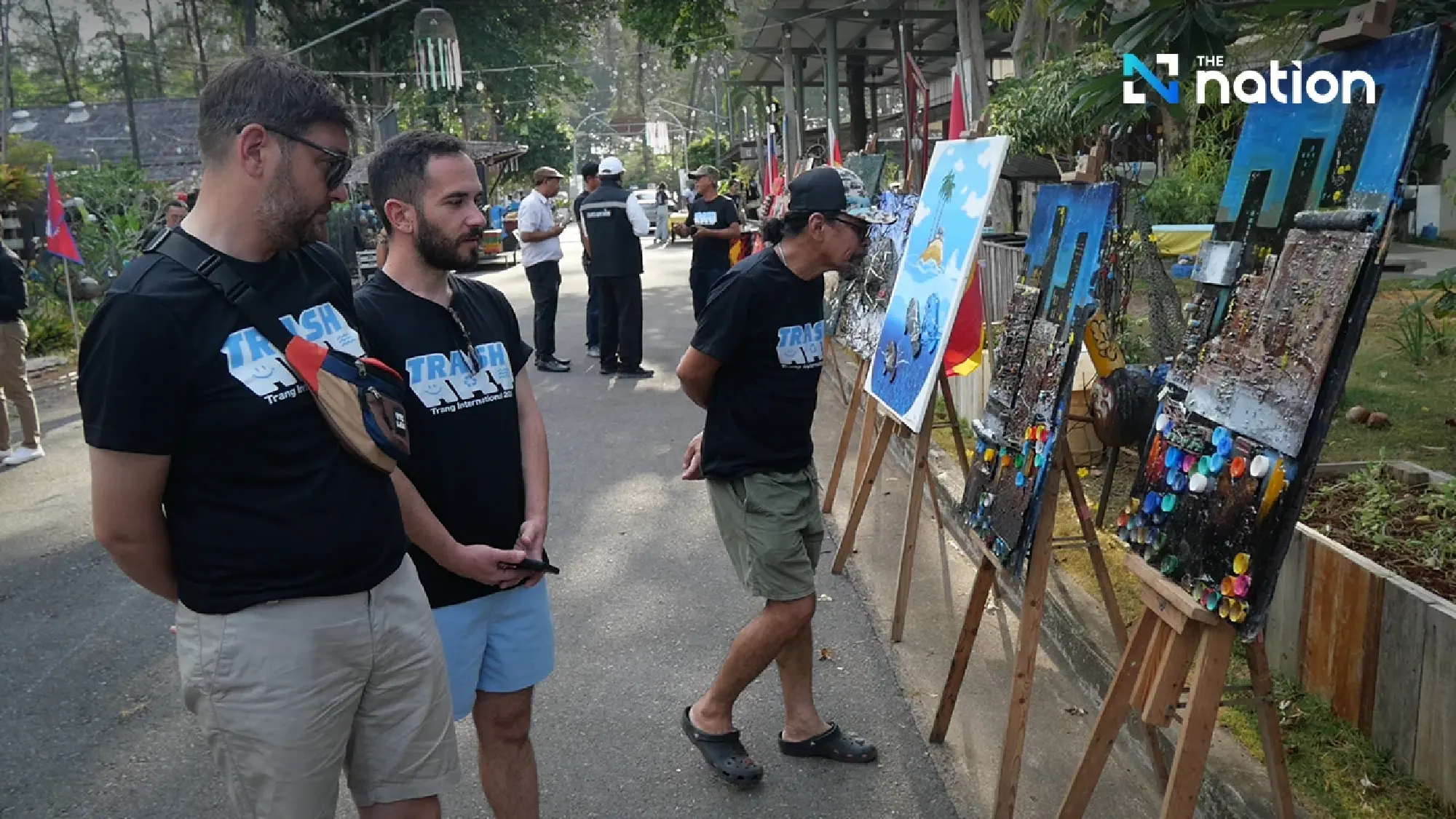

Coastal communities play a central role
According to Dugong Village owner and project initiator Chakyapong Ongcharoenkrit, the project places strong emphasis on participation from Trang’s coastal communities, including Koh Muk, Koh Libong, Koh Sukorn and Ban Hat Hua Hin.
He said these communities are closely tied to marine resources and are directly affected by marine waste, making their involvement essential.

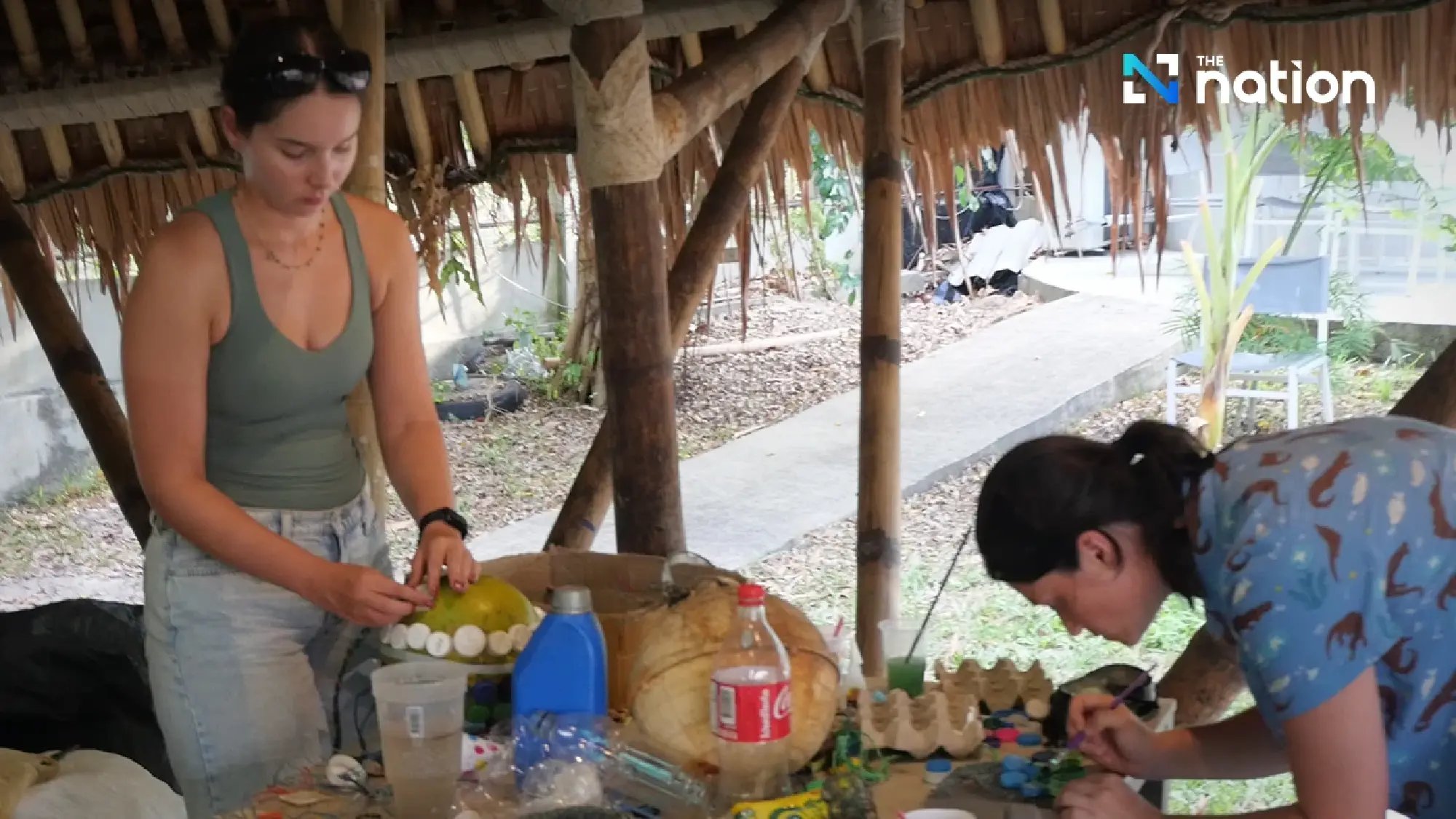
The project encourages local people to take part in collecting rubbish from the sea, sorting materials, joining workshops and helping organise exhibitions. The aim is to build awareness from household level upwards, while also giving young people in the communities an opportunity to learn from and exchange ideas with international artists.
He said the initiative could help build a long-term marine conservation network and support the development of sustainable eco-tourism in Trang, while sending a message to local people, visitors and future generations that rubbish should not be thrown into the sea or tourist sites.

Artists use their work to speak for nature
Mario Fois Carta, an artist from Sardinia, Italy, said art was essential for communicating environmental issues because artists of every kind — including painters, performers, poets and musicians — all have a voice that can reach people and encourage them to protect the world, promote peace and love nature.
He said his own work was inspired by conflict around the world. Its cracked form represents divisions among people and the struggle between power groups and ordinary citizens, while also expressing hope for change so that people can shape their own future and enjoy a better quality of life.

National artists join international collaboration
Sarawut Duangchampa, Thailand’s National Artist in Visual Arts (Sculpture) for 2017, said his piece was created by building on an aluminium structure first assembled by another artist, before adding parts from an old bicycle.
He said the work reflects the idea of artists from many nations coming together, with each element linked like lines of unity that form a collective creative force. He named the piece “Friendship”, symbolising harmony and unity.
Meanwhile, Decha Warachun, National Artist in Visual Arts (Printmaking and Mixed Media) for 2007, said solving the waste problem required greater public understanding, especially among school pupils, students and tourists, so they realise rubbish should not be left in natural areas.
He added that turning waste into art also helps children and young people learn that discarded materials can be developed into creative works of real value.
His own work uses foam in an abstract form to tell the story of marine areas inhabited by dugongs, while also reflecting the beauty of the environment alongside the problem of waste.

Students help turn rubbish into value
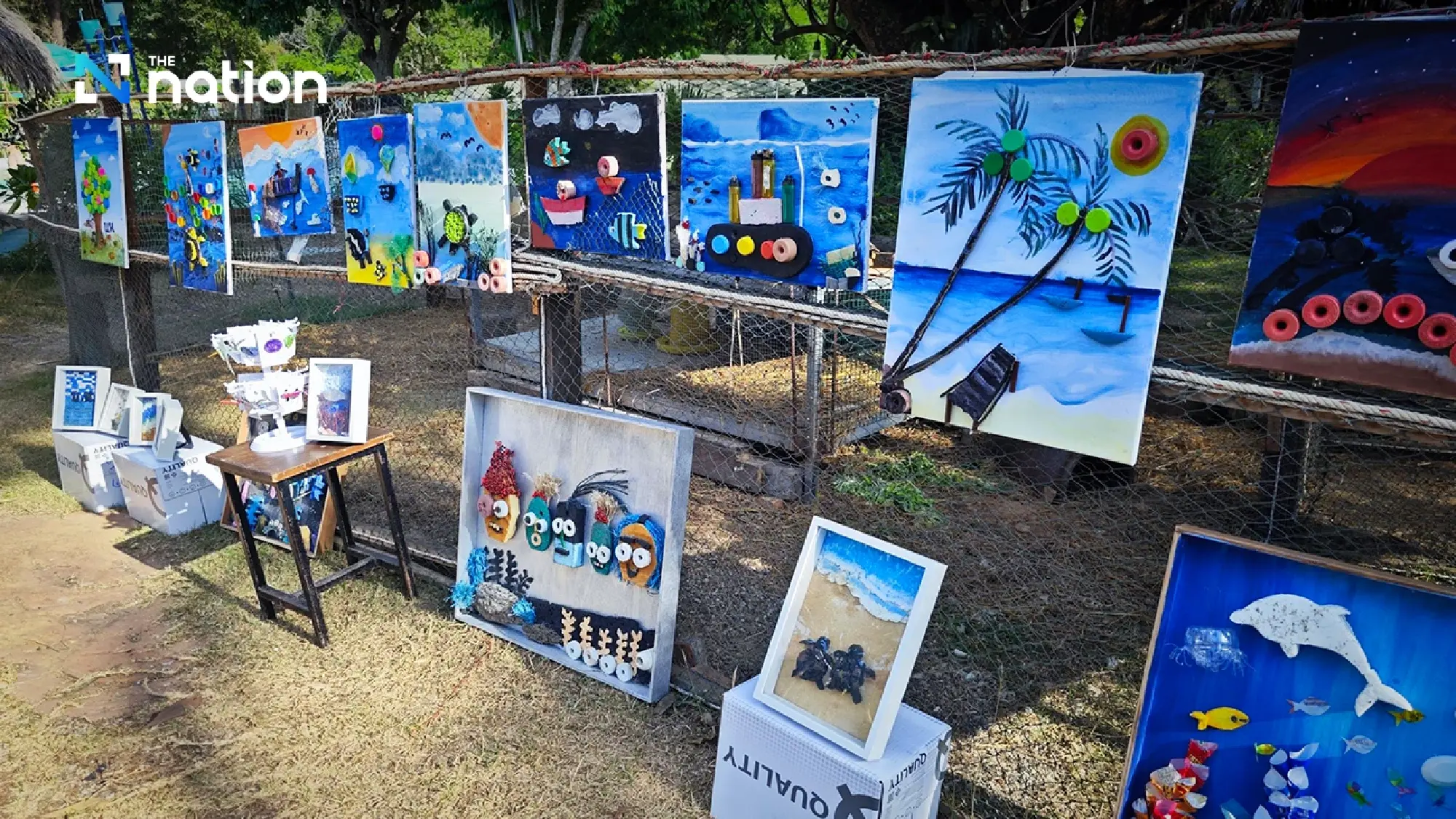
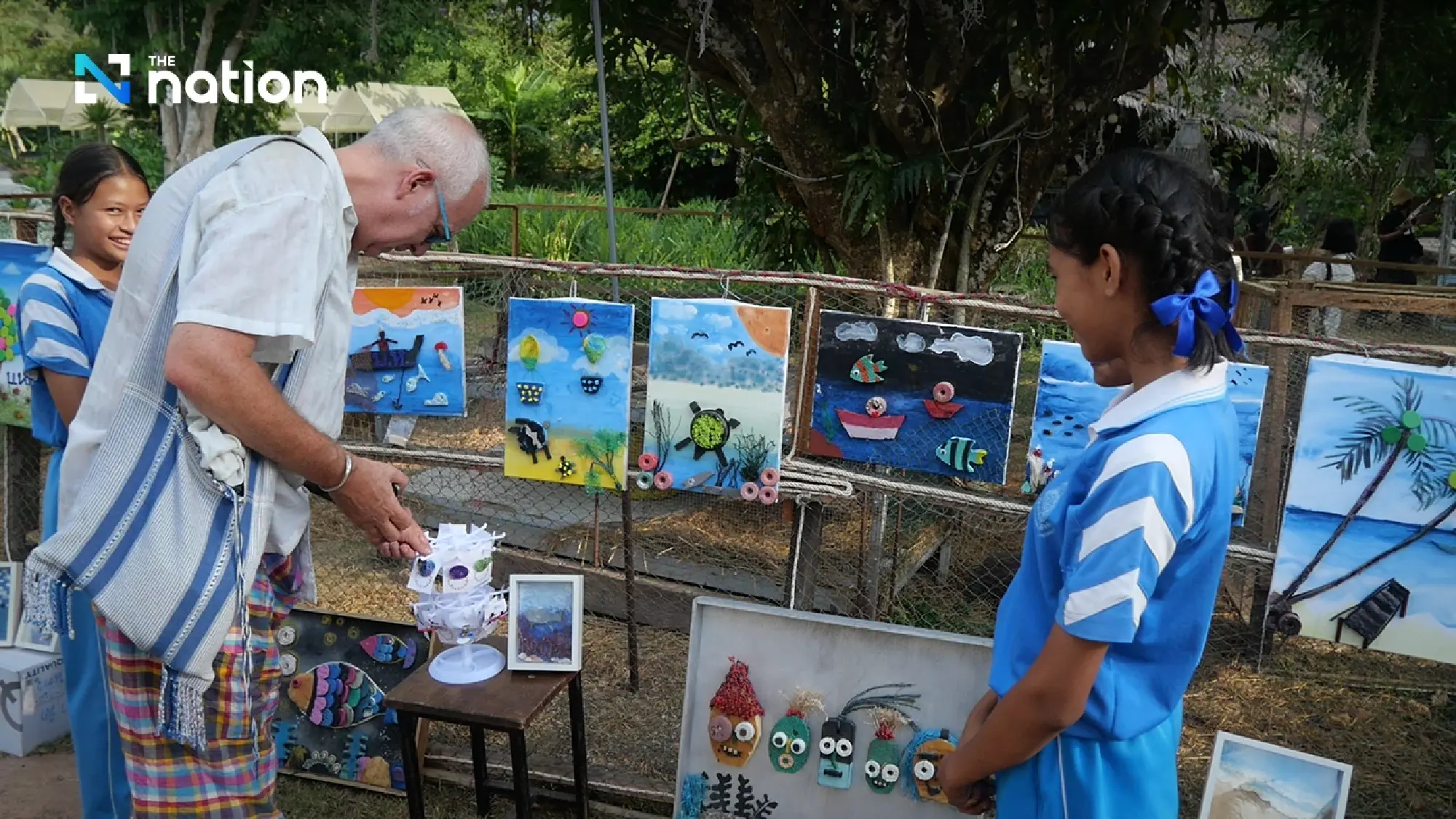
Students from Ban Hua Hin School in Sikao district also displayed and sold artworks made from waste at the event. Their items included plastic keyrings, photo frames and brooches, turning rubbish into practical products and souvenirs with prices starting from 20 baht.
One participating student said they were excited and happy to join the activity, adding that they planned to build on what they had learned by joining community campaigns, teaching local people how to upcycle waste and applying the experience to future art projects.
New landmark created for Trang tourism
Lamai Lapsirisopha, president of the Koh Muk Tourism Business Association in Trang, said the project had created a new landmark near the Koh Muk pier bridge, which has become a new check-in and photo spot for tourists.
She said the artworks were created after artists and community members worked together to collect rubbish and transform it into art. The project had been well received by local people because it raised awareness of waste management and showed how unused materials could be given new value through creativity.
