
Chadchart uses ‘chemical DNA’ to trace Bangkok PM2.5, cuts severe days by half
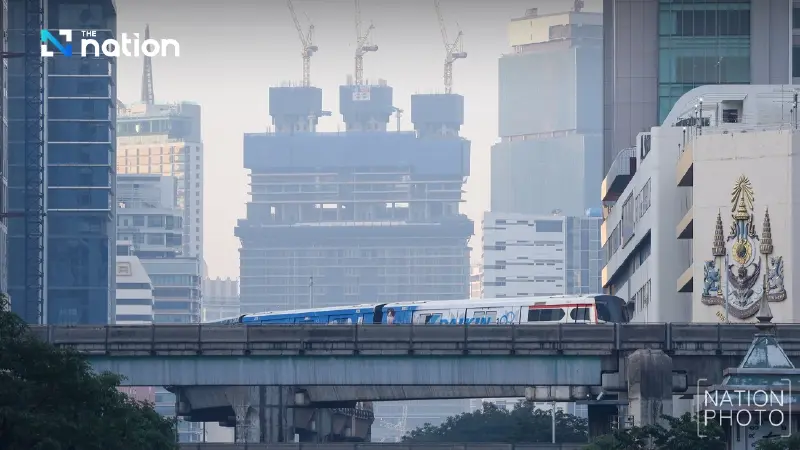


Bangkok Governor Chadchart Sittipunt says chemical fingerprint analysis helped identify the real sources of PM2.5, leading to a 45-50% drop in days with dangerous pollution levels.
Bangkok Governor Chadchart Sittipunt said Bangkok has managed to cut the number of days with severe PM2.5 pollution by 45-50% this year after using chemical fingerprint, or “chemical DNA”, analysis to identify the real sources of the dust more accurately.
Speaking at the Climate Care Talk: Understanding Bangkok’s “Mai The Ruam” waste management project, Chadchart said the city had moved away from simply guessing the causes of PM2.5 and had instead adopted a science-based approach. He said Bangkok sent dust samples to a laboratory for analysis, which showed that on high-pollution days the particles contained large amounts of potassium — a key indicator that the pollution was not coming from traffic alone, but also from biomass burning and rice straw burning.
Chemical analysis changes the response
Chadchart said the findings gave City Hall a much clearer picture of the true causes of PM2.5 in Bangkok. On days when pollution levels were lower, tests found that nitrates from vehicle emissions were the dominant pollutant. But on days when pollution spiked into the red zone, the chemical profile changed significantly, pointing to open burning as a major contributing factor.
That evidence allowed Bangkok to respond more precisely, he said, by working not only on vehicle emissions in the capital but also by engaging with farmers in Bangkok’s more than 100,000 rai of rice-growing areas and coordinating with neighbouring provinces where agricultural burning affects the city’s air quality.


PM2.5 figures improve sharply
Chadchart said the results had been significant. The number of days when pollution exceeded the standard, in the orange and red categories, fell by 45-50% compared with the previous year, while average daily dust levels overall declined by about 22%.
He added that burn spots in Bangkok had dropped by 44%, while nearby provinces such as Nakhon Nayok recorded a 25% decline. Part of that progress came from Bangkok’s support for farmers through free straw-compressing machines, allowing rice straw to be turned into income instead of being burned.
AI and real-time monitoring strengthen control
Alongside the chemical analysis, Bangkok has also intensified pollution controls through technology. Chadchart said the city introduced the Green List system, using CCTV and AI to detect lorries, while well-maintained vehicles and EVs are allowed to enter the city without restrictions during the dust season.
He added that Bangkok had also worked with China to install a “Superstation” capable of measuring pollution in real time, allowing officials to identify where incoming dust is coming from at any given moment.
Pollution remains a major threat
Despite the improvement, Chadchart warned that PM2.5 remained one of the biggest threats to Bangkok’s future. He said poor air quality could weaken the capital’s ability to attract talented people and investment, while pollution-related illness had already affected about 300,000 people and caused economic losses of more than 3 billion baht.
He said the lesson from this year’s campaign was that effective policy must be based on evidence. By pinpointing the source of pollution through chemical analysis, Bangkok had been able to target the problem more directly and achieve measurable results.
