
From Land of Smiles to Hub of Smart: Thailand’s aviation tech takes off
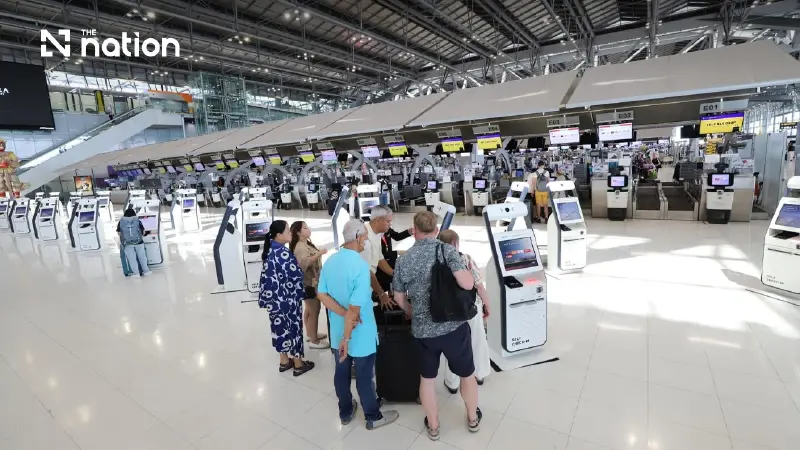


Thailand’s aviation-hub ambition is being powered by smart airport technology, biometrics, AI and data-driven infrastructure led by SKY ICT.
Thailand’s old travel promise was warmth. Its new aviation promise is intelligence.
As the kingdom pushes to become a leading aviation hub in the Asia-Pacific region, the “Land of Smiles” is steadily turning into a “Hub of Smart” — where hospitality is being reinforced by data, biometrics and frictionless passenger journeys.
The ambition is national. Thailand’s aviation vision includes expanding Suvarnabhumi Airport, upgrading Don Mueang, developing Andaman Airport and strengthening cargo, maintenance and sustainable aviation systems. The government has said Suvarnabhumi is being positioned to return to the world’s top 20 airports, while Bangkok’s main airports are being prepared for major capacity growth by 2030.
But infrastructure alone will not define the next era of air travel. The real competitive edge lies in what passengers cannot always see: the invisible software layer that keeps terminals moving.
That is where SKY ICT has become one of Thailand’s most important aviation-technology players. The company describes itself as a “Tech Backbone of Thailand’s airports”, using AI, IoT and Big Data to improve safety, speed and cost efficiency through biometric identification, auto gates, passenger tracking and turnaround management. It says its airport technology services now cover more than 13 airports nationwide.
The most visible breakthrough is the biometric “One ID” journey. SKY ICT’s facial-recognition platform allows travellers to register once and move through check-in, security screening and boarding with less repeated document handling. Its system integrates with common-use passenger processing platforms and supports self-service check-in, automated bag drop, passenger validation and self-boarding gates.
For passengers, the experience is simple: register a face, look at a camera, move forward. Suvarnabhumi Airport describes the process as three steps — facial registration, identity verification at the checkpoint and boarding-gate access — designed to make travel faster, more convenient and more secure.
In the age of premium travel, this matters. A hub is not judged only by runways, lounges or retail. It is judged by whether it makes movement feel effortless.
SKY ICT has also strengthened confidence through international standards. The company says it has received ISO/IEC 27001:2022 for information security, ISO/IEC 20000-1:2018 for IT service management, and BS ISO 23592:2021 with the BSI Kitemark™ for Service Excellence.
Together, these certifications signal that Thailand is not merely digitising airports, but building an auditable, secure and service-led aviation ecosystem.
For airlines, airport authorities and government agencies, that creates a smarter operating environment. For travellers, it delivers a smoother journey. For Thailand, it strengthens a bigger national story: a country where technology does not replace hospitality, but quietly upgrades it.
The smile remains. The system behind it is getting smarter.
