
Thailand rebukes Cambodia, calls for direct talks
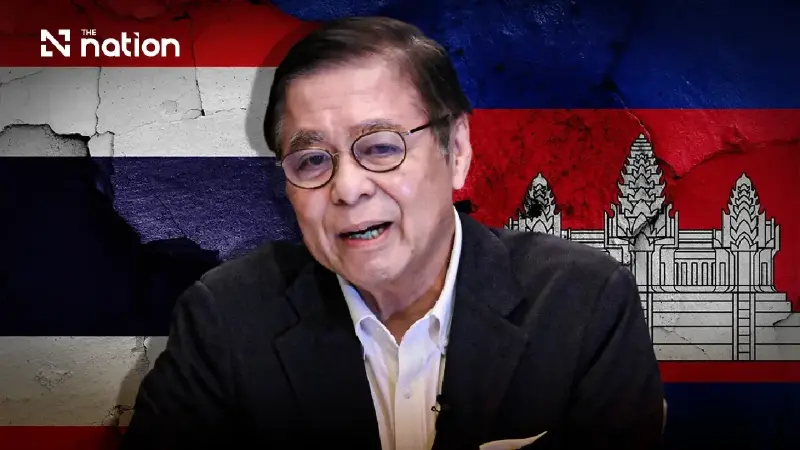


Sihasak says both sides must rebuild trust and negotiate directly, as Cambodia asks ASEAN to support the return of displaced civilians
- Thailand has urged Cambodia to engage in direct bilateral negotiations to resolve their border disputes, rather than using regional forums.
- The Thai Foreign Minister criticized Cambodia for repeatedly presenting what he described as a "one-sided narrative" at international meetings.
- Thailand finds Cambodia's position inconsistent, as it seeks bilateral talks for the land boundary while pursuing international conciliation for maritime claims.
- Bangkok insists that direct engagement is necessary to build mutual trust and address broader security concerns before technical boundary work can advance.
Thailand has urged Cambodia to return to direct negotiations over their border disputes, with Deputy Prime Minister and Foreign Minister Sihasak Phuangketkeow saying the two neighbours must seek a joint solution rather than use regional forums to make one-sided demands.

Speaking during the 59th ASEAN Foreign Ministers’ Meeting in Manila, Sihasak said Thailand was prepared to explain its position whenever Cambodia raised the issue internationally, but lasting progress would require sincerity, mutual trust and direct engagement between Bangkok and Phnom Penh.
He criticised Cambodian Deputy Prime Minister and Foreign Minister Prak Sokhonn for continuing to present what Sihasak described as the same account at successive international meetings.
Sihasak said the dispute could not be reduced to a one-sided narrative and that Cambodia should engage Thailand in finding a way forward rather than simply calling on Bangkok to meet its demands. His remarks represented Thailand’s position on the continuing disagreements between the two governments.
Thailand presses for bilateral engagement

Thailand has maintained that the two countries should follow the direction previously agreed by their leaders in Cebu, where they discussed bilateral engagement, confidence-building measures and the gradual restoration of relations.
Sihasak said Thailand had not closed the door to negotiations and remained prepared to discuss both land and maritime boundary issues. He argued that direct talks could begin before either side relied on further international mechanisms.
Cambodia has asked for a meeting of the Thailand-Cambodia Joint Boundary Commission, or JBC, to address the land boundary. It has separately initiated compulsory conciliation proceedings under the United Nations Convention on the Law of the Sea concerning the countries’ overlapping maritime claims.
Sihasak said Cambodia’s positions appeared inconsistent because it was seeking bilateral talks through the JBC while declining Thailand’s proposal to begin discussions under channels available within the law-of-the-sea process. Cambodia has said land-boundary negotiations should be kept separate from the maritime proceedings.
The Thai Cabinet has approved a new chair and members for Thailand’s JBC panel. Sihasak said this was an internal technical preparation and did not mean that formal negotiations with Cambodia were about to begin.
He said boundary demarcation could not be separated from wider border-security conditions. Thailand wanted progress on confidence-building measures, including demining, action against cross-border scam operations and an end to incidents or statements that Bangkok viewed as provocative.
Sihasak has also told international counterparts that Thailand is not opposed to dialogue, but that negotiations must be conducted in good faith and not used by either side to gain a political or diplomatic advantage.

Cambodia raises humanitarian concerns
Prak Sokhonn used meetings in Manila to draw ASEAN’s attention to the humanitarian consequences of the border conflict.
Cambodia’s Foreign Ministry said more than 20,000 people remained at displacement sites despite the ceasefire agreed in December. Prak urged ASEAN governments to support their safe and unhindered return so they could resume their livelihoods.
He told an ASEAN meeting with representatives of the ASEAN Intergovernmental Commission on Human Rights that the conflict had left children out of school and vulnerable groups with limited access to essential care.
Prak also thanked the Philippines for what Cambodia described as its constructive role in supporting a peaceful resolution and the work of the ASEAN Observation Team.
Thailand has not rejected a supporting role for ASEAN members or other international partners. Sihasak has said, however, that outside involvement cannot replace direct discussions between the two neighbouring governments.
He said both countries needed to move beyond competing accounts of the conflict, face each other across the negotiating table and agree on practical steps to restore trust before technical boundary work and broader bilateral relations could make substantial progress.

