
Sihasak says Thai-Cambodian dialogue stalled after Cambodia takes dispute to UNCLOS
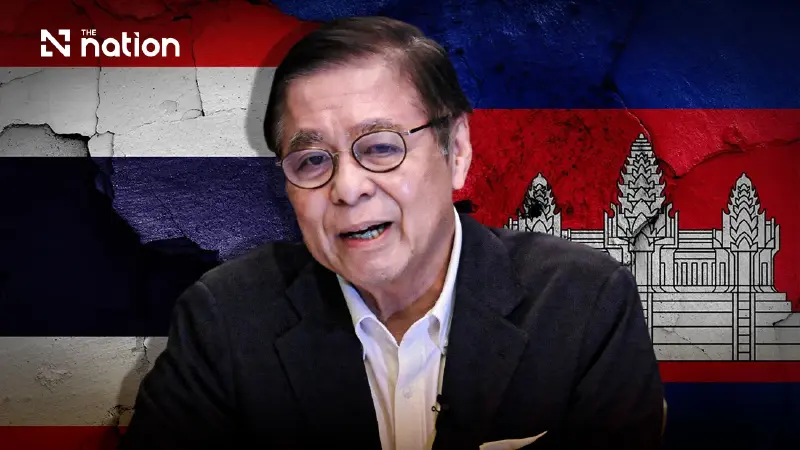


Deputy Prime Minister and Foreign Minister Sihasak Phuangketkeow says Thailand remains committed to bilateral talks with Cambodia, but dialogue has stalled after Phnom Penh chose to pursue dispute settlement under UNCLOS.
Deputy Prime Minister and Foreign Minister Sihasak Phuangketkeow has said the door to Thai-Cambodian talks is currently “closed”, after Cambodia chose to take its dispute into the dispute-settlement mechanism under the United Nations Convention on the Law of the Sea, or UNCLOS.
He said the move has left talks on the land boundary unable to move forward, while stressing that Thailand remains committed to resolving issues through bilateral negotiations.
Speaking in Beijing while accompanying Prime Minister and Interior Minister Anutin Charnvirakul on an official visit to the People’s Republic of China, Sihasak said Thailand had discussed regional security issues with the Chinese side, particularly the suppression of scammer networks and transnational crime.
He said these problems were linked to several countries and required cooperation from neighbours, including Myanmar, Cambodia and China, in order to address them systematically through law enforcement, anti-human trafficking measures, anti-money laundering efforts and action against transnational criminal networks.
On Thai-Cambodian relations, Sihasak said China had expressed readiness to help facilitate the restoration of ties between the two countries.
However, Thailand has insisted that any solution should begin with bilateral dialogue, which it sees as the most appropriate mechanism.
At present, he said, talks cannot proceed because Cambodia has chosen to bring the dispute into the UNCLOS dispute-settlement process instead of holding direct negotiations.
Asked whether this process had reduced the chances of dialogue, Sihasak said: “At this point, the door is closed. There is still no opportunity to talk about the land boundary. That will also be difficult.”
Sihasak said Thailand had also raised concerns with the Chinese government over the delivery of tanks to Cambodia.
He said that while Thai-Cambodian relations remain sensitive and fragile, the transfer of military equipment could affect the atmosphere for de-escalation.
Thailand has asked China to take into account the impact on regional stability and the feelings of all parties involved.
On Myanmar, Sihasak said Thailand and China shared the same position in supporting Myanmar’s return to engagement with the international community.
However, he said this must proceed alongside peacebuilding and responses to the concerns of the wider international community.
Thailand also raised the issue of pollution in the Kok River with China, as it is a matter of concern for the Thai public.
Sihasak said Thailand had asked China to provide technical support to Myanmar to help accelerate the establishment of a Thai-Myanmar joint committee to address the problem sustainably.
He added that Thailand had also conveyed concern over the problem of grey Chinese capital, insisting that the Thai government welcomes only quality, transparent investment that complies with Thai law.
Although grey capital groups represent only a small portion compared with most Chinese investors, they have affected public confidence and sentiment in Thailand.
Sihasak said Thailand has asked Chinese authorities to cooperate seriously in preventing and resolving the problem, in order to maintain a positive investment climate and preserve good relations between Thailand and China.
