
Thai anti-graft agency warns of four identity fraud schemes
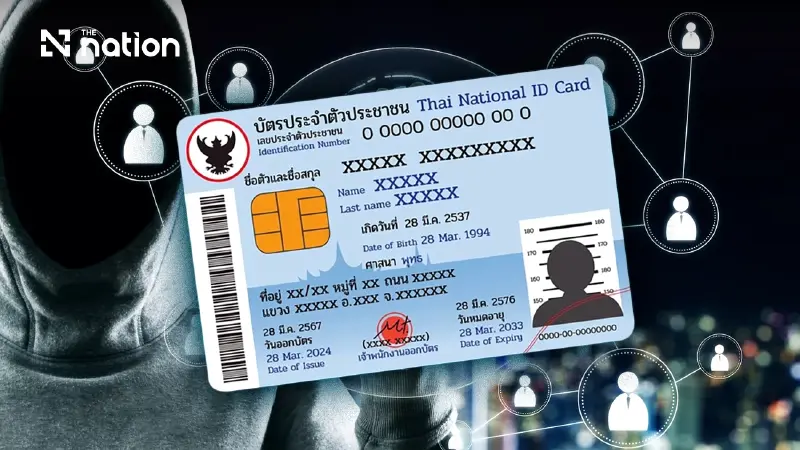


PACC wants civil-registration, immigration, hospital and banking databases linked as it warns identity laundering threatens national security
- Thailand's anti-corruption agency (PACC) has warned of four identity fraud schemes used by foreign criminal networks, which it calls "identity laundering."
- The methods include assuming dormant or deceased identities, improperly entering the "pink card" system for non-nationals, falsifying birth records to gain Thai nationality, and creating multiple overlapping identities for a single person.
- The agency stated that these fraudulently obtained but genuine documents pose a national security threat, allowing criminals to conduct financial transactions and register companies.
- As a solution, the PACC proposed a central database linking records from the Immigration Bureau, hospitals, and banks to automatically flag high-risk or inconsistent identity information.
Thailand’s Public Sector Anti-Corruption Commission (PACC) has identified four methods that it says foreign criminal networks use to acquire or exploit Thai civil-registration documents, warning that “identity laundering” poses a national security threat.
Pol Lt Col Siripong Sritula, deputy secretary-general of the PACC, said on Tuesday (August 18, 2026) that the methods involved assuming dormant identities, improperly entering the pink-card system, falsifying birth records and creating overlapping identities.
He called for data held by the Department of Provincial Administration, Immigration Bureau, hospitals and banks to be linked through a central system capable of issuing automatic risk alerts.
Siripong said pursuing cases individually would not address the root cause because agencies currently keep their records separately, preventing authorities from seeing a person’s full identity history.
He cited the case of Chinese national Mingchen Sun, who is facing charges connected to military-grade weapons and explosive materials, as an example of how genuine government documents could allegedly be obtained using false information.
Authorities have also arrested a district official and a district employee accused of falsifying civil-registration records for Sun. The allegations remain subject to legal proceedings.
Four methods used to exploit identity records
Siripong outlined four principal methods:
1. Assuming dormant or deceased identities
Siripong described this as a basic and frequently detected method that was particularly widespread between 2007 and 2017.
Networks allegedly search for the records of children whose deaths were not registered, people who have never obtained an identity card and bedridden patients unable to contact government agencies. Because the records show little or no activity, the names can be sold through brokers for foreign nationals to assume.
Siripong alleged that government officials with access to civil-registration databases sometimes facilitate the process or act as intermediaries between brokers and foreign applicants.
2. Exploiting pink-card registration
This method allegedly involves entering a foreign national’s name in a yellow house-registration book for people without Thai nationality who have a permanent address.
Siripong said applications could be supported by claims based on marriage or residence in a remote area, particularly in northern Thailand. He referred to Operation Salai Mok Chiang Dao, which targeted an alleged network in Chiang Dao and Wiang Haeng districts of Chiang Mai.
Those entered in the system may receive a pink identification card for people without Thai nationality. Siripong said the card and registered address could then be used for financial transactions and company registrations.
3. Falsifying birth records
The third method involves fabricating birth information so children obtain Thai nationality from birth.
Siripong said networks described by officials as “Chinese baby gangs” allegedly enter false information into government systems to secure genuine birth certificates or collude with hospital personnel to issue documents for children to whom the records do not belong.
4. Creating overlapping identities
Siripong described the use of several identities or national statuses by one person as the most complex method.
The identities can allegedly be alternated when travelling or conducting transactions, making it harder for authorities to connect records and detect suspicious activity.
Sun case cited as identity-laundering example
Siripong described Sun’s case as a “perfect crime” in identity-laundering terms because of the alleged complexity of the process.

He said Sun held Chinese and Cambodian passports, Dominican nationality, a South Korean visa and a Thai pink card. Maintaining several identities and statuses would have required substantial investment, he added.
Siripong alleged that Sun used his marriage to a Thai national to secure entry in a TR.13 house-registration record for people without Thai nationality in Chiang Dao district. The registration subsequently enabled him to obtain a genuine pink card.
A pink card identifies a person without Thai nationality and does not confer Thai citizenship.
With the card and a registered address, Sun could open bank accounts, conduct financial transactions, register legal entities and hold substantial assets without immediately attracting suspicion, Siripong said.
He described the resulting records as “genuine documents issued by the authorities but derived from false information”, making them more difficult to detect than ordinary counterfeit cards.
Central database proposed
Siripong said enforcement should focus on the system enabling identity fraud rather than relying solely on arrests in individual cases.
He proposed a central database connecting personal information held by the Department of Provincial Administration, Immigration Bureau, hospitals and financial institutions. The system should automatically flag inconsistent or high-risk identity records, he added.
Siripong warned that the issue extended beyond money laundering because identity laundering could undermine national infrastructure and public confidence in Thailand’s civil-registration system.
