
Arrest of Chinese suspect in Thailand reveals transnational crime
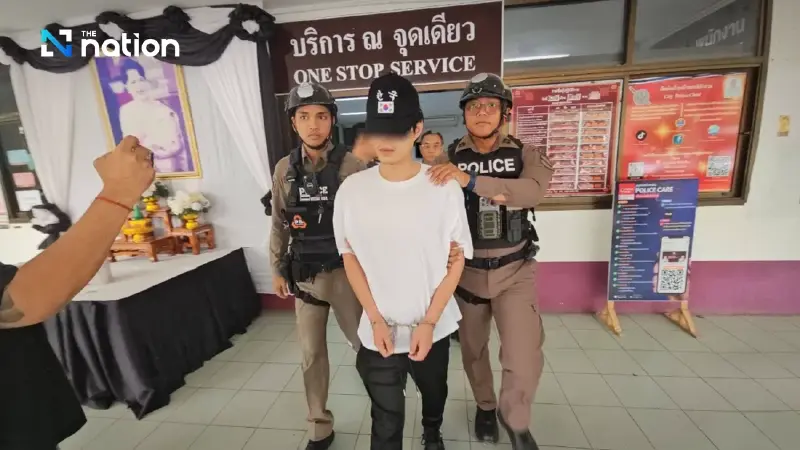


Police seized a weapons cache from a Chinese suspect in Chon Buri, revealing links to identity laundering and a transnational crime syndicate operating in Thailand.
- The arrest of a Chinese national led to the discovery of a large cache of military-grade weapons and explosives, which experts link to a violent transnational crime syndicate.
- Investigations revealed the syndicate sources weapons from the Thai police and army, traffics them across the Thai-Cambodian border, and has links to Cambodian armed forces for training.
- The network systematically penetrates Thai bureaucracy through bribery to facilitate identity laundering, forging passports and birth certificates to grant criminals legal status and access.
- The criminal activity exploits loopholes in Thailand's visa-free travel policy, which has allowed the country to become a hideout for transnational criminal groups due to a lack of strict screening.
Najomtien police in Sattahip district, Chon Buri, expanded their investigation to search a house in Soi Huai Yai following a vehicle rollover, arresting 31-year-old Chinese national Ming Chen San.
Officers discovered war weapons, highly destructive explosives, 10 lethal and throwing grenades, bomb-making materials, and a large quantity of fuel hidden inside the property.
Although the suspect claimed the items were prepared for suicide due to depression, Assoc Prof Thitiwut Boonyawongwiwat, a transnational crime academic at Chiang Mai University, assessed that such behaviour was not the act of a lone wolf or a typical patient.
Instead, it aligned with a transnational crime syndicate undertaking tasks for profit, representing a new threat that combines illegal capital with the capacity for violence, closely resembling terrorism.
An in-depth investigation found that some of the seized weaponry included police welfare firearms and Royal Thai Army ammunition, reflecting the leakage of state weapons into the black market.

Additionally, information linked Ming to weapons training with the Cambodian Prime Minister's Bodyguard Headquarters (BHQ), with war weapons being moved freely across the Thai-Cambodian border despite strict deployment.
The integration between transnational criminal organisations and neighbouring armed forces indicates that the network is developing the capability to employ violent methods for personal interests or political objectives.
Beyond the weapons cache, links were found to identity laundering and nationality trading syndicates penetrating the Thai bureaucracy from within.
Ming holds multiple passports and fake passports, as well as a pink identity card for non-Thai nationals, with a history of transferring his house registration from Chiang Dao district, Chiang Mai, to Khlong Sam Wa district, Bangkok.
Investigative data indicated the syndicate pays brokers THB500,000 to THB1 million to corrupt state officials to forge documents and use administrative officials' residences as system addresses.

Furthermore, the "Guman Jeen" (fraudulent Chinese child) operation works systematically with hospital staff and local officials to issue fake birth certificates, hiring Thais to register marriages and pose as fathers so foreign children obtain full Thai nationality from birth.
This paves the way for grey capital groups to legally access education, healthcare, property ownership, and business operations in Thailand in the long term.
The situation reflects severe loopholes in the "free visa" policy that Ming and transnational criminals have used as a tool to travel in and out of the country since 2020.
The visa exemption for 93 countries, while aiming to stimulate the economy, has created security impacts, causing Thailand to lose fee revenue and lack strict screening systems, turning it into a hideout for criminal groups and a shelter for those fleeing conflicts.
Experts have thus suggested the government urgently overhaul the entire immigration system comprehensively, alongside reviewing the visa exemption to a reciprocal format and limiting the stay period to 15-30 days to prevent Thailand from permanently becoming a stronghold for global criminals and transnational networks.
