
Stephen Ndegwa appointed World Bank division director for Thailand and Myanmar
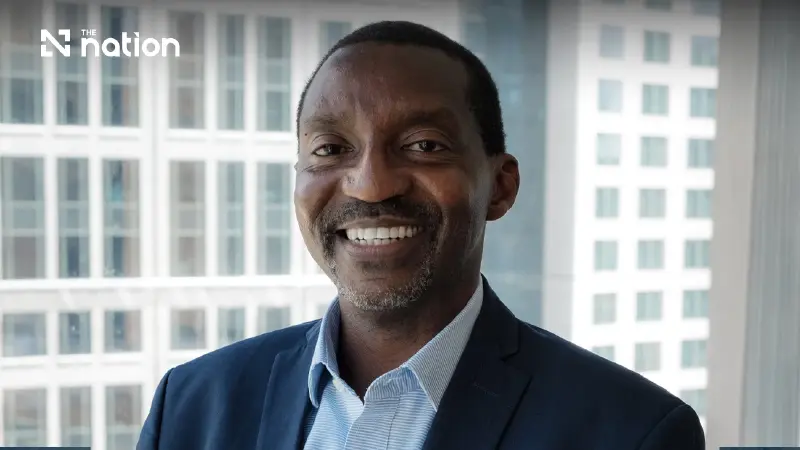


Stephen N. Ndegwa will lead World Bank programmes in Thailand and Myanmar, advancing competitiveness, resilience and support for vulnerable communities
- Stephen N. Ndegwa has been appointed as the World Bank's Division Director for Thailand and Myanmar, effective September 1, 2026.
- Based in Bangkok, he will lead the expansion of the World Bank's partnership with Thailand to support its goal of achieving high-income status by 2037.
- In Myanmar, his focus will be on supporting vulnerable communities affected by conflict by preserving human capital, strengthening resilience, and protecting livelihoods.
- Ndegwa previously served as the World Bank’s Division Director for the Pacific Islands and brings over two decades of experience with the institution to his new role.
The World Bank has appointed Stephen N. Ndegwa as Division Director for Thailand and Myanmar, placing him in charge of the institution’s programmes in both countries from Tuesday (September 1, 2026).
Based in Bangkok, Ndegwa takes up the position while the World Bank is expanding its partnership with Thailand and maintaining support for vulnerable communities in Myanmar amid continuing fragility, conflict and violence.
He will work with government agencies and other stakeholders to support national priorities and advance the World Bank’s mission of ending extreme poverty and promoting shared prosperity on a livable planet, while helping create more and better jobs.
“Thailand has demonstrated strong leadership and results in pursuing sustainable and resilient development, while Myanmar’s people continue to face immense challenges,” Ndegwa said.
“I look forward to working closely with our partners to help create opportunities, strengthen resilience, and support inclusive and sustainable growth.”
Thailand partnership targets high-income status by 2037
Ndegwa joins as the World Bank deepens its cooperation with Thailand to support the development of a more competitive and resilient economy and the country’s ambition to achieve high-income status by 2037.
Ahead of the 2026 IMF-World Bank Group Annual Meetings in Bangkok, one of his main priorities will be to advance the next phase of the World Bank Group’s engagement with Thailand through a new Country Partnership Framework (CPF).
The framework will provide a focused roadmap for strengthening Thailand’s global competitiveness, accelerating economic growth and job creation, and building a more inclusive and resilient economy.
It centres on two mutually reinforcing outcomes: developing a more competitive private sector and strengthening resilience to support growth.
The creation of more and better jobs and the mobilisation of private capital will serve as cross-cutting priorities across the framework.
Current World Bank investments in Thailand cover resilient infrastructure, carbon markets, water security and flood-risk management.
The institution is also providing knowledge and analytical support in macroeconomic management, urban development, digital transformation, finance and private-sector development.
Support for vulnerable communities in Myanmar
In Myanmar, the World Bank Group will continue supporting communities affected by fragility, conflict and violence, with its work focused on preserving human capital, strengthening community resilience and protecting livelihoods and food security.
Its engagement will follow a “monitor, assess and assist” approach aligned with the World Bank Group’s Strategy for Engaging in Fragility, Conflict, and Violence Affected Settings for 2026–2030.
Under Ndegwa’s leadership, the World Bank will continue producing knowledge and analysis to deepen understanding of Myanmar’s changing economic and social conditions.
It will also expand assistance for vulnerable communities through programmes delivered by third-party partners.
The approach is intended to help communities withstand conflict, economic hardship, natural disasters and other shocks while establishing foundations for future recovery and greater resilience.
Regional experience spanning more than two decades
Before taking up his new position, Ndegwa served as the World Bank’s Division Director for the Pacific Islands, where he oversaw a portfolio comprising more than 80 projects across the region.
He joined the World Bank as a Young Professional in 2002 and has since held leadership positions covering Africa, East Asia and the Pacific, Europe and Central Asia, the Middle East and South Asia.
His previous assignments include serving as country manager for Serbia and operations manager for Afghanistan.
Ndegwa holds a PhD in Political Science and Public Policy from Indiana University in the United States.
