
Two dead, one unaccounted for after Grand Canyon flash flood
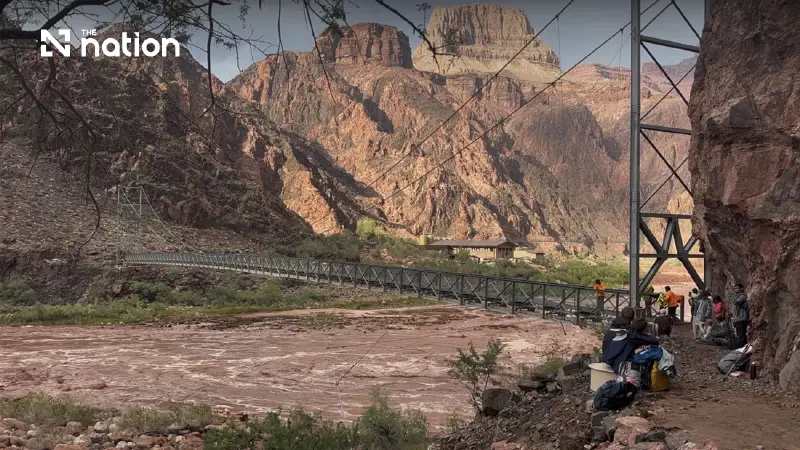


More than 80 people were rescued after floodwater tore through Bright Angel Creek, wrecking bridges and damaging the park’s main water line.
Two people were killed and one person remained unaccounted for late on Monday (August 31) after a flash flood swept through Grand Canyon National Park in Arizona, prompting a large-scale rescue operation in its remote inner corridor.
More than 80 people were rescued over the weekend, according to a late-Monday update from park officials. The revised count marked a sharp reduction from an earlier National Park Service appeal for information about more than 20 people who might have been missing or unaccounted for.
Heavy rain on Saturday sent mud, boulders and debris rushing through Bright Angel Creek, a side canyon extending from the park’s North Rim to the Colorado River. The flood swept away trails, footbridges and other infrastructure.
By Sunday morning, 62 people had been evacuated by helicopter from Phantom Ranch and the North Kaibab Trail. Phantom Ranch is a historic lodge and campground near the point where Bright Angel Creek meets the Colorado River.
The flood also damaged or destroyed about 40% of the Transcanyon Waterline, leaving the park with limited reserves and forcing officials to introduce stringent water-conservation measures. Overnight hotel accommodation inside the park was suspended, although the South Rim remained open to daytime visitors.
Search narrows after initial appeal
The body of a 46-year-old man was recovered on Sunday near Crystal Rapids along the Colorado River. A second body was recovered on Monday, but officials did not immediately disclose further details about that victim.

National Park Service incident commander Dave Black said late on Monday that nearly all those known to have been in the affected area had been accounted for, leaving one person still missing.
Rangers had cross-checked camping permits, vehicle licence plates and information from relatives to identify people who might have been inside the canyon when the flood struck. Accounting for all visitors remained difficult because day hikers do not need permits.
The Park Service had asked for information about hikers and backpackers who were in the Bright Angel Creek corridor on August 29. The appeal covered people travelling on the North Kaibab Trail, staying at Bright Angel Campground or passing through the narrow area north of Phantom Ranch known as “the Box”.
Rain disrupted parts of the search on Monday, but officials expected improved weather to assist teams looking for the person who remained unaccounted for.
Bridges and water supply badly damaged

Nearly all footbridges spanning Bright Angel Creek were destroyed, removing access across the creek for hikers and significantly changing the surrounding landscape.
Metal structures and other debris were also swept into the Colorado River, prompting the Park Service to close the river to traffic while the hazards were assessed.
The Transcanyon Waterline carries water from the canyon for use by park facilities. Its loss prompted Stage 4 restrictions on the South Rim and the closure of overnight accommodation until further notice.
Among the sites remaining closed were:
- Phantom Ranch
- Bright Angel Campground
- Phantom Ranch Canteen and cabins
- The entire North Kaibab Trail between its northern trailhead and Phantom Ranch
- Black Bridge and Silver Bridge across the Colorado River
Park officials had not announced an estimated reopening date and warned that further inner-canyon closures could be required.
Visitors describe sudden roar and debris
David Gregory, who was staying at Phantom Ranch, said a ranger instructed him and other guests to cross a footbridge and move to higher ground. The bridge was washed away about 10 minutes later.
Gregory described cabins and equipment from a maintenance site being carried and spun around by the floodwater.
US Representative David Schweikert, an Arizona Republican, was rafting with friends near Bright Angel Creek when the group heard an approaching roar.
He described the sound as “a handful of locomotives” smashing boulders. Schweikert and the other members of his group subsequently hiked out of the canyon safely.
Grand Canyon National Park attracted about 4.4 million visitors in 2025. The Park Service has asked visitors to remain outside the closed and flood-damaged areas while search, recovery and damage assessments continue.
Source: Reuters
