
Thailand plans public display of Phanom Surin artefacts
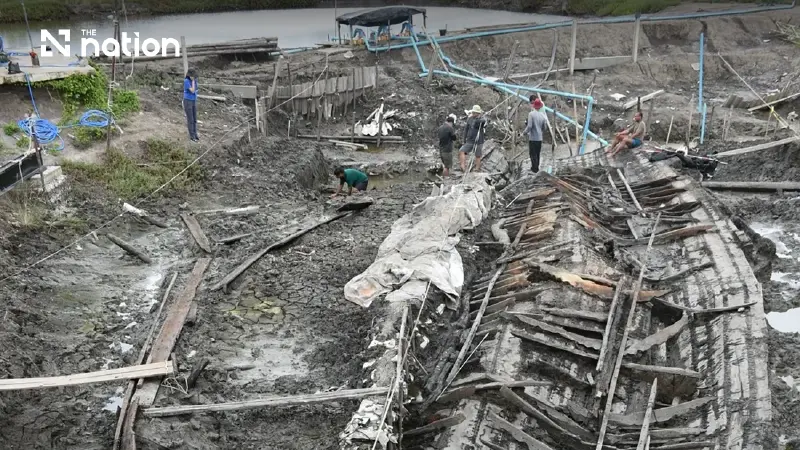


The Phanom Surin wreck in Samut Sakhon, thought to be 1,200–1,300 years old, holds evidence of trade with China and the Middle East.
The Fine Arts Department is advancing plans to turn the Phanom Surin ancient shipwreck site in Samut Sakhon into a regional learning centre for wetland archaeology and the history of transoceanic trade, with the longer-term aim of developing a cultural tourism destination.
The project centres on a vessel believed to be around 1,200–1,300 years old and several thousand recovered artefacts. Evidence from different cultures has made the site significant to researchers studying central Thailand’s early societies and their connections with distant maritime trading networks.
For the 2026 fiscal year, the department has continued funding the 1st Regional Office of Fine Arts in Ratchaburi to study and analyse the finds. The conservation science team at the Office of National Museums will undertake specialist conservation of objects recovered from the wetland environment.

Director-general Phanombut Chantarachot said he had instructed the Ratchaburi office to organise an academic seminar on progress at the Phanom Surin site. It will present research findings and project updates, explain the significance of the discoveries and outline appropriate conservation methods.
Conservation work prepares for future public access
Work includes repairing the existing tank used to immerse the ship’s keelson and mast components to improve their preservation.
For a second phase, the Office of Architecture has been assigned to design a new conservation tank. The facility is intended to address flooding, improve working efficiency and better accommodate conservation staff.

Longer-term plans call for excavation of the remaining western section of the vessel and conservation of ship components that are still submerged. The department also plans an exhibition building where conserved artefacts can be displayed, allowing the site to open formally to the public in the future.
A shrimp-pond discovery linked to Dvaravati
Archaeological surveys and excavations began in 2013 after the wreck was discovered in a shrimp pond in Moo 6, Phanthai Norasing subdistrict, Mueang Samut Sakhon district. The land belonged to Phanom and Surin Sringamdee.

The vessel lay in coastal wetlands, where layers of mud protected many of the archaeological remains. Much of the evidence survived in relatively good condition despite being more than a millennium old, contributing to the discovery’s national and international significance.
Studies by the Underwater Archaeology Division and the Ratchaburi regional office place the vessel around the 13th–14th centuries of the Buddhist Era, contemporary with the Dvaravati culture of central Thailand.
Archaeologists have suggested that the ship may have had an important connection with the nearby ancient Dvaravati city of Nakhon Pathom. They believe the evidence may also help explain the region’s transition from the late prehistoric period into the early historic era.
Arabian Sea techniques and Southeast Asian timber
The vessel’s construction offers another line of evidence about its origins and trading connections.
Its hull was assembled using the sewn-plank technique, with wooden planks stitched or lashed together. This method was widely used in the Middle East and around the Arabian Sea.
Timber analysis identified teak, palmyra palm and woods known in Thai as khiam, teng and takhian rak, all native to Southeast Asia.
Researchers have provisionally suggested that the ship may have been built in Southeast Asia or undergone major repairs there, using a construction technique associated with the Arabian Sea.
The findings point to Southeast Asia’s participation in long-distance shipping and trade from the early historic period, although the vessel’s precise place of construction remains a subject of interpretation.

Cargo and inscriptions reveal cultural exchanges
Objects recovered from inside and around the wreck include traded goods, food remains, tools and everyday equipment used by the crew.
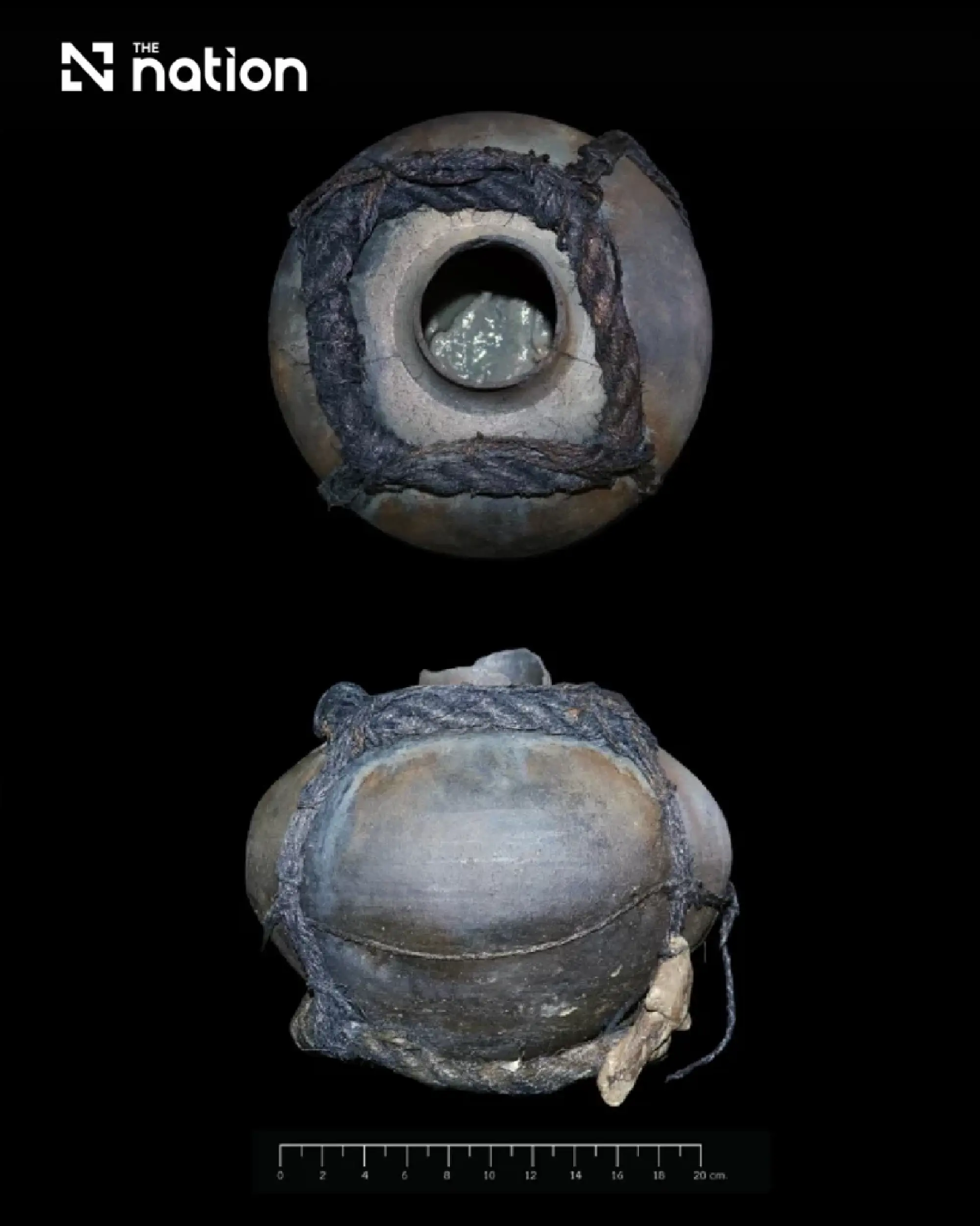
Among the ceramic finds were Middle Eastern torpedo jars containing traces of bitumen, Indian-style ridged pots of a type widely used in Southeast Asia, and glazed ceramics produced in China.
Persian and Chinese inscriptions found on pottery have been read and translated, adding evidence of contact and exchange among people from different regions.

Researchers also recovered seeds originating in Southeast Asia, India and the Middle East. Other finds included fish bones, bones from land animals and birds, animal horns and tusks.
A small human figurine carved from horn or ivory resembles a religious figure seated with knees raised. Archaeologists have tentatively interpreted it as an object of worship carried aboard by a crew member, offering evidence of the beliefs and daily lives of people involved in maritime travel more than 1,000 years ago.

