
First modern-era prison to exhibit Dvaravati artefacts


Play
THAILAND’S first prison of the modern era, in Nakhon Pathom province is set to get a new lease of life
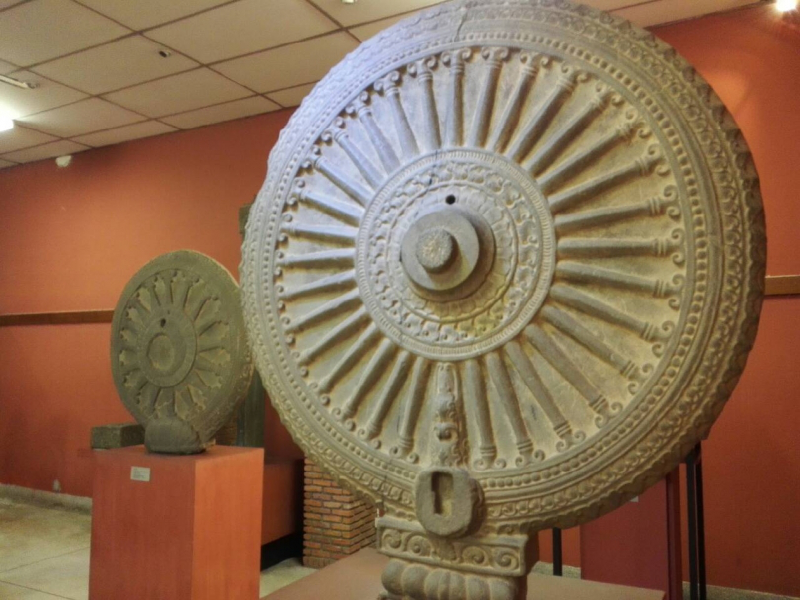
The 118-year-old prison, which used to house convicts since the reign of King Rama V and has been closed for two years, was recently selected to house artefacts from the Dvaravati period, from the sixth to the 13th centuries.
The Culture Ministry saw hidden potential in the building, located just 500 metres from the Phra Pathom Chedi pagoda and sought permission to turn it into the Nakhon Pathom National Museum.
The old museum had only 410 square metres of space to display objects that show Nakhon Pathom’s past glory as a hub of the Chao Phraya river basin’s Dvaravati civilisation. The new museum will be a fitting home for items that could not be displayed so far because of its lack of space.
“A total of 1,873 items from the Dvaravati period were unearthed in Nakhon Pathom but only 251 pieces were on display, while the other 1,622 were kept in storage,” head of the Fine Arts Department Anan Chuchote said.
The department will use only six rai out of the prison’s 33 rai of land to build the museum with a total of 1,300 square metres for display. The construction will use funds from the 2018 fiscal year and should take three to four years to complete.
Muang Nakhon Pathom Municipality will seek to use the rest of the prison area to be the city’s first official public park.
Nakhon Pathom Prison director Kiettisak Vechawongwan said the prison was built in 1898 because King Rama V wanted to move the Nakhon Chaisri regional city from Thana area to Phra Pathom Chedi area. That created the need to use convicts as labourers for buildings and road/canal construction, as well as restoration of the Phra Pathom Chedi pagoda.
During King Rama VI’s reign, prisoners in this area had also been used to construct the Sanam Chandra Palace.
Before the Nakhon Pathom prison, Siam, as Thailand was known at the time, only had detention cells at various buildings such as those at Nakhon Chaisri regional city in a building behind the governor’s residence, Kiettisak said.
When the cell-block got overcrowded, King Rama V ordered the construction of the prison and moved all inmates to this facility. About 10 years later, in 1915, the Corrections Department was set up by King Rama VI and Phraya Chaiwichit Wisitthamthada (Kham na Pombejra) served as the department’s first director-general.
The Central Nakhon Pathom Prison had the capacity to hold 1,500 inmates but sometimes held up to 3,500 people. Later, a new jail was built on a 38-rai plot in Wang Taku sub-district, on the city’s outskirts, as per a Cabinet resolution in 1983. The relocation was a more convenient site for rehabilitation of prisoners, better for prison control and solved the problem of overcrowding, Kiettisak said.
