
Thai health ministry reports 19 flood deaths, 49 health facilities affected on Sept 28
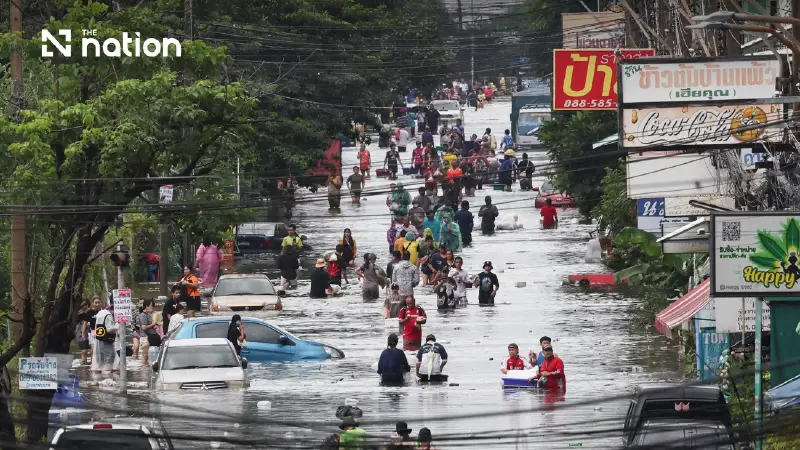


Floods have affected 23 Thai provinces and 49 health facilities, with 22 closed, prompting patient transfers and eight emergency healthcare measures
- Thailand's Ministry of Public Health announced on September 28 that widespread flooding had caused 19 deaths.
- The majority of the fatalities were attributed to drowning and electrocution.
- The floods have also impacted 49 health facilities, forcing some hospitals to close and transfer patients, particularly in Rayong province.
- In response, the ministry has initiated an eight-point plan to manage the health crisis, focusing on hospital readiness, patient transfers, and delivering medical supplies.
Ministry of Public Health reported 19 flood-related deaths and 23 affected provinces in a September 28, 2026 update, with drowning and electrocution accounting for most fatalities. Flooding had also affected 49 health facilities, including 22 that had closed completely.
Dr Somruek Chungsaman, permanent secretary for public health, said 24 of the affected facilities continued operating normally, while three had partially suspended services.
Public Health Minister Pattana Promphat outlined eight response measures after chairing a teleconference on flooding, windstorms and mudslides. The measures cover hospital readiness, patient transfers, medicine deliveries, assistance for vulnerable residents and preparations to restore damaged services.

Rayong hospitals arrange patient transfers as floodwater rises
Pattana identified Rayong as a priority, with high water levels at Ban Khai Hospital restricting services to emergency patients. The hospital planned to transfer 30 patients to Chaloem Phrakiat Hospital in Rayong.
At Klaeng Hospital, rising floodwater had entered the hospital grounds. Efforts were under way to transfer eight to 10 critically ill patients to Rayong Hospital and another 100 patients to Chaloem Phrakiat Hospital.
The National Institute for Emergency Medicine was instructed to prepare the Sky Doctor air medical service to assist Klaeng Hospital. The service was to be ready to deploy immediately upon receiving a request to transfer patients to receiving hospitals.
Pattana identified other areas requiring urgent attention as Kanchanaburi, Ratchaburi, Prachin Buri, Nakhon Nayok, Bangkok and neighbouring provinces, alongside Rayong’s Klaeng district.
Two hospitals were singled out for close monitoring because of their high risk: Chaophraya Abhaibhubejhr Hospital in Prachin Buri and Nakhon Nayok Hospital.
Health officials were also monitoring facilities along the Mae Klong basin, hospitals and subdistrict health-promoting hospitals in downstream Prasae areas of Klaeng, and subdistrict health-promoting hospitals in Phra Nakhon Si Ayutthaya, Prachin Buri and Sa Kaeo.
Medical teams support shelters and vulnerable residents
The Department of Medical Services deployed a Mini Medical Emergency Response Team, known as MiniMERT, to Rom Klao Housing Estate to prepare emergency medical support and protect residents’ health and safety.
Health Region 9 sent three teams to Pak Chong district in Nakhon Ratchasima. The teams covered affected communities, assessed the impact of flooding, monitored care at evacuation shelters and prepared personnel, medicines, medical supplies and other resources for vulnerable groups.
The Ratchaburi Provincial Public Health Office prepared for increased releases from Mae Klong Dam by assessing risk areas, drawing up evacuation plans and readying shelters and medical and public health services.
Health Region 4 teams visited housebound and bedridden patients and older residents in Pak Kret district, Nonthaburi. The visits checked access to medicines and treatment and provided health advice.
Health ministry issues eight orders to maintain care
Pattana’s meeting issued the following eight instructions to protect patients and maintain healthcare services during the floods:
1. Closely supervise hospitals. Ministry inspectors and provincial public health chiefs must check essential support systems, including medicines, medical supplies, backup electricity, water, oxygen and other necessary resources.
2. Provide emergency toilets. Assess demand for cardboard toilets and arrange supplies, giving evacuation shelters priority.
3. Maintain public communication. Continue providing residents with risk warnings and essential information.
4. Accelerate medicine and supply deliveries. Dispatch requested items promptly and clearly track deliveries to each area. Provincial public health offices should serve as the main receiving points before distributing supplies to affected areas, agencies or community representatives.
5. Prepare repair teams. Teams should begin work as soon as water levels recede, restoring electricity, water, communications, medical equipment and essential utilities so facilities can reopen safely and quickly.
6. Prioritise housebound and bedridden patients. Ensure access to medical services, uninterrupted medication and close health monitoring.
7. Protect hospitals and organise transfers. Coordinate with provincial authorities, provincial administrative organisations and military units to obtain personnel, vehicles and pumps. Plan transfers according to clinical urgency, confirm that receiving hospitals are ready and prepare contingencies for further rises in water levels to maintain continuity of care.
8. Plan the recovery phase. Define the work required and compile inventories of medicines, medical supplies and other public health resources so adequate reserves can be prepared and distributed to affected areas.
Ministry warns of drowning and electrocution risks
Somruek urged residents to take additional care because flooding can change water depths, currents and the ground beneath the water. Most of the 19 reported deaths involved people falling into water or drowning, or suffering electrocution.
For anyone who must enter floodwater, Somruek advised carrying a flotation aid, such as a life jacket or a buoyant plastic container, for use in an emergency.
Somruek also advised households affected by incoming floodwater to cut the electricity supply and stop using electrical appliances. Residents can obtain further flood-related information and health guidance through the Mor Prom application.
///////////////////////
For those who wish to help our fellow citizens suffering and affected by the floods, you can make a donation through the following accounts:
Nation Foundation
Bank of Ayudhya (Krungsri): Account No. 333-0-01399-6
Kasikorn Bank: Account No. 192-3-59782-0
"We will get through this crisis together."
